PM Modi honours skilled youth at Kaushal Deekshant Samaroh in Lucknow
Synopsis
Prime Minister Narendra Modi attended the Kaushal Deekshant Samaroh in Lucknow on 21 November 2026, celebrating vocational graduates trained under the Skill India Mission and PMKVY in a convocation-style ceremony aimed at dignifying technical education.
Key Takeaways
PM Narendra Modi attended the Kaushal Deekshant Samaroh in Lucknow on 21 November 2026 .
The ceremony is a convocation-style event honouring completers of government vocational training programmes.
The Skill India Mission was launched on 15 July 2015 to train millions of Indians in industry-relevant skills.
The Pradhan Mantri Kaushal Vikas Yojana (PMKVY) , approved in 2015, is the flagship certification scheme under the mission.
Lucknow , capital of Uttar Pradesh , is a frequent venue for national skill and education events given the state's large youth workforce.
Updated placement and certification statistics for PMKVY are expected in forthcoming Ministry of Skill Development reports.
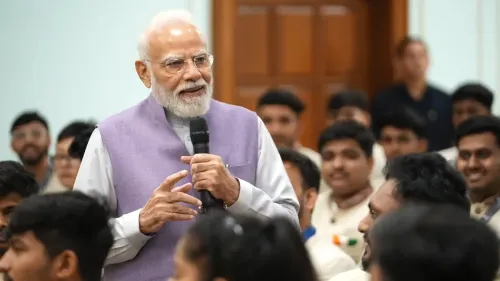
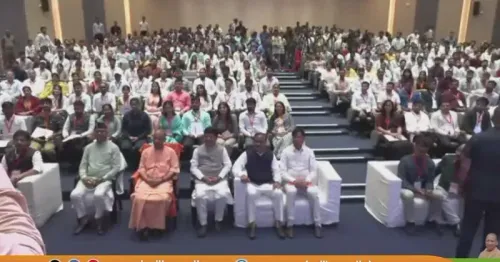
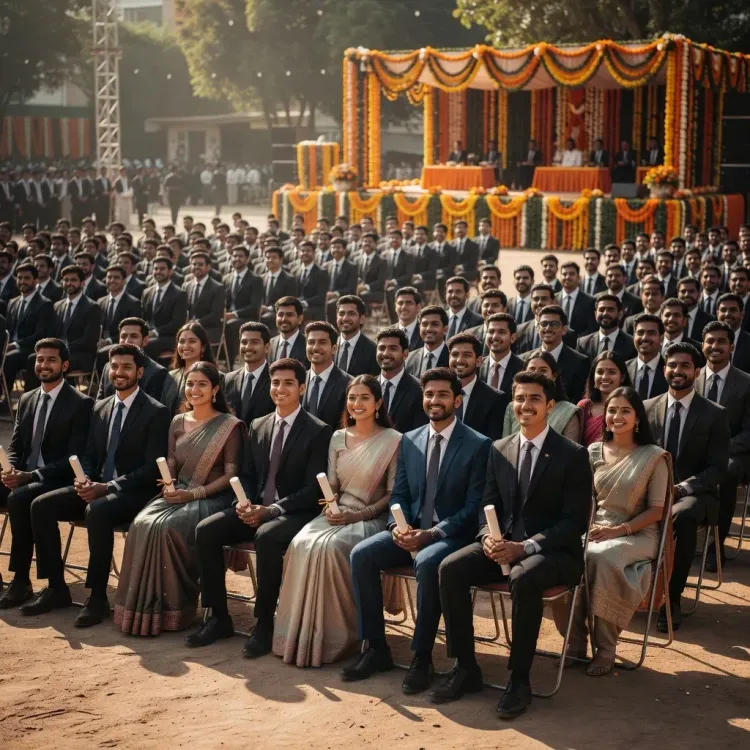
Thousands of young Indians who traded classrooms for craft benches got their moment in the spotlight on Saturday, 21 November 2026, as Prime Minister Narendra Modi attended the Kaushal Deekshant Samaroh in Lucknow, a convocation-style ceremony marking the completion of government-run vocational training programmes.
A convocation with a different kind of degree
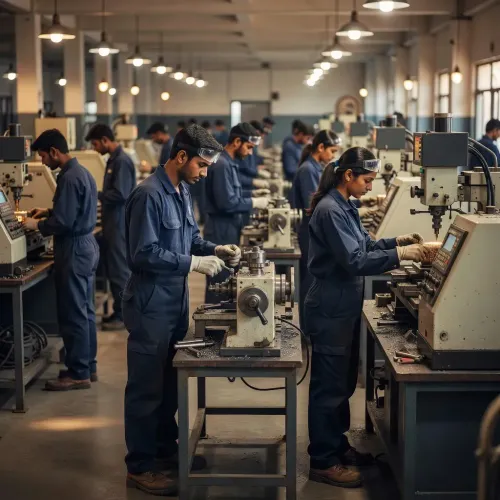
The Kaushal Deekshant Samaroh — literally a 'skill graduation ceremony' — mirrors the pomp of a university convocation but honours trainees who have cleared certification under schemes such as the Pradhan Mantri Kaushal Vikas Yojana (PMKVY). Where a traditional ceremony celebrates academic degrees, this one recognises welders, electricians, healthcare workers, and logistics professionals who have been trained and assessed for industry-ready skills. The format is a deliberate signal: vocational achievement deserves the same public recognition as a college scroll.
Lucknow, the capital of Uttar Pradesh — India's most populous state and a key demographic engine for the national workforce — has repeatedly served as a stage for flagship skill and education events, amplifying reach to trainees and aspirants across the Hindi heartland.
Skill India's decade-long foundation
The ceremony draws on a policy architecture that is now more than a decade old. The Skill India Mission was launched on 15 July 2015 with the ambition of training hundreds of millions of Indians in industry-relevant skills over the following years. The Pradhan Mantri Kaushal Vikas Yojana, approved the same year, became the mission's flagship certification vehicle — offering short-term, sector-specific training tied to National Skills Qualifications Framework standards and linked to placement support.
Successive phases of PMKVY have expanded the scheme's scope, bringing in new sectors, digital skilling components, and Recognition of Prior Learning tracks for workers already in informal employment. State-level convocations like today's event serve a dual function: they celebrate individual completers and generate public accountability around certification and placement numbers.
Youth unemployment and the workforce alignment challenge
The political and economic stakes behind a ceremony like this are real. India's demographic dividend — a young, growing workforce — only converts into growth if that workforce is employable in the sectors where demand actually exists: manufacturing, logistics, healthcare, green energy, and digital services. Skill mismatches remain a persistent drag on both hiring rates and worker wages.
Events anchored by the Prime Minister give the skilling agenda national visibility, nudging state governments and industry partners to treat certification and placement outcomes as measurable deliverables rather than administrative formalities. The Ministry of Skill Development's forthcoming reports on PMKVY placement data will be watched for evidence of how well the pipeline is converting trained youth into employed workers.
India's skilled youth stepped onto a graduation stage today — the country is now watching to see how many step into a pay cheque.
Point of View
Modi reinforces the BJP's long-running political narrative that blends economic aspiration with dignity of labour — positioning Skill India as both a workforce policy and a social equity statement. The choice of Lucknow underscores Uttar Pradesh's centrality to the government's demographic-dividend calculus ahead of continued manufacturing and services expansion. However, the ceremony's real test lies in placement outcomes: critics have consistently argued that certification numbers outpace actual employment gains under PMKVY. Whether this edition delivers updated, credible placement data will determine how much political capital the event ultimately yields.
NationPress
21 Nov 2026
Frequently Asked Questions
What is the Kaushal Deekshant Samaroh?
The Kaushal Deekshant Samaroh is a convocation-style ceremony organised by the government to recognise and celebrate young Indians who have completed vocational training and certification under schemes such as the Pradhan Mantri Kaushal Vikas Yojana.
What is the Pradhan Mantri Kaushal Vikas Yojana (PMKVY)?
PMKVY is the flagship skill-certification scheme launched in 2015 under the Skill India Mission. It provides short-term, industry-aligned training and formal certification to improve the employability of Indian youth across sectors such as manufacturing, healthcare, logistics, and digital services.
When was the Skill India Mission launched?
The Skill India Mission was launched on 15 July 2015 with the goal of training hundreds of millions of Indians in industry-relevant vocational skills over subsequent years.
Why was Lucknow chosen for the Kaushal Deekshant Samaroh?
Lucknow, as the capital of Uttar Pradesh — India's most populous state — is frequently selected as a venue for national skill and education events because it allows the government to reach a large base of trainees and workforce aspirants across the Hindi heartland.
What should I watch for after this event?
The Ministry of Skill Development is expected to release updated certification and placement statistics for PMKVY. These figures will provide a clearer picture of how effectively trained graduates are being absorbed into employment.