PM Modi marks Janjatiya Gaurav Diwas, honours tribal heritage
Synopsis
Prime Minister Narendra Modi marked Janjatiya Gaurav Diwas on 15 November 2026, the birth anniversary of tribal icon Birsa Munda, celebrating India's tribal heritage, culture and contributions. The observance was instituted in 2021 to honour Scheduled Tribe communities nationally.
Key Takeaways
Prime Minister Narendra Modi marked Janjatiya Gaurav Diwas on 15 November 2026 , honouring India's tribal heritage and culture.
The day commemorates the birth anniversary of Birsa Munda , the 19th-century tribal freedom fighter from Jharkhand , born on 15 November 1875 .
The Government of India formally instituted Janjatiya Gaurav Diwas in 2021 to recognise contributions of Scheduled Tribe communities.
India has over 700 Scheduled Tribe communities making up approximately 8.6 per cent of the national population.
The annual observance aligns cultural recognition with central government welfare and development programmes in tribal areas.
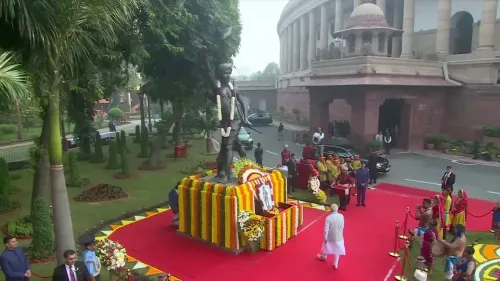
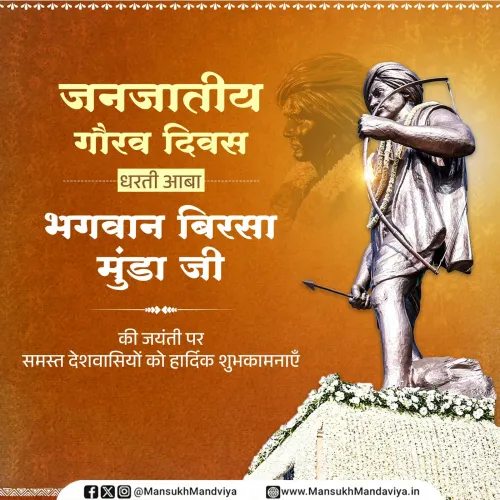
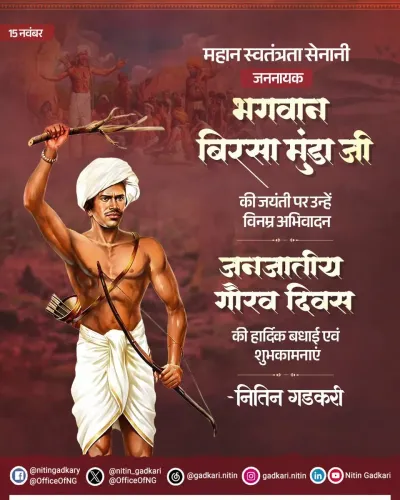
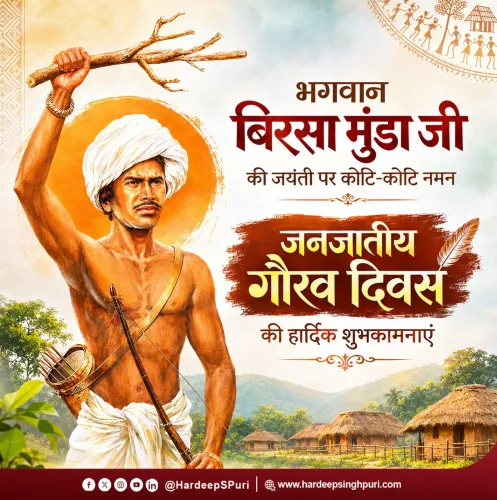
On the birth anniversary of Birsa Munda — the 19th-century tribal leader who defied colonial rule and became a symbol of Adivasi resistance — Prime Minister Narendra Modi marked Janjatiya Gaurav Diwas on Sunday, 15 November 2026, saluting the 'rich heritage, culture and contributions of India's tribal communities.'
Birsa Munda's legacy and the making of a national observance
Birsa Munda, born on 15 November 1875 in present-day Jharkhand, led the Ulgulan (Great Tumult) — an armed uprising against British land-grab policies that shaped tribal rights movements for generations. His death in British custody at the age of 25 cemented his place in India's freedom-struggle pantheon. The Government of India formally declared 15 November as Janjatiya Gaurav Diwas in 2021, anchoring the observance in Munda's birth anniversary and creating a permanent national platform to recognise tribal contributions to nation-building.
An annual salute that connects culture to policy
The day has evolved into more than a ceremonial tribute. Each year's observance aligns with central government programmes targeting welfare and development in tribal areas, weaving cultural recognition into a broader policy narrative around Scheduled Tribe communities. This year's post linked to a live broadcast, extending the reach of the observance beyond formal government events to a wider digital audience. The pattern signals an intent to keep tribal heritage visible in mainstream national discourse — not just on the calendar, but in the policy conversation.
India is home to more than 700 Scheduled Tribe communities, representing roughly 8.6 per cent of the national population. Their historical role in resisting colonialism, preserving biodiversity-rich forest landscapes, and sustaining distinct cultural traditions forms the bedrock of what Janjatiya Gaurav Diwas is designed to commemorate.
Five years since its institution, the observance has become a fixed point in India's ceremonial and policy calendar — a moment when the country pauses to ask how well it honours the communities whose struggles helped shape the republic it inherited.
Point of View
Chhattisgarh, Madhya Pradesh and Odisha. By anchoring the observance in Birsa Munda's legacy, the government frames tribal welfare as a matter of historical justice rather than routine social policy, elevating it in the national narrative. The annual broadcast and digital outreach signal a deliberate effort to deepen that framing beyond bureaucratic announcements. Whether cultural recognition translates into measurable gains in tribal livelihood indicators remains the central question observers are tracking.
NationPress
15 Nov 2026
Frequently Asked Questions
What is Janjatiya Gaurav Diwas and why is it celebrated on 15 November?
Janjatiya Gaurav Diwas is an annual national observance to honour the heritage, culture and contributions of India's tribal communities. It is celebrated on 15 November because that date marks the birth anniversary of Birsa Munda, the revered 19th-century tribal leader and freedom fighter from Jharkhand. The Government of India officially instituted the day in 2021.
Who was Birsa Munda?
Birsa Munda was a tribal leader and freedom fighter born on 15 November 1875 in present-day Jharkhand. He led the Ulgulan, an armed uprising against British colonial land policies, and became a defining symbol of Adivasi resistance. He died in British custody at the age of 25 and is widely revered across tribal communities in India.
When was Janjatiya Gaurav Diwas first declared?
The Government of India formally declared 15 November as Janjatiya Gaurav Diwas in 2021, coinciding with the birth anniversary of Birsa Munda, to recognise the historical and cultural contributions of India's Scheduled Tribe communities.
What did PM Modi say on Janjatiya Gaurav Diwas 2026?
Prime Minister Narendra Modi posted on X on 15 November 2026 that 'Janjatiya Gaurav Diwas celebrates the rich heritage, culture and contributions of India's tribal communities,' and shared a link to a live broadcast tied to the observance.
How large is India's tribal population?
India is home to more than 700 Scheduled Tribe communities, accounting for approximately 8.6 per cent of the national population, spread across states including Jharkhand, Chhattisgarh, Madhya Pradesh, Odisha and several north-eastern states.