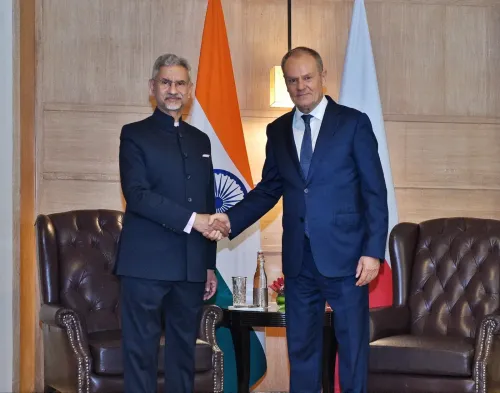
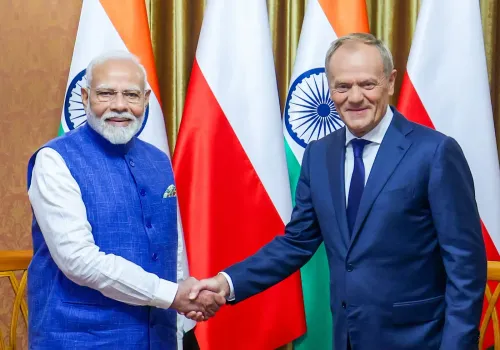
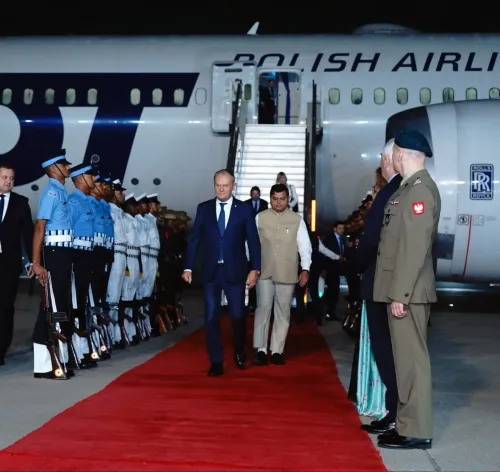
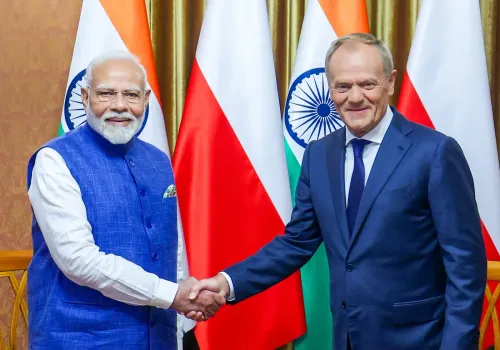
PM Modi meets Poland's Tusk, deepens Strategic Partnership
Synopsis
Prime Minister Narendra Modi held high-level talks with Polish PM Donald Tusk on 22 October 2026, reviewing the India-Poland Strategic Partnership and discussing deeper cooperation in trade, defence, space, nuclear energy, and critical minerals — anchoring India's Central European strategy in concrete sectoral priorities.
Key Takeaways
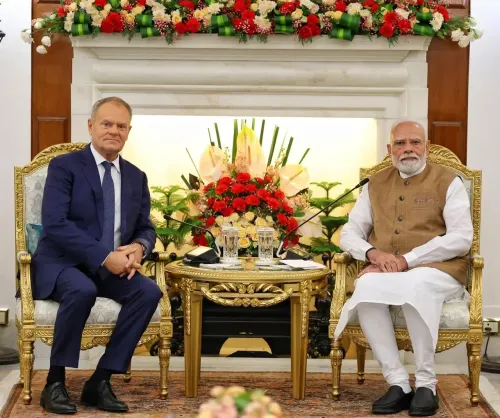
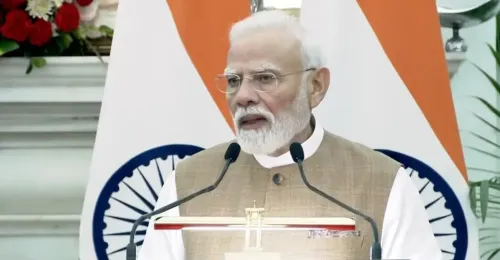
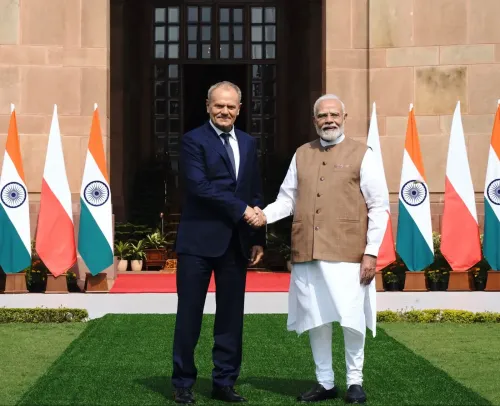
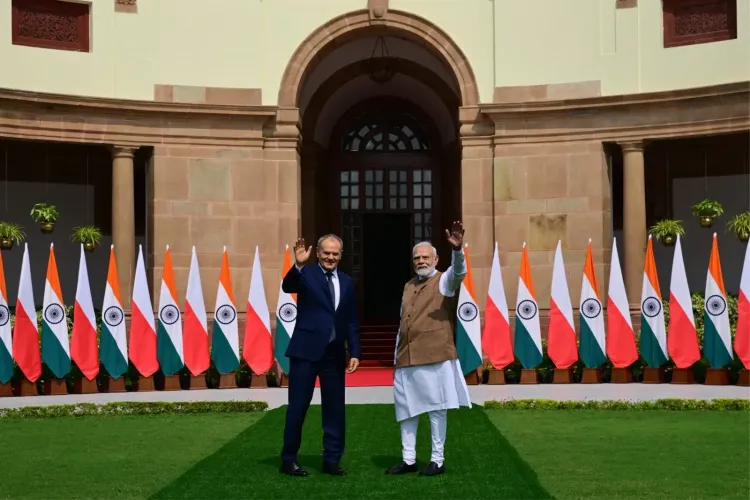
PM Narendra Modi met Polish PM Donald Tusk on 22 October 2026 , describing the talks as 'excellent'.
The two sides reviewed progress under the India-Poland Strategic Partnership , first anchored by diplomatic ties established in 1950 .
Cooperation pillars discussed: trade and investment , defence and space , nuclear energy , and critical minerals .
Donald Tusk is in his second stint as Polish PM, having returned to power in December 2023 .
The meeting aligns with India's broader strategy of diversifying partnerships across Central and Eastern Europe for supply-chain resilience and strategic autonomy.
Specific follow-up agreements or working groups on nuclear energy and critical minerals are the key developments to watch.
Two governments with roots in a 1950 diplomatic relationship found fresh urgency on Thursday, 22 October 2026, as Prime Minister Narendra Modi held what he described as 'excellent talks' with Polish Prime Minister Donald Tusk — spanning trade, defence, space, nuclear energy, and critical minerals in a single high-level exchange.
What the two leaders put on the table
Modi confirmed the two sides reviewed progress under the India-Poland Strategic Partnership and mapped out avenues for deeper cooperation. The agenda was deliberately broad: trade and investment, defence and space, nuclear energy, and critical minerals — each a pillar that connects India's strategic ambitions to Poland's position as a central node inside the EU and NATO.
The inclusion of nuclear energy and critical minerals is particularly pointed. Both sit at the intersection of India's push for supply-chain resilience and its long-term energy transition goals — areas where Central and Eastern European partners offer diversification that larger Western European economies alone cannot provide.
Poland's place in India's European strategy
Poland re-emerged as a serious diplomatic interlocutor for New Delhi in the 2010s, when high-level visits began expanding the strategic framework beyond its post-1950 ceremonial baseline. Donald Tusk, now serving his second term as Prime Minister after returning to power in December 2023, brings both EU institutional weight and transatlantic credibility — a combination that matters as India navigates its relationships across the Western alliance.
India's engagement across Central and Eastern Europe has been a quiet but deliberate hedge: these economies offer defence technology corridors, nuclear expertise, and rare-mineral supply chains that complement ties with Germany, France, and the United Kingdom. Poland, as one of the fastest-growing EU economies and a country sharply focused on defence modernisation, fits that template.
Why nuclear energy and critical minerals stand out
Of the four cooperation pillars Modi named, two carry the sharpest long-range implications. Nuclear energy cooperation with a NATO member that is actively expanding its own civil nuclear programme could open technology-sharing and project-investment channels for India. Critical minerals — the lithium, cobalt, and rare-earth inputs that underpin everything from semiconductors to electric vehicles — have become a top-tier geopolitical asset, and any bilateral framework addressing them directly signals industrial-level seriousness on both sides.
Whether the talks produced concrete working groups or binding commitments remains to be reported; Modi's post confirms the agenda and the tone, but specific deliverables will emerge through official joint statements.
Point of View
But via hard-infrastructure sectors like nuclear energy and critical minerals. Poland's dual identity as an EU economy and a NATO frontline state gives New Delhi a uniquely leveraged entry point into Western alliance networks. The explicit mention of critical minerals is a tell: India is treating bilateral summits as instruments of supply-chain diplomacy, not just photo-opportunity statecraft. Tusk's return to power in late 2023 has given Poland renewed EU institutional influence, making this precisely the moment India would want to deepen the relationship.
NationPress
22 Oct 2026
Frequently Asked Questions
What did PM Modi and Poland's Donald Tusk discuss in their October 2026 meeting?
The two leaders reviewed progress under the India-Poland Strategic Partnership and discussed deepening cooperation in trade and investment, defence and space, nuclear energy, and critical minerals.
What is the India-Poland Strategic Partnership?
The India-Poland Strategic Partnership is a bilateral framework for cooperation in trade, defence, space, and technology. India and Poland have maintained diplomatic relations since 1950, with the partnership framework expanded through high-level visits in the 2010s.
Why is nuclear energy part of India-Poland talks?
Poland is expanding its own civil nuclear programme, making it a potential partner for technology-sharing and investment with India, which is also scaling up nuclear energy as part of its long-term energy transition strategy.
Who is Donald Tusk and why does he matter for India?
Donald Tusk is Poland's Prime Minister, currently in his second term after returning to power in December 2023. His EU institutional experience and Poland's NATO membership give him outsized influence, making him a strategically valuable partner for India's European outreach.
Why is India engaging Central and Eastern Europe more actively?
India has been diversifying partnerships across Central and Eastern Europe to complement ties with larger Western European economies, focusing on defence technology, nuclear expertise, and critical mineral supply chains to strengthen supply-chain resilience and strategic autonomy.