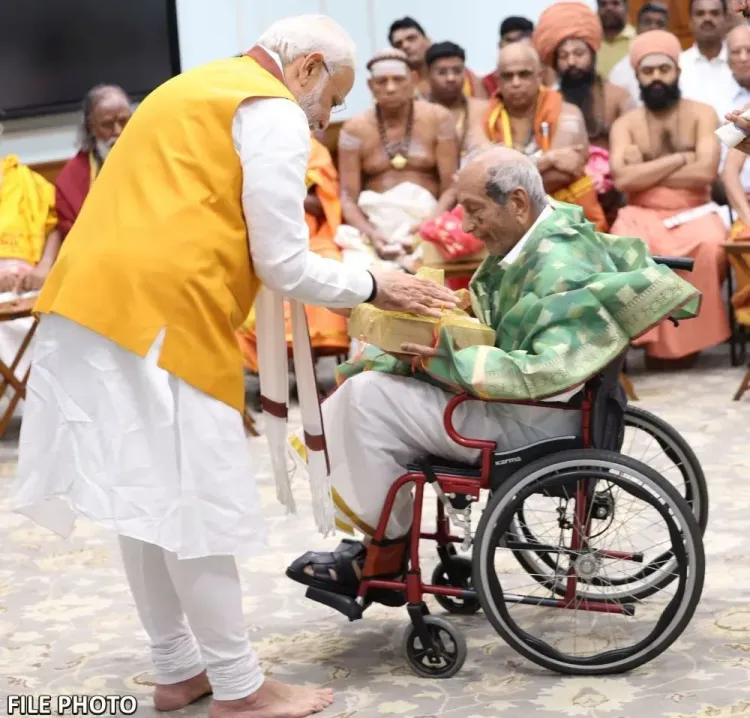
PM Modi mourns passing of Vummidi Ethiraj, craftsman of the Sengol
Synopsis
Prime Minister Narendra Modi paid tribute to Thiru Vummidi Ethiraj of Tamil Nadu, whose family crafted the historic Sengol sceptre presented to PM Nehru in 1947 and reinstalled in India's new Parliament in 2023.
Key Takeaways
Prime Minister Narendra Modi expressed deep sadness at the passing of Thiru Vummidi Ethiraj Ji .
Ethiraj belonged to a distinguished Tamil Nadu family credited with crafting the historic Sengol sceptre.
The Sengol was originally presented to Prime Minister Jawaharlal Nehru in 1947 as a symbol of the transfer of sovereignty at independence.
In 2023 , the Sengol was installed inside India's new Parliament building during its inauguration by PM Modi.
The tribute underscores the government's emphasis on pre-colonial Indian symbols of authority and cultural continuity.
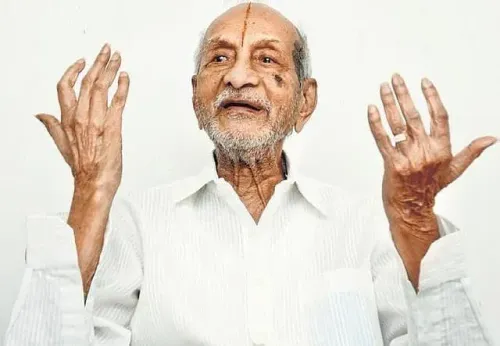
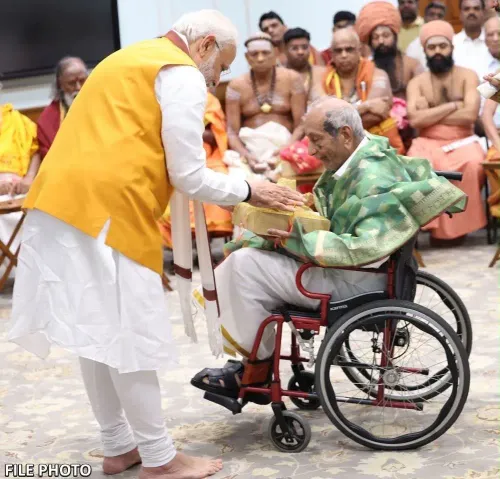
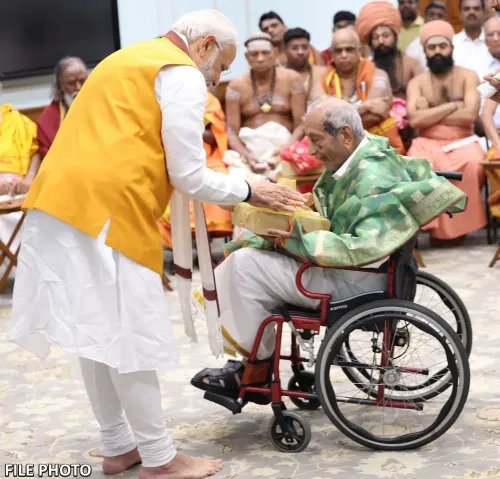
A thread connecting India's independence in 1947 to the inauguration of its new Parliament in 2023 has frayed with the passing of Thiru Vummidi Ethiraj, a member of the distinguished Vummidi family of Tamil Nadu whose craftsmanship helped forge one of the young nation's most consequential symbols. Prime Minister Narendra Modi expressed deep grief at the news, honouring a man whose legacy is literally embedded in the architecture of Indian democracy.
In his post, Prime Minister Modi wrote: 'Deeply saddened by the passing of Thiru Vummidi Ethiraj Ji. Hailing from a distinguished family based in Tamil Nadu, he will always be remembered for his efforts in crafting the historic Sengol that was presented to Former Prime Minister Nehru.'
The Sengol's journey from 1947 to the new Parliament
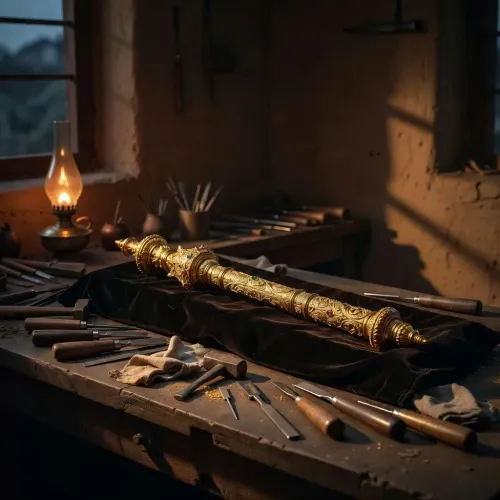
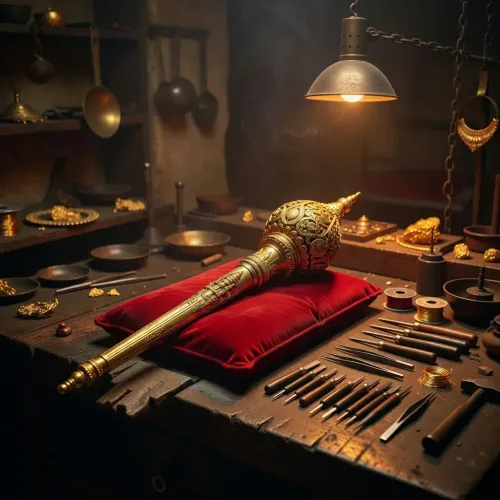
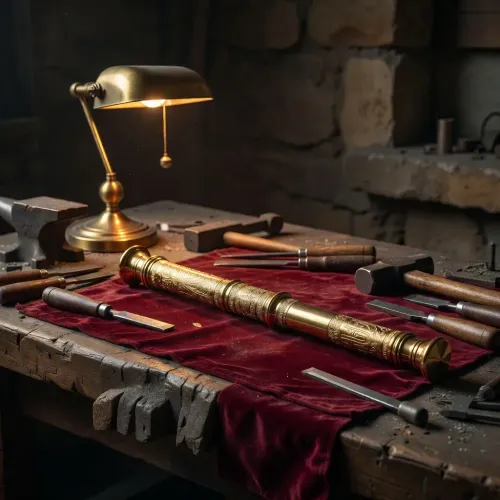
The Sengol — a gold sceptre rooted in the Tamil tradition of sovereign authority — was presented to Prime Minister Jawaharlal Nehru in 1947 as a ceremonial emblem marking the transfer of power at independence. The Vummidi family's role in crafting it placed them at the intersection of Tamil Nadu's celebrated goldsmithing heritage and a defining moment in modern Indian history. For decades the Sengol receded from public memory, stored away as a relic. That changed dramatically when Prime Minister Modi installed it inside the new Parliament building during its inauguration in 2023, recasting the sceptre as a pre-colonial emblem of Indian sovereignty — a pointed counterpoint to the colonial mace tradition. That act gave the Vummidi family's craftsmanship renewed national visibility and fresh cultural weight.A Tamil Nadu family at the heart of India's craft heritage
The Vummidi family represents a lineage of artisans for whom goldsmithing is not merely a trade but a custodianship of tradition. Tamil Nadu has long been home to some of India's most refined metalworking and jewellery craftsmanship, and the Sengol commission in 1947 placed the Vummidis in history books that would only later be opened for a wider readership. Thiru Vummidi Ethiraj carried that inheritance with him through his lifetime. Prime Minister Modi's tribute follows a pattern of official recognition for individuals connected to the symbols of Indian sovereignty and cultural continuity — a thread the government has drawn deliberately since the Sengol's reinstallation brought this chapter of history back into public conversation. Tamil Nadu's cultural bodies and artisan communities may now reflect on what formal preservation efforts should follow for this family's legacy.Point of View
The government reframed a colonial-era independence ceremony as an assertion of indigenous Indian sovereignty; honouring the craftsman who made it extends that narrative into civil memory. The move also signals continued outreach toward Tamil Nadu, a state where the party has historically struggled electorally but has intensified engagement through cultural symbolism and heritage recognition. Whether this translates into sustained heritage-preservation policy for Tamil artisan families remains the more substantive question.
NationPress
22 Oct 2026
Frequently Asked Questions
Who was Thiru Vummidi Ethiraj?
Thiru Vummidi Ethiraj was a member of the distinguished Vummidi family from Tamil Nadu, celebrated for their goldsmithing tradition and credited with crafting the historic Sengol sceptre that was presented to Prime Minister Jawaharlal Nehru in 1947.
What is the Sengol and why is it significant?
The Sengol is a gold sceptre rooted in Tamil traditions of sovereign authority. It was presented to PM Nehru in 1947 as a symbol of the transfer of power at Indian independence, and was reinstalled in India's new Parliament building in 2023 by Prime Minister Modi.
Why was the Sengol placed in the new Parliament in 2023?
Prime Minister Modi installed the Sengol in the new Parliament building during its inauguration in 2023, presenting it as a pre-colonial Indian emblem of sovereignty and cultural continuity rather than a colonial-era artefact.
What did PM Modi say about Vummidi Ethiraj's passing?
PM Modi said he was 'deeply saddened' by the passing of Thiru Vummidi Ethiraj Ji and stated that he would always be remembered for his family's role in crafting the historic Sengol presented to Prime Minister Nehru.
Which family crafted the original Sengol for independence in 1947?
The Vummidi family, a distinguished goldsmithing family from Tamil Nadu, is credited with crafting the Sengol that was presented to Prime Minister Jawaharlal Nehru at Indian independence in 1947.