PM Modi pays homage to Gandhi and Shastri on Gandhi Jayanti
Synopsis
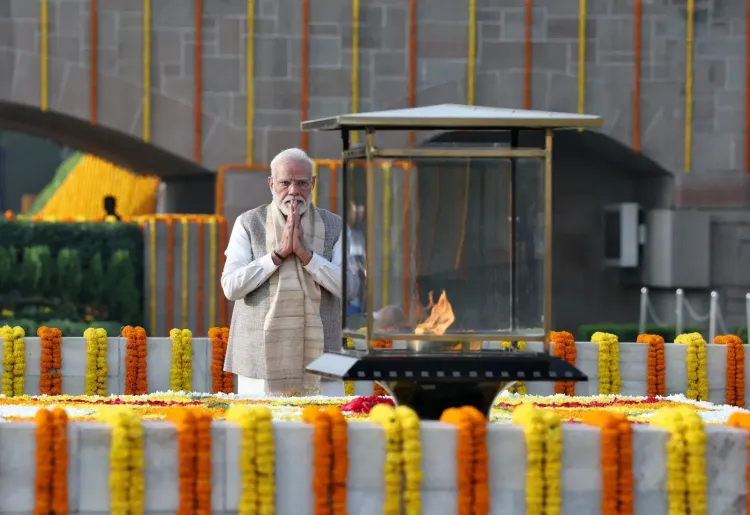
Prime Minister Narendra Modi paid tributes to Mahatma Gandhi at Rajghat and Lal Bahadur Shastri at Vijay Ghat on Gandhi Jayanti, 2 October 2026, honouring both leaders born on the same date and invoking their ideals of simplicity, courage, and service.
Key Takeaways
PM Narendra Modi visited Rajghat and Vijay Ghat on 2 October 2026 to pay official homage.
Mahatma Gandhi (born 2 October 1869 ) and Lal Bahadur Shastri (born 2 October 1904 ) share the same birth date, making it a dual national observance.
Modi cited 'simplicity, courage and service to the nation' as the qualities he honoured in both leaders.
Shastri served as India's second Prime Minister and is remembered for the slogan 'Jai Jawan Jai Kisan' and his leadership in the 1965 war .
The annual tributes at both memorials are a constitutional fixture of India's national calendar every 2 October .
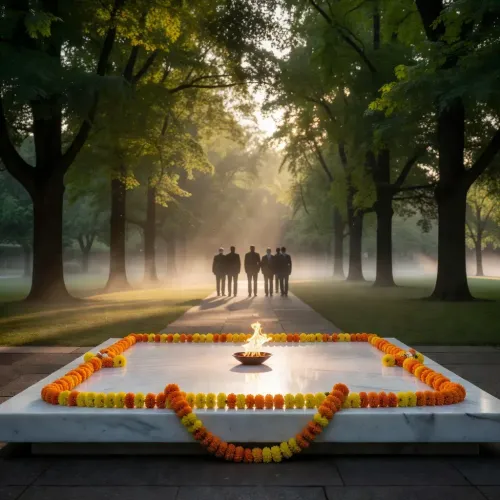
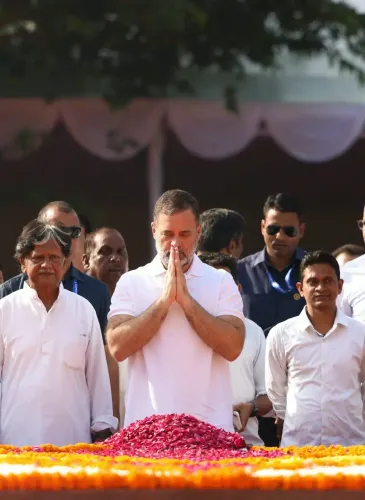
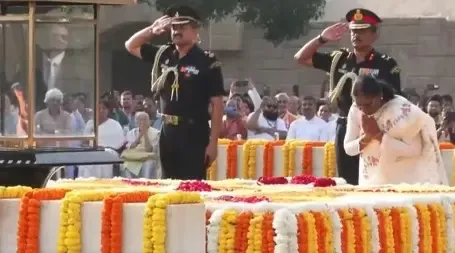
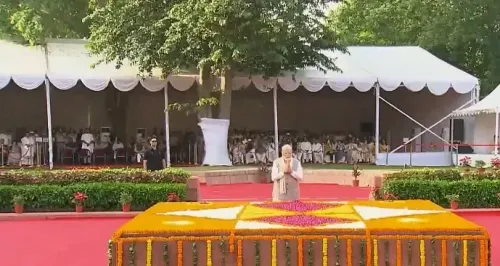
On the morning of Gandhi Jayanti, 2 October 2026, Prime Minister Narendra Modi walked to two of Delhi's most hallowed memorials — laying tributes first at Rajghat, the samadhi of Mahatma Gandhi, and then at Vijay Ghat, where former Prime Minister Lal Bahadur Shastri rests. Two leaders, one shared birth date, and a nation pausing to remember.
Two memorials, one morning
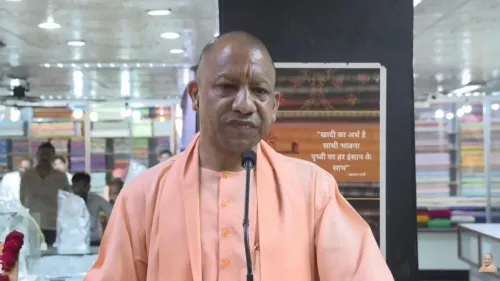
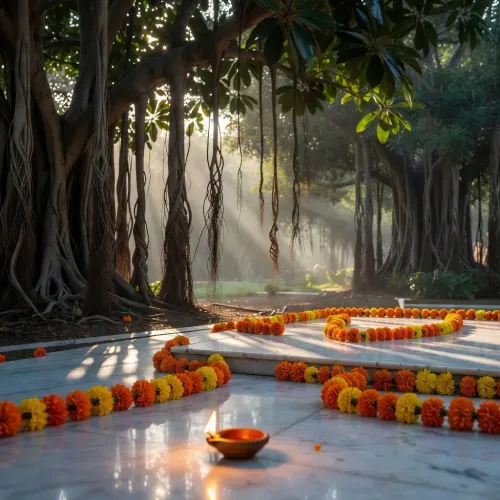
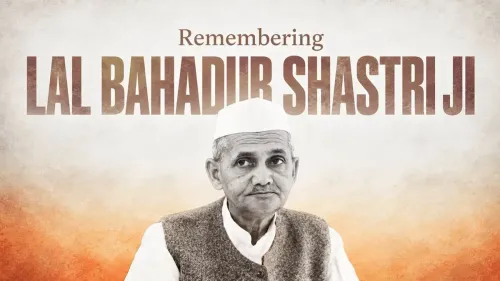
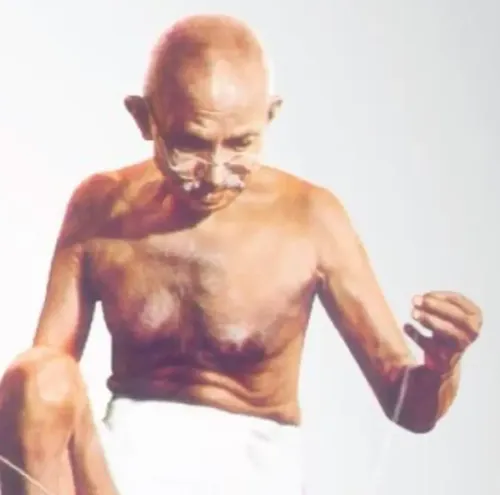
The Prime Minister posted four photographs from the visits, writing that the lives of both leaders — defined by 'simplicity, courage and service to the nation' — 'continue to inspire generations.' He added that their ideals and 'unwavering commitment to India's progress will always remain a guiding light for us.'
Rajghat, on the banks of the Yamuna in New Delhi, marks the site where Mahatma Gandhi was cremated on 31 January 1948, a day after his assassination. It is among the most visited memorials in the country, drawing heads of state and ordinary citizens alike. Vijay Ghat, a short distance away, is the memorial of Lal Bahadur Shastri, who was born on 2 October 1904 — the same day as Gandhi in 1869 — making this date a double observance in India's national calendar.
Gandhi and Shastri: lives that share a date, not a story
Mahatma Gandhi, born 2 October 1869 in Porbandar, Gujarat, led India's non-violent independence movement and remains the country's most globally recognised historical figure. His philosophy of ahimsa (non-violence) and satyagraha (truth-force) shaped the independence struggle and influenced civil-rights movements worldwide.
Lal Bahadur Shastri, born 2 October 1904 in Mughalsarai, Uttar Pradesh, served as India's second Prime Minister from 1964 to 1966. He is remembered for his personal austerity, his leadership during the 1965 Indo-Pakistan War, and the rallying slogan 'Jai Jawan Jai Kisan' — 'Hail the soldier, hail the farmer' — which became a defining call of his tenure. He died in Tashkent on 11 January 1966, just hours after signing the Tashkent Declaration.
A ritual with national weight
The annual tributes at Rajghat and Vijay Ghat are a fixture of India's official calendar, observed by sitting prime ministers, presidents, and senior ministers every 2 October. The day is also a national holiday and, since 2014, coincides with the launch anniversary of the Swachh Bharat Abhiyan, the government's flagship cleanliness drive, which drew direct inspiration from Gandhi's emphasis on sanitation and self-reliance.
Beyond the ritual, the act of publicly invoking both Gandhi and Shastri together underscores a recurring strand in Indian political culture: the pairing of moral authority with practical statecraft, of the idealist and the administrator, as twin pillars worth remembering in the same breath.
On a date that belongs equally to a global icon and a quietly consequential prime minister, the wreath laid at each memorial carries the same message — that simplicity and service, not just power, are how India chooses to measure its greatest leaders.
Point of View
The tribute quietly threads together legacy, governance branding, and national identity.
NationPress
2 Oct 2026
Frequently Asked Questions
Why is 2 October celebrated as Gandhi Jayanti in India?
2 October is celebrated as Gandhi Jayanti because it marks the birth anniversary of Mahatma Gandhi , born on 2 October 1869 in Porbandar, Gujarat. It is a national holiday in India and is also observed internationally as the International Day of Non-Violence .
Why is Lal Bahadur Shastri remembered on 2 October?
Lal Bahadur Shastri was born on 2 October 1904 , the same date as Mahatma Gandhi. India observes his birth anniversary alongside Gandhi Jayanti each year. Shastri served as the country's second Prime Minister and is celebrated for his slogan 'Jai Jawan Jai Kisan' and his austerity in public life.
Where is Mahatma Gandhi's memorial in Delhi?
Rajghat , located on the western bank of the Yamuna river in New Delhi , is the memorial that marks the cremation site of Mahatma Gandhi . It is a black marble platform maintained as a serene public memorial.
What is Vijay Ghat in New Delhi?
Vijay Ghat is the memorial of former Prime Minister Lal Bahadur Shastri , situated near Rajghat in New Delhi . The name means 'victory platform,' honouring his leadership during the 1965 Indo-Pakistan War .
What did PM Modi say while paying tribute on Gandhi Jayanti 2026?
PM Modi said that the lives of Gandhi and Shastri — marked by 'simplicity, courage and service to the nation' — 'continue to inspire generations,' and that their ideals and 'unwavering commitment to India's progress will always remain a guiding light' for the country.