PM Modi Pays Tribute to Bankim Chandra on Birth Anniversary

Synopsis
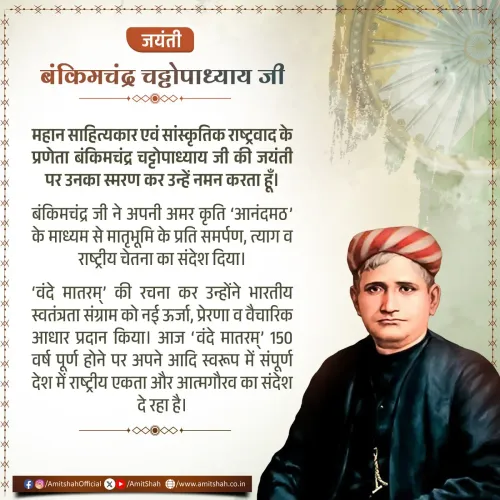
Prime Minister Narendra Modi on 26 June 2026 honoured Bankim Chandra Chattopadhyay on his birth anniversary, calling him a literary beacon who inspired patriotism across generations. Modi also noted India is marking the 150th anniversary of Vande Mataram, the national song born from Bankim's 1882 novel Anandamath.
Key Takeaways
PM Modi paid tribute to Bankim Chandra Chattopadhyay on his birth anniversary on 26 June 2026 .
Modi noted that India is observing the 150th anniversary of Vande Mataram in 2026.
Vande Mataram originated in Bankim Chandra's 1882 novel Anandamath and became a defining anthem of India's freedom movement.
The Constituent Assembly declared Vande Mataram India's national song in 1950 .
The post continues the government's pattern since 2014 of promoting annual commemorations of 19th-century nationalist literary figures.
The tribute was posted in Bengali , reflecting Bankim Chandra's linguistic and cultural heritage.
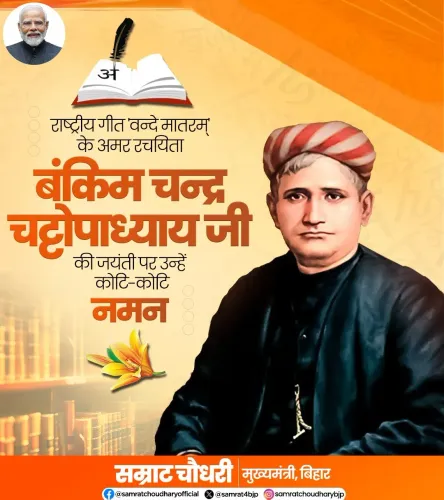
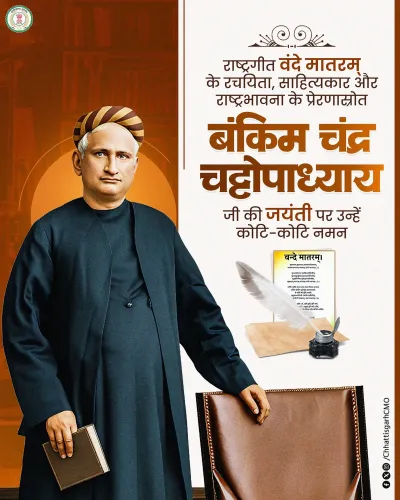
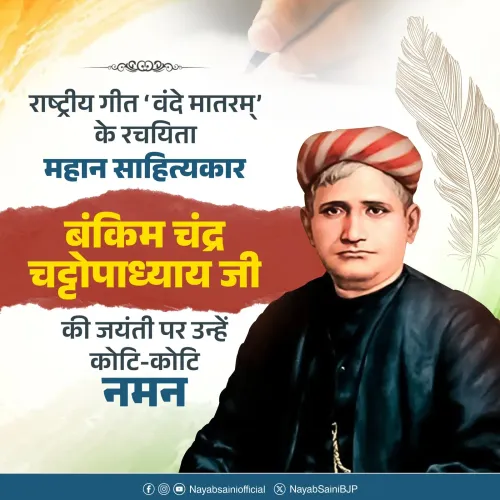
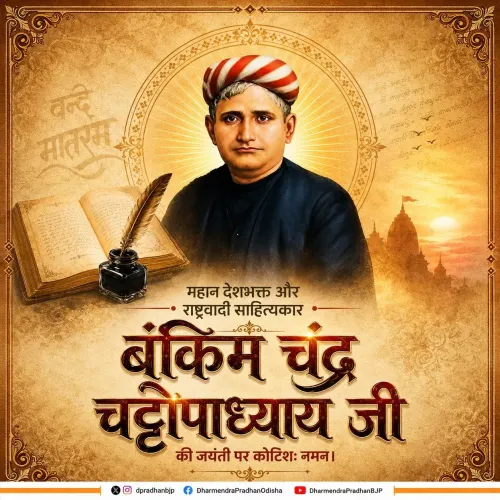
Prime Minister Narendra Modi on Friday, 26 June 2026 paid tribute to the celebrated Bengali writer and nationalist poet Bankim Chandra Chattopadhyay on his birth anniversary, honouring him as a towering literary beacon who kindled patriotism and cultural pride across generations of Indians.
Writing in Bengali, Modi offered homage — 'মহান বঙ্কিম চন্দ্র চট্টোপাধ্যায়ের জয়ন্তীতে তাঁর প্রতি শ্রদ্ধাঞ্জলি' ('Tributes to the great Bankim Chandra Chattopadhyay on his birth anniversary') — and noted that the author's literary works continue to illuminate minds and strengthen the nation's collective resolve toward nation-building. The Prime Minister also underscored that India is currently marking the 150th anniversary of Vande Mataram, calling it 'one of the most enduring inspirations gifted to the freedom movement and our nation.'
Context
Bankim Chandra Chattopadhyay (1838–1894) is widely regarded as a founding figure of modern Bengali literature and Indian nationalist thought. His novel Anandamath, published in 1882, contained the poem Vande Mataram, which became a rallying cry for anti-colonial resistance across India. The song's imagery of the motherland as a divine figure fused spiritual devotion with political assertion in a way that resonated deeply during the independence struggle.
Policy Backdrop
In 1950, the Constituent Assembly of India formally declared Vande Mataram the national song of the country, placing it alongside the national anthem Jana Gana Mana. Since 2014, the central government has actively promoted annual commemorations of Bankim Chandra's birth anniversary through cultural programmes and school-level initiatives, situating his legacy within a broader narrative of India's civilisational self-assertion. The 150th anniversary milestone of Vande Mataram has drawn renewed attention to the song's historical and cultural significance.
Stakeholders and Impact
The tribute carries resonance for cultural organisations, literary bodies, and educational institutions across West Bengal and the rest of India that observe Bankim Chandra's birth anniversary with recitations, seminars, and public events. Such commemorations organised by the Ministry of Culture and state education departments typically see participation from schools and universities. For the Bengali-speaking community in particular, Bankim Chandra remains a figure of immense literary and national pride.
What's Next
With the 150th year of Vande Mataram being marked in 2026, official programmes — including possible Ministry of Culture events, mass school recitations, and parliamentary references — are expected in the months ahead. The Prime Minister's post signals the government's intent to keep the anniversary at the forefront of national cultural discourse. Such milestones have in the past been accompanied by commemorative publications, heritage walks, and state-sponsored cultural festivals celebrating 19th-century literary figures who shaped India's national identity.
Point of View
A state the BJP has long sought to consolidate. By foregrounding the 150th anniversary of Vande Mataram, the government frames the national song as a living civilisational inheritance rather than a historical artefact, reinforcing its broader cultural-nationalist agenda. The choice to post in Bengali — not Hindi or English — signals an effort to speak directly to a regional audience on its own terms. Such tributes consistently serve a dual function: honouring a literary giant while anchoring the ruling party's identity in the cultural nationalism that figures like Bankim Chandra helped define.
NationPress
26 Jun 2026
Frequently Asked Questions
Who was Bankim Chandra Chattopadhyay?
Bankim Chandra Chattopadhyay (1838–1894) was a pioneering Bengali novelist and poet, best known for composing Vande Mataram and writing the novel Anandamath (1882), which became cornerstones of India's nationalist literary tradition.
Why is Vande Mataram celebrated in 2026?
2026 marks the 150th anniversary of Vande Mataram , the poem composed by Bankim Chandra Chattopadhyay that later became India's national song. PM Modi highlighted this milestone in his tribute on 26 June 2026.
What is Vande Mataram and what is its significance?
Vande Mataram is India's national song, originally a poem in Bankim Chandra's 1882 novel Anandamath . It became a powerful anthem during the freedom struggle and was formally designated the national song by the Constituent Assembly in 1950.
Why did PM Modi post in Bengali?
PM Modi posted his tribute in Bengali to honour Bankim Chandra Chattopadhyay's linguistic and cultural heritage. Posting in Bengali also reflects the government's cultural outreach to Bengali-speaking communities across India.
What events mark Bankim Chandra Chattopadhyay's birth anniversary in India?
Bankim Chandra's birth anniversary is observed through cultural programmes, school recitations of Vande Mataram , literary seminars, and events organised by the Ministry of Culture and state education departments, a practice the central government has actively promoted since 2014.