PM Modi Honors the Legacy of Srimad Sudhindra Tirtha Swamiji: A Life of Service and Spirituality
Synopsis
Prime Minister Narendra Modi pays tribute to Srimad Sudhindra Tirtha Swamiji, a revered spiritual leader known for his unwavering commitment to service and education. This piece reflects on his profound impact and enduring legacy in preserving India's cultural values.
Key Takeaways
Srimad Sudhindra Tirtha Swamiji dedicated his life to spirituality and service.
He played a crucial role in promoting education and cultural heritage in India.
His legacy includes the establishment of numerous institutions and temples.
He was the longest-serving head of the Kashi Math .
His teachings emphasize simplicity and kindness .
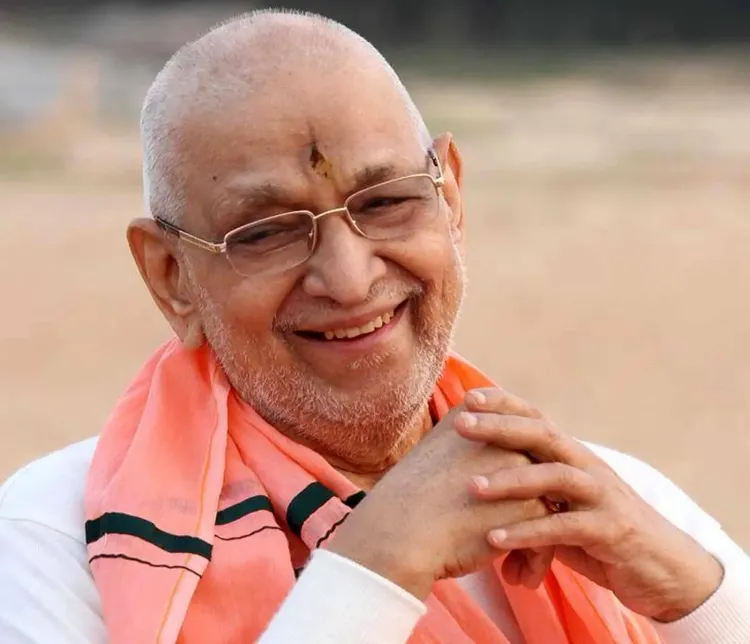
New Delhi, March 31 (NationPress) Prime Minister Narendra Modi honored the memory of Srimad Sudhindra Tirtha Swamiji, the esteemed leader of the Shri Kashi Math Samsthan in Varanasi, who dedicated his existence to spirituality and service.
Utilizing the social media platform X, the Prime Minister expressed, “On this significant day marking his birth centenary, I pay my respects to Srimad Sudhindra Tirtha Swamiji of the Shri Kashi Math Samsthan in Varanasi. His life was a testament to dedication towards service and spirituality.”
Focusing on the Swamiji’s remarkable achievements, PM Modi noted, “He established numerous institutions and research facilities and ardently promoted education among the masses. His teachings reflect the values of simplicity, kindness, and righteousness. His commitment to preserving and promoting India’s cultural heritage is equally commendable.”
Srimad Sudhindra Tirtha Swamiji (March 31, 1926 - January 17, 2016), also referred to as Shri Sudhindra Tirtha Swamiji, served as the legal and spiritual leader (Mathadipathi) of the Kashi Math and was the 20th successive seer in its revered lineage.
He departed in the early hours of a Sunday in Haridwar at the age of 90. Renowned for his spiritual leadership, he assumed the role of the 20th head of the Kashi Math in 1949 and became its longest-serving pontiff.
Born in Ernakulam, Kerala, to Ramadasa Shenoy and Droupathi on March 31, 1926, he was initially named Sadhasiva Shenoy. His father held a position as a trustee of the Shri Venkataramana Temple in Ernakulam. He studied science, focusing on physics and chemistry, at Maharaja’s College, Ernakulam.
In 1944, during his university years, he was initiated into sanyas by his guru, Sukrateendra Tirtha Swamiji, and was later appointed as his successor. After his initiation, he renounced worldly affairs and embarked on his spiritual quest.
Throughout his life, he significantly contributed to the installation of idols and the development of numerous temples across the nation, including those in Kasaragod, Gurupura, Mangaluru, Mumbai, Uppinangadi, and Moodbidri, leaving a profound spiritual and cultural legacy.
Point of View
PM Modi's tribute to Srimad Sudhindra Tirtha Swamiji underscores the importance of spiritual leaders in shaping societal values. His lifelong commitment to service and education reflects a broader narrative of cultural preservation in India, reminding us of the vital role such figures play in maintaining our heritage.
NationPress
24 Sept 2026
Frequently Asked Questions
Who was Srimad Sudhindra Tirtha Swamiji?
Srimad Sudhindra Tirtha Swamiji was the legal and spiritual leader of the Kashi Math and the 20th seer in its lineage, known for his dedication to spirituality and service.
What contributions did he make?
He established numerous educational institutions, temples, and research centers, promoting the values of simplicity, kindness, and the preservation of Indian culture.
When did he pass away?
He passed away on January 17, 2016, at the age of 90, in Haridwar.
What is the significance of his birth centenary?
The birth centenary marks 100 years since his birth, celebrating his contributions to spirituality and education.