PM Modi Virtually Launches Drug-Free Youth Drive in Gandhinagar
Synopsis
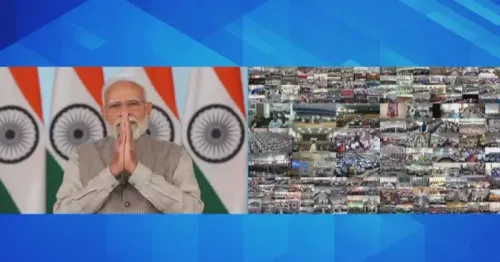
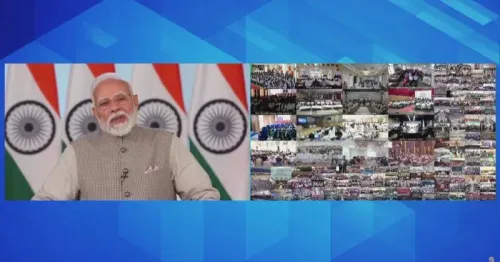
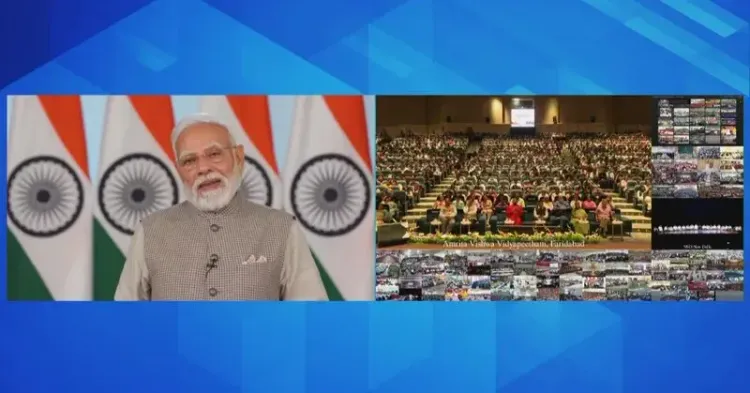
Prime Minister Narendra Modi virtually launched the 'Nashamukt Yuva for Viksit Bharat Sankalp Abhiyan' in Gandhinagar on 2 August 2026, extending India's anti-drug campaign framework to link youth sobriety with the country's Viksit Bharat 2047 development vision.
Key Takeaways
PM Narendra Modi virtually launched the 'Nashamukt Yuva for Viksit Bharat Sankalp Abhiyan' on 2 August 2026 .
The launch event was held in Gandhinagar , the capital of Gujarat .
The campaign links drug-free youth with India's Viksit Bharat 2047 development framework.
It builds on the Nasha Mukt Bharat Abhiyan launched in 2020 by the Ministry of Social Justice and Empowerment.
Key stakeholders include youth groups and state government machinery responsible for ground-level rollout.
The Chief Minister's Office of Gujarat announced the event, reflecting the state's active role as a partner in national welfare drives.
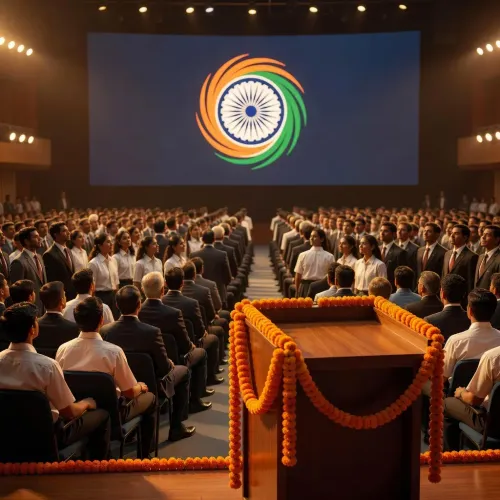
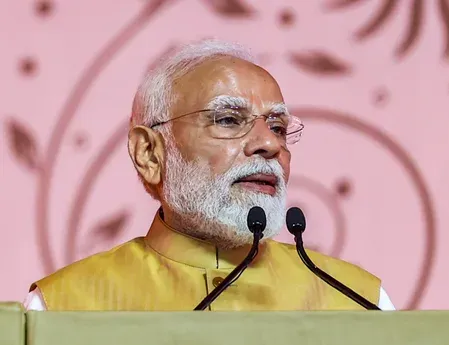
A national pledge against narcotics took shape in Gandhinagar on Sunday, 2 August 2026, as Prime Minister Narendra Modi virtually launched the 'Nashamukt Yuva for Viksit Bharat Sankalp Abhiyan' — a campaign that ties youth sobriety directly to India's development ambitions. The Chief Minister's Office of Gujarat announced the live event, signalling Gujarat's role as the host state for the programme's inaugural ceremony.
A Campaign Built on a Six-Year Foundation
The new abhiyan does not arrive in a vacuum. It builds on the Nasha Mukt Bharat Abhiyan, launched in 2020 by the Ministry of Social Justice and Empowerment, which targeted drug abuse among young Indians across vulnerable districts. That earlier drive established state-level coordination mechanisms and awareness infrastructure that today's campaign can now scale.
The name itself is deliberate architecture: 'Nashamukt Yuva' (drug-free youth) is fused with 'Viksit Bharat' — the government's overarching 2047 vision of a developed India. The message is explicit: a nation cannot develop if its youth are lost to addiction.
Gujarat as the Launch Pad
Gandhinagar, Gujarat's capital, has repeatedly served as the stage for nationally significant social and economic initiatives under the current administration. Hosting the virtual launch here underscores the state government's active partnership with the Centre on welfare programmes. Prime Minister Modi's virtual address format also allows the campaign's message to radiate simultaneously to districts far beyond the capital.
Youth groups and state government machinery are the immediate stakeholders tasked with translating the sankalp — the pledge — into ground-level awareness drives, counselling outreach, and community mobilisation.
Where the Abhiyan Goes From Here
The real test will be the state-level rollout: whether district administrations activate awareness camps, whether schools and colleges integrate the campaign's messaging, and whether Parliament sees follow-on funding or legislative updates tied to anti-narcotics enforcement. A launch is a signal; the scale of implementation will determine whether it moves the needle on India's drug abuse statistics.
India's youngest demographic is also its largest. Channelling that energy toward a 'Viksit Bharat' rather than losing it to substance abuse is not just a welfare goal — it is a productivity argument at national scale. The abhiyan has made the stakes plain. Now comes the harder work.
Point of View
The Centre reframes drug abuse not merely as a social ill but as a direct obstacle to national economic potential. Gujarat's role as the launch host reinforces the state's positioning as a model partner in Centre-driven welfare initiatives. The campaign also arrives as a programmatic successor to the 2020 Nasha Mukt Bharat Abhiyan, suggesting an intent to institutionalise anti-drug outreach rather than treat it as a one-off drive. Whether the sankalp translates into measurable outcomes will depend on the depth of district-level implementation and any accompanying budgetary commitment.
NationPress
2 Aug 2026
Frequently Asked Questions
What is the Nashamukt Yuva for Viksit Bharat Sankalp Abhiyan?
It is a national campaign launched by Prime Minister Narendra Modi on 2 August 2026 aimed at making India's youth drug-free, framing sobriety as essential to the country's Viksit Bharat 2047 development goals.
Where was the Nashamukt Yuva Abhiyan launched?
The launch event was held in Gandhinagar, the capital of Gujarat, with Prime Minister Modi participating virtually.
How is this campaign different from the Nasha Mukt Bharat Abhiyan?
The Nasha Mukt Bharat Abhiyan was launched in 2020 by the Ministry of Social Justice and Empowerment. The new Nashamukt Yuva Abhiyan builds on that foundation and explicitly connects drug-free youth to the Viksit Bharat 2047 national development vision.
Who are the main beneficiaries of the Nashamukt Yuva Abhiyan?
Young people across India are the primary target group, with state governments and district administrations responsible for implementing awareness drives and outreach programmes.
Why did Gujarat host the launch of the Nashamukt Yuva Abhiyan?
Gandhinagar, Gujarat has frequently served as the venue for nationally significant social initiatives under the current administration, and the state government has been an active partner in Centre-led welfare programmes.