PM Modi Visits MCG with PM Albanese, Backs India-Australia Sports Ties
Synopsis
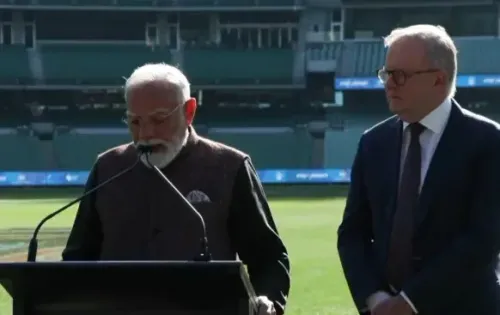
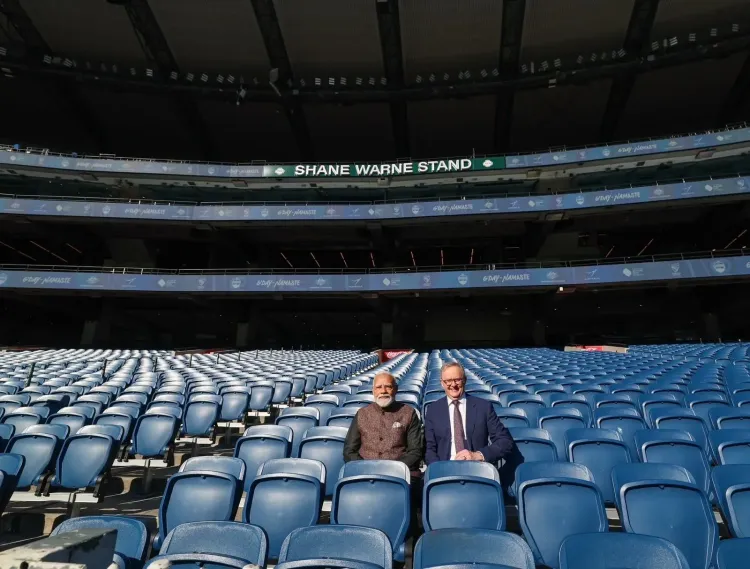
Prime Minister Narendra Modi visited the Melbourne Cricket Ground alongside Australian PM Anthony Albanese on 10 July 2026, calling sport a key pillar of the India-Australia partnership and backing expanded youth exchanges and sporting collaboration between the two nations.
Key Takeaways
PM Modi and Australian PM Anthony Albanese jointly visited the Melbourne Cricket Ground (MCG) on 10 July 2026 .
Modi described sport as 'a key pillar of the India-Australia partnership' in a post on X.
India and Australia have held a Comprehensive Strategic Partnership since 2020 , which formally includes sport and youth exchanges.
The Border-Gavaskar Trophy has operated as a sporting diplomacy tool continuously since 1996 .
Both leaders called for more sporting exchanges and youth engagement to deepen bilateral friendship.
The visit sets the stage for possible formal announcements ahead of the 2027 ODI Cricket World Cup co-hosted by India.
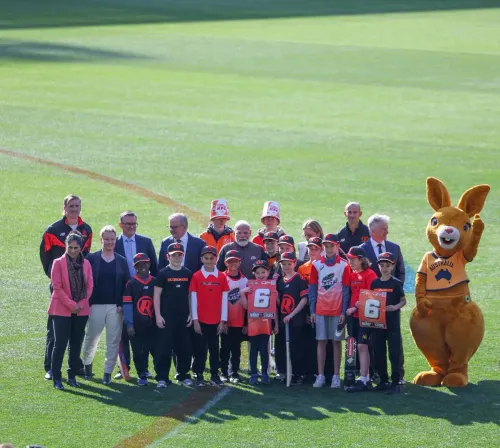
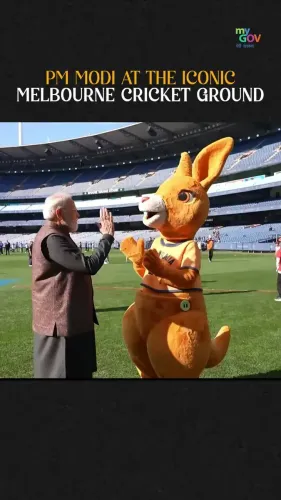
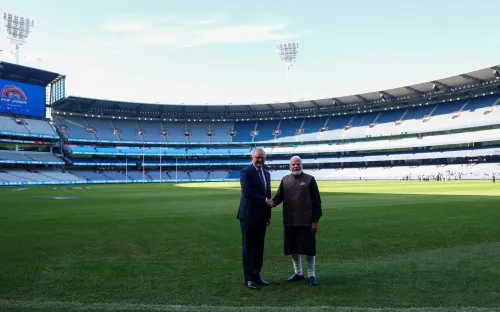
Prime Minister Narendra Modi visited the iconic Melbourne Cricket Ground (MCG) alongside Australian Prime Minister Anthony Albanese on Friday, 10 July 2026, using the landmark venue to underscore sport as a cornerstone of the bilateral relationship between India and Australia.
Posting on X, PM Modi said: 'Sport is a key pillar of the India-Australia partnership, bringing our people closer through shared passion and mutual respect.' He added that 'more sporting exchanges, youth engagement and collaboration can further strengthen the India-Australia friendship.'
Context
The MCG visit came during Modi's bilateral engagement in Melbourne, one of Australia's largest cities and home to a substantial Indian diaspora. The Melbourne Cricket Ground, which has hosted numerous India-Australia Test matches, carries deep symbolic weight for cricket fans across both nations. By choosing the MCG as a backdrop, both leaders signalled the centrality of people-to-people connections in the partnership.
The joint appearance reflects a long-standing diplomatic tradition: Indian and Australian leaders have repeatedly invoked cricket as a living bridge between the two countries. Modi's 2014 visit to Australia similarly produced a joint statement highlighting cricket as a vehicle for bilateral goodwill.
Policy Backdrop
India and Australia elevated their relationship to a Comprehensive Strategic Partnership in 2020, a framework that explicitly includes sport, youth exchanges, and education alongside defence and trade cooperation. The two countries are also partners within the Quad — alongside the United States and Japan — giving the bilateral a strong strategic foundation on which cultural ties are layered.
Cricket has served as a formal diplomatic instrument for decades. The Border-Gavaskar Trophy, contested continuously since 1996, and regular junior cricket tours have kept the sporting channel active even during periods of diplomatic friction. Sports diplomacy of this kind carries low political risk while generating high public visibility, making it an efficient tool for leaders on both sides.
Stakeholders and Impact
The immediate beneficiaries of stronger sporting ties are youth athletes in both countries, along with the large Indian-Australian diaspora — estimated in the hundreds of thousands — for whom cricket is a shared cultural touchstone. Tourism and educational exchanges between the two nations are also likely to benefit from the warm optics of the MCG visit.
Cricket boards, sports academies, and youth development programmes on both sides stand to gain if the goodwill translates into formal agreements. The visit also reinforces Australia's position as a preferred destination for Indian students and skilled migrants, a demographic reality that gives both governments strong incentive to maintain close ties.
What's Next
Observers will watch for follow-up announcements on expanded youth sports scholarships or joint training programmes, particularly with the 2027 ODI Cricket World Cup — co-hosted by India — on the horizon. Any formal sports cooperation memorandum emerging from the Melbourne engagement would mark a concrete step beyond symbolic visits.
The broader bilateral agenda is expected to continue advancing across defence, critical minerals, and trade, with the MCG moment serving as a people-centred complement to those harder-edged negotiations.
Point of View
Visible face of a strategic partnership that runs far deeper — encompassing Quad security cooperation, critical minerals supply chains, and a large Indian diaspora. By standing together at one of cricket's most recognisable venues, Modi and Albanese send a message to domestic audiences in both countries that the relationship is warm and personal, not merely transactional. For Modi, it reinforces his foreign policy emphasis on people-to-people links as a durable pillar of Indian diplomacy. The timing — with the 2027 ODI World Cup approaching — also creates a natural policy hook for converting symbolic goodwill into concrete youth and sporting programmes.
NationPress
10 Jul 2026
Frequently Asked Questions
Why did PM Modi visit the Melbourne Cricket Ground?
PM Modi visited the Melbourne Cricket Ground on 10 July 2026 during his bilateral engagement in Australia to highlight sport as a key pillar of the India-Australia partnership, alongside Australian PM Anthony Albanese.
What is the India-Australia Comprehensive Strategic Partnership?
The Comprehensive Strategic Partnership, established in 2020, is the highest tier of the India-Australia bilateral relationship, covering defence, trade, education, and explicitly including sport and youth exchanges.
What is the Border-Gavaskar Trophy and why does it matter diplomatically?
The Border-Gavaskar Trophy is a Test cricket series between India and Australia that has been played continuously since 1996. It functions as a formal people-to-people diplomatic channel and is one of the most-watched cricket events globally.
What sporting exchanges exist between India and Australia?
Beyond the Border-Gavaskar Trophy, India and Australia conduct regular junior cricket tours and youth sports programmes under the framework of their Comprehensive Strategic Partnership.
What could follow from the Modi-Albanese MCG visit?
Possible outcomes include formal agreements on youth sports scholarships, joint training programmes, and expanded sporting collaboration, particularly with the 2027 ODI Cricket World Cup co-hosted by India on the horizon.