PM Modi Pledges to Deepen India-Singapore Strategic Partnership
Synopsis
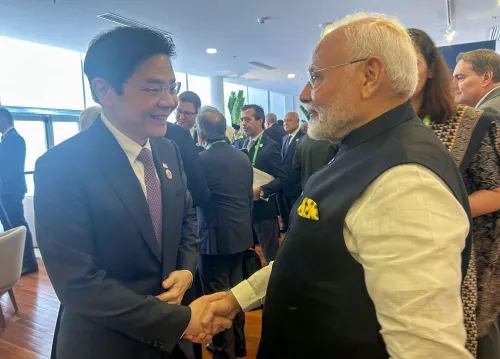
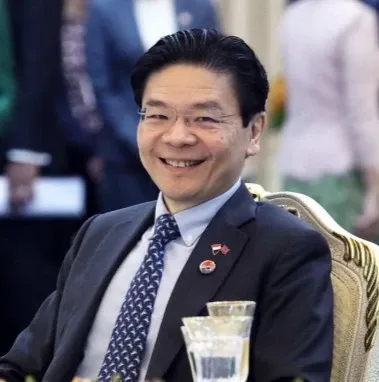
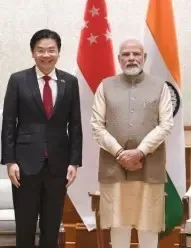
Prime Minister Narendra Modi responded to Singapore PM Lawrence Wong's wishes on June 11, 2026, reaffirming his commitment to deepening the India-Singapore Comprehensive Strategic Partnership. The exchange signals strong continuity in bilateral ties under Singapore's new leadership, anchored in the Act East Policy and a 2015 strategic framework.
Key Takeaways
PM Modi publicly acknowledged warm wishes from Singapore PM Lawrence Wong on June 11, 2026 .
Modi pledged to deepen the Comprehensive Strategic Partnership established between India and Singapore in 2015 .
Lawrence Wong became Singapore's Prime Minister in May 2024 , succeeding Lee Hsien Loong .
India and Singapore's economic ties are anchored in the CECA signed in 2005 , covering goods, services, and investment.
The engagement is part of India's Act East Policy , which prioritises deeper integration with ASEAN nations.
Singapore remains one of India's top trade and investment partners, with cooperation spanning fintech, defence, and diaspora links.
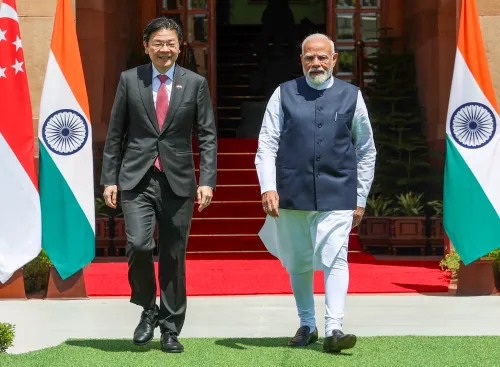
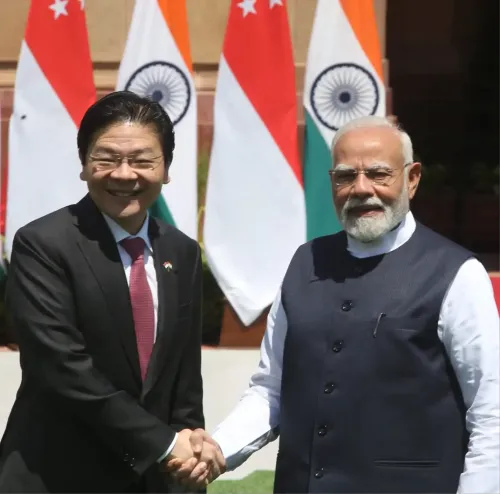
Prime Minister Narendra Modi on Thursday, June 11, 2026, responded to warm wishes from Singapore Prime Minister Lawrence Wong, reaffirming India's commitment to strengthening the bilateral Comprehensive Strategic Partnership and taking ties between the two nations to 'new heights.'
Context
In his post on X, PM Modi addressed Lawrence Wong directly, writing: 'Thank you Prime Minister Lawrence Wong for your warm wishes. I look forward to working closely with you to further deepen our Comprehensive Strategic Partnership and take India-Singapore ties to new heights.' The exchange signals an early and cordial engagement between the two leaders, reinforcing the personal diplomacy that has long underpinned the bilateral relationship.
Lawrence Wong assumed office as Singapore's Prime Minister in May 2024, succeeding the long-serving Lee Hsien Loong. Wong previously held senior portfolios including finance and education, and his leadership marks a generational transition in Singapore's political establishment.
Policy Backdrop
India and Singapore elevated their bilateral relationship to a Comprehensive Strategic Partnership in 2015, during PM Modi's visit to Singapore. The framework spans defence cooperation, trade, technology, and people-to-people exchanges, building on the foundational Comprehensive Economic Cooperation Agreement (CECA) signed in 2005, which liberalised trade in goods, services, and investment between the two countries.
The engagement sits within India's broader Act East Policy, launched in 2014 to intensify strategic and economic integration with ASEAN nations. Singapore, as a leading ASEAN financial hub and one of India's top trade and investment partners, occupies a central role in this outreach. Areas of active cooperation include fintech, joint defence exercises, and robust diaspora linkages.
Stakeholders and Impact
Business communities on both sides stand to benefit from any deepening of the partnership, particularly in sectors such as financial services, digital infrastructure, and manufacturing. The Indian diaspora in Singapore — one of the largest foreign communities in the city-state — also has a direct stake in the warmth of bilateral ties.
Defence establishments of both nations have conducted regular joint exercises and information-sharing initiatives under the existing framework. A stronger personal rapport between the two Prime Ministers could accelerate the pace of these engagements and open space for new agreements.
What's Next
Analysts will watch for high-level visits, potential updates to the CECA, and the outcomes of defence or economic dialogues that may be scheduled following Singapore's leadership transition. PM Modi's explicit reference to the Comprehensive Strategic Partnership suggests the bilateral agenda will remain substantive rather than merely ceremonial. As India deepens its Indo-Pacific footprint, Singapore's role as a regional gateway and trusted interlocutor is likely to grow in strategic importance.
Point of View
Singapore's value as a financial gateway and ASEAN anchor makes this relationship one of New Delhi's more strategically loaded bilateral investments.
NationPress
26 Oct 2026
Frequently Asked Questions
What is the India-Singapore Comprehensive Strategic Partnership?
The Comprehensive Strategic Partnership is a bilateral framework established in 2015 during PM Modi's visit to Singapore. It covers defence cooperation, trade, technology, and people-to-people exchanges, building on the CECA signed in 2005.
Who is Lawrence Wong and why does it matter for India?
Lawrence Wong became Singapore's Prime Minister in May 2024, succeeding Lee Hsien Loong. His leadership marks a generational transition, and his early outreach to PM Modi signals continuity in the strong India-Singapore relationship.
What is India's Act East Policy and how does Singapore fit in?
India's Act East Policy, launched in 2014, replaced the earlier Look East Policy to intensify strategic and economic ties with ASEAN nations. Singapore, as a leading ASEAN financial hub, is a central pillar of this outreach.
What is the India-Singapore CECA?
The Comprehensive Economic Cooperation Agreement (CECA), signed in 2005, liberalised trade in goods, services, and investment between India and Singapore. It remains the foundational economic treaty underpinning the bilateral relationship.
What could deepen India-Singapore ties in 2026?
Potential developments include high-level visits, a possible review or upgrade of the CECA, and new defence or technology agreements. PM Modi's explicit reference to the Comprehensive Strategic Partnership suggests substantive bilateral engagement is planned.