PM Modi Watches Wayang Kulit Ramayana in Indonesia
Synopsis
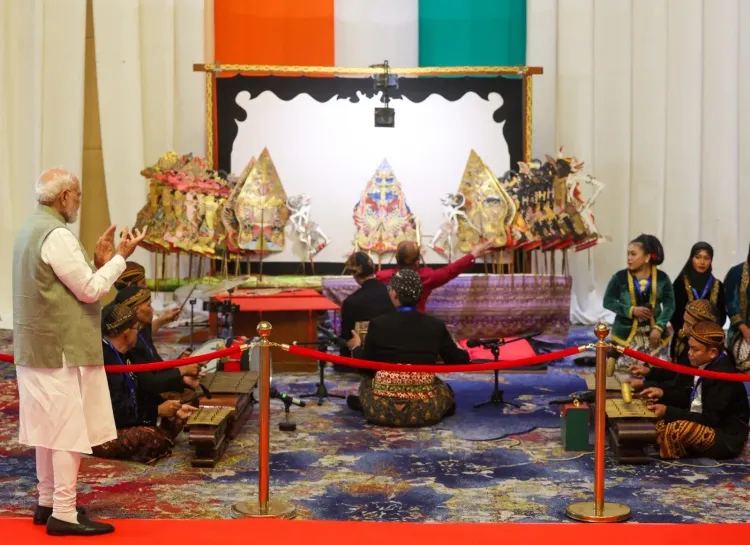
Prime Minister Narendra Modi witnessed a Wayang Kulit shadow-puppet performance of the Ramayana by Indonesia's Ganesh ensemble on 6 July 2026, describing it as proof of a shared civilisational heritage that has crossed seas and generations while retaining its eternal values.
Key Takeaways
PM Narendra Modi watched a Wayang Kulit performance of the Ramayana in Indonesia on 6 July 2026 .
The performance was presented by the Ganesh ensemble, which Modi publicly complimented by name.
Wayang Kulit is a UNESCO-recognised Indonesian shadow-puppet tradition using leather puppets and gamelan music to enact Indian epics.
The engagement aligns with India's Act East Policy , which prioritises cultural diplomacy with ASEAN nations.
India and Indonesia committed in their 2018 Joint Statement to jointly promote shared Ramayana traditions.
The moment reinforces India's positioning as a civilisational partner in Southeast Asia alongside its strategic and economic interests.
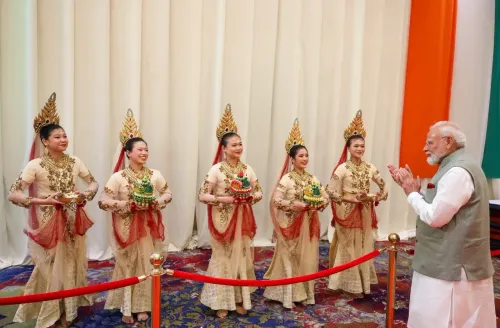
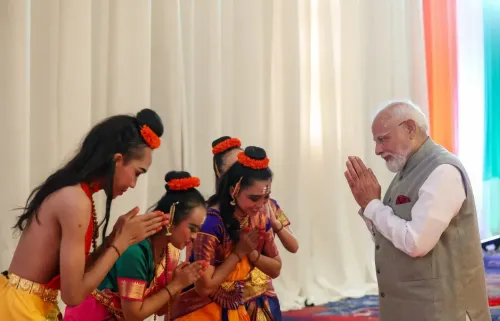
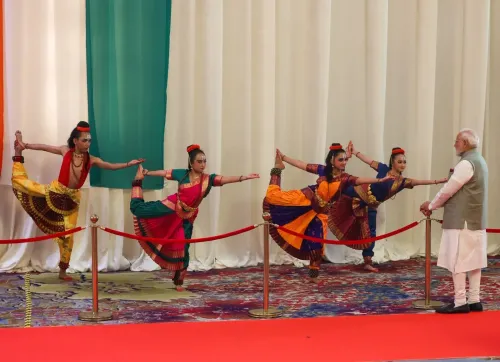
Prime Minister Narendra Modi on Monday, 6 July 2026, witnessed a performance of Wayang Kulit — Indonesia's centuries-old shadow puppetry tradition — featuring the timeless narrative of the Ramayana, calling it a moving reminder of shared civilisational heritage between India and Indonesia.
Posting on X, PM Modi said the performance was 'a moving reminder of how our shared civilisational heritage has travelled across seas and generations, taking on beautiful local expressions while preserving its eternal values.' He specifically complimented the performing ensemble known as Ganesh for bringing the story to life.
Context
Wayang Kulit is a classical Indonesian art form in which intricately crafted leather puppets are used to enact stories from Indian epics — primarily the Ramayana and the Mahabharata — accompanied by gamelan (traditional Javanese orchestra) music. The tradition has been practised across Java and Bali for over a millennium and was inscribed on UNESCO's list of Intangible Cultural Heritage in 2008.
The Ramayana, originating in ancient India, spread across Southeast Asia through maritime trade routes and cultural exchange, taking on distinct regional forms in each country while retaining its core ethical and philosophical themes. Indonesia's version, known as the Kakawin Ramayana, dates to the ninth century.
Policy Backdrop
India's Act East Policy, upgraded from the earlier Look East framework in 2014, places cultural diplomacy and people-to-people ties at the centre of India's engagement with ASEAN nations. PM Modi has consistently used visits to ASEAN capitals to spotlight living cultural continuities rooted in ancient maritime links, positioning India as a civilisational partner rather than a purely economic one.
During the 2018 India-Indonesia Joint Statement, both governments committed to preserving and promoting shared Ramayana traditions through joint festivals and cultural exchanges. Wednesday's engagement with the Ganesh ensemble reflects that continuing diplomatic thread, complementing India's broader soft-power outreach through yoga promotion, Buddhist heritage circuits, and diaspora networks across the region.
Stakeholders and Impact
For Indonesian artists and cultural practitioners, high-level recognition from a visiting head of government carries significant symbolic weight, elevating the profile of traditional performing arts both domestically and internationally. The Ganesh ensemble's mention by name in PM Modi's post is likely to draw wider attention to Wayang Kulit as a living bridge between the two civilisations.
For India's cultural diplomacy apparatus, the moment reinforces a narrative that the country's ancient epics are not merely historical artefacts but living traditions that continue to shape cultures across Asia. This framing supports India's soft-power goals at a time when it seeks to deepen strategic and economic ties with Indonesia, the world's largest archipelago nation and a key ASEAN partner.
What's Next
Observers will watch for announcements at the next India-Indonesia bilateral summit or an ASEAN-India cultural ministerial meeting, where heritage collaborations — including joint Ramayana festivals or artist-exchange programmes — could be formalised. PM Modi's public appreciation of the performance may also prompt renewed discussions around a dedicated India-Indonesia cultural endowment to sustain such traditions. The broader pattern suggests that cultural engagement will remain a pillar of India's Southeast Asia strategy well into the coming years.
Point of View
Consistent with his government's decade-long effort to frame India's ASEAN outreach in civilisational rather than transactional terms. By personally naming the Ganesh ensemble, Modi amplifies the diplomatic signal beyond a routine courtesy, lending the moment a visibility that outlasts the visit itself. This fits a broader pattern in which India uses shared epic traditions — the Ramayana trail across Southeast Asia, Buddhist heritage circuits — as a soft-power scaffold for harder strategic objectives. The move also implicitly positions India as a custodian of a living cultural commons that predates and transcends modern geopolitics.
NationPress
6 Jul 2026
Frequently Asked Questions
What is Wayang Kulit and why is it significant?
Wayang Kulit is Indonesia's traditional shadow-puppet theatre, recognised by UNESCO as Intangible Cultural Heritage, in which leather puppets enact stories from Indian epics like the Ramayana and Mahabharata accompanied by gamelan music. It is significant as one of the most enduring examples of how Indian civilisational influence spread across Southeast Asia over more than a thousand years.
Why did PM Modi watch a Wayang Kulit performance in Indonesia?
PM Modi witnessed the Wayang Kulit Ramayana performance by the Ganesh ensemble during his engagement in Indonesia on 6 July 2026, describing it as a reminder of the shared civilisational heritage between India and Indonesia. The visit aligns with India's Act East Policy, which prioritises cultural and people-to-people diplomacy with ASEAN nations.
What is India's Act East Policy?
India's Act East Policy, launched in 2014, is a strategic framework that deepens India's political, economic, and cultural ties with Southeast and East Asian nations, with ASEAN countries at its core. It upgraded the earlier Look East Policy and places cultural diplomacy and connectivity at the forefront of India's regional engagement.
What did India and Indonesia agree on regarding the Ramayana?
In their 2018 Joint Statement, India and Indonesia committed to preserving and promoting their shared Ramayana traditions through joint cultural festivals and exchange programmes, recognising the epic as a living thread connecting the two civilisations.
Who is the Ganesh ensemble that performed for PM Modi?
Ganesh is an Indonesian performing ensemble known for presenting Wayang Kulit versions of the Ramayana. PM Modi specifically named and complimented the group in his post on X following the performance on 6 July 2026.