PM Modi Welcomes Japan PM Takaichi for First India Visit
Synopsis
Prime Minister Narendra Modi on 1 July 2026 welcomed Japanese PM Sanae Takaichi to India for her first bilateral visit. The two leaders are set to hold talks on 2 July to advance the India-Japan Special Strategic and Global Partnership, with implications for Indo-Pacific peace and stability.
Key Takeaways
Prime Minister Narendra Modi welcomed Japanese PM Sanae Takaichi to India on 1 July 2026 — her first visit to the country as head of government.
Bilateral talks are scheduled for 2 July 2026 , focused on deepening the India-Japan Special Strategic and Global Partnership .
The partnership was elevated to its current tier in 2014 and covers security, defence technology, infrastructure, and supply-chain cooperation.
Both nations are Quad members, reinforcing shared objectives of a free and open Indo-Pacific .
Outcomes to watch include new defence or technology pacts and any references to upcoming multilateral summits.
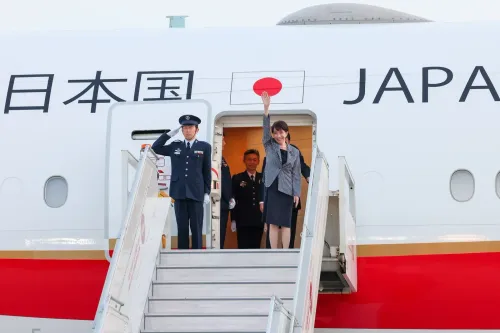
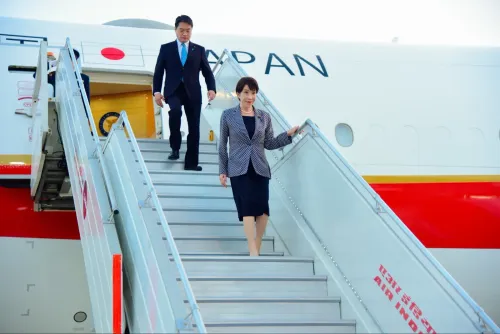
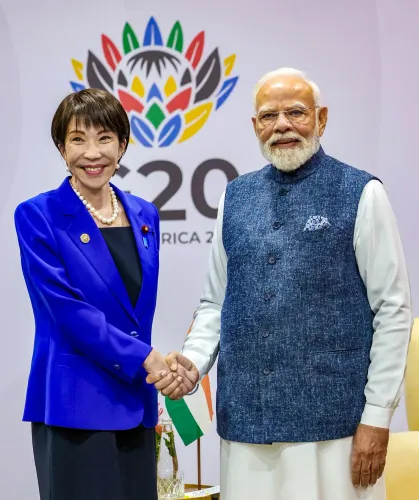
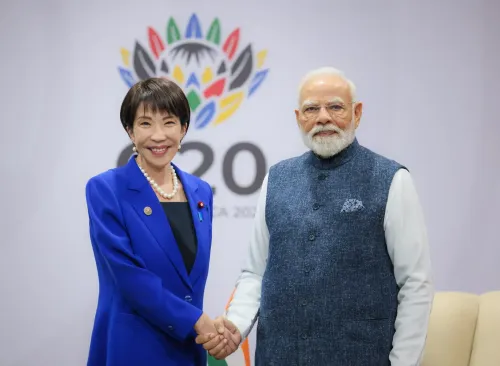
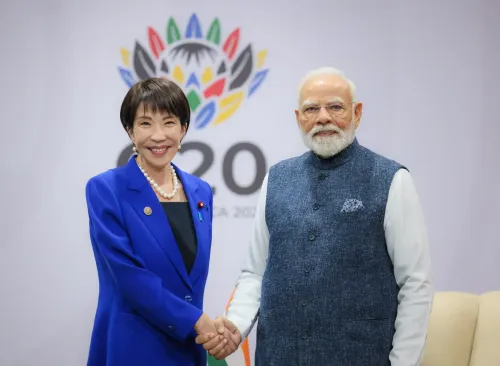
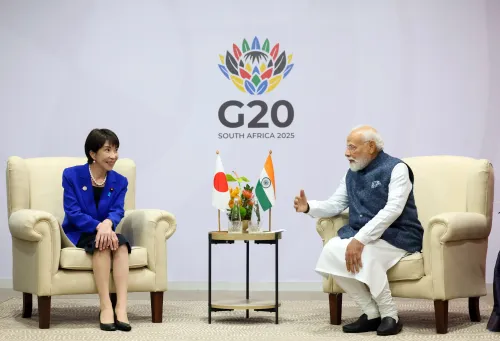
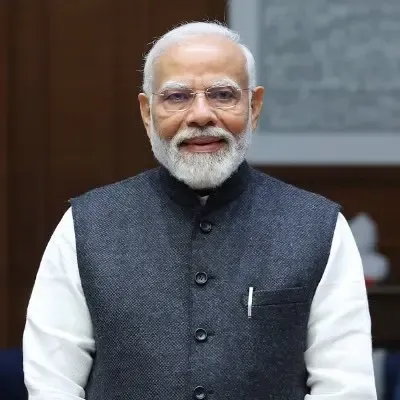
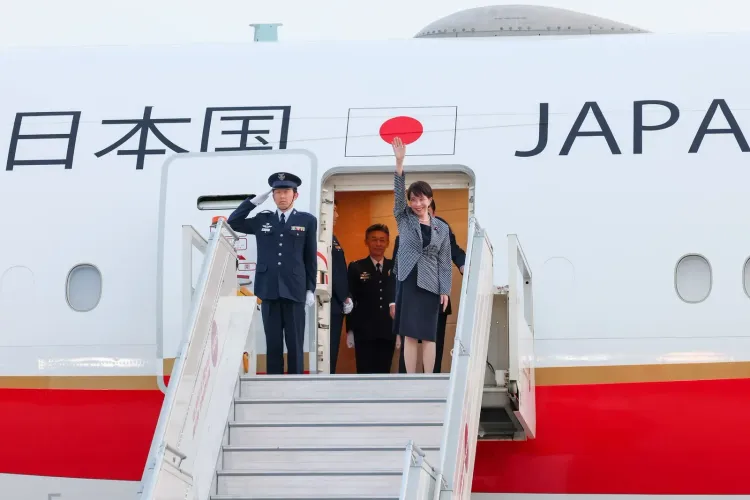
Prime Minister Narendra Modi on Wednesday, 1 July 2026 extended a formal welcome to Japanese Prime Minister Sanae Takaichi on her first-ever visit to India, signalling the start of high-level bilateral talks aimed at deepening the India-Japan Special Strategic and Global Partnership.
Posting on X, Modi wrote: 'A very warm welcome to India, Prime Minister Sanae Takaichi. We are delighted to host you on your first visit to India and I look forward to our wide-ranging discussions tomorrow that will further deepen the India-Japan Special Strategic and Global Partnership. Through our joint efforts, we will continue to advance peace, stability and prosperity in the Indo-Pacific and beyond.'
Context
Prime Minister Takaichi's arrival in New Delhi marks her first bilateral engagement with India as Japan's head of government. The visit is expected to anchor a structured summit with Prime Minister Modi, with the two leaders scheduled to hold 'wide-ranging discussions' on 2 July 2026. Such leader-level exchanges have been a consistent feature of the India-Japan relationship for nearly two decades.
The India-Japan Special Strategic and Global Partnership — the highest tier of diplomatic designation India extends to any partner — was established in 2014 when Modi visited Tokyo, elevating a relationship that had already been deepening since 2006 through successive annual summits and defence agreements.
Policy Backdrop
India's Act East Policy, a cornerstone of its foreign-policy architecture, has made Japan a central partner in the country's strategic outreach to the Indo-Pacific. Cooperation spans infrastructure financing, defence technology transfers, semiconductor supply-chain resilience, and maritime security coordination.
Both nations are members of the Quad — alongside the United States and Australia — which advocates for a free and open Indo-Pacific. The Quad framework has provided additional institutional scaffolding for India-Japan coordination on regional security issues, reinforcing the bilateral partnership with a multilateral dimension.
Stakeholders and Impact
Diplomatic officials on both sides are expected to finalise the agenda for the summit, which could include announcements on defence procurement, technology collaboration, and infrastructure investment. Indian and Japanese defence industries will closely watch any new pacts that emerge, particularly in areas such as advanced manufacturing and maritime surveillance.
The broader Indo-Pacific region, including partners in Southeast Asia, will also monitor the outcomes, as joint statements from New Delhi and Tokyo often carry weight in shaping the region's security and economic architecture.
What's Next
The bilateral summit is scheduled for 2 July 2026, after which both governments are expected to release joint statements or a communique detailing new agreements. Observers will watch for any references to upcoming Quad summits, new bilateral defence pacts, or technology-sharing frameworks that could signal the next phase of India-Japan strategic convergence.
The visit reinforces a long-standing pattern of stable, high-level engagement between the two democracies — one that has endured across multiple administrations in both countries and is likely to generate concrete deliverables regardless of the global diplomatic climate.
Point of View
Not merely a bilateral courtesy. Modi's public welcome — emphasising 'peace, stability and prosperity in the Indo-Pacific' — is calibrated diplomatic language that signals continuity of purpose regardless of who leads in Tokyo. The visit fits a broader pattern in which New Delhi has used leader-level summits to lock in strategic commitments early in a new counterpart's tenure. Deliverables from the 2 July talks will indicate how quickly the two sides intend to operationalise their partnership under Takaichi's leadership.
NationPress
2 Jul 2026
Frequently Asked Questions
Who is Sanae Takaichi and why is she visiting India?
Sanae Takaichi is the Prime Minister of Japan. She is visiting India for the first time in that capacity to hold bilateral talks with PM Narendra Modi on deepening the India-Japan Special Strategic and Global Partnership.
What is the India-Japan Special Strategic and Global Partnership?
It is the highest-tier diplomatic framework between India and Japan , established in 2014 . It covers cooperation in defence, technology, infrastructure, maritime security, and supply-chain resilience.
When are PM Modi and PM Takaichi holding their bilateral talks?
The two leaders are scheduled to hold 'wide-ranging discussions' on 2 July 2026 in New Delhi , a day after Takaichi's arrival.
What is the Quad and how does it relate to this visit?
The Quad is a strategic grouping comprising India , Japan , the United States , and Australia , focused on maintaining a free and open Indo-Pacific. Both India and Japan are members, giving their bilateral relationship a multilateral strategic dimension.
What outcomes are expected from the India-Japan summit in July 2026?
Observers expect announcements on defence procurement, technology collaboration, and infrastructure investment, as well as possible references to upcoming Quad summits or new bilateral pacts.