CM Nitish Kumar Pushes KCC Reach, Banker Role in Bihar Growth
Synopsis
Chief Minister Nitish Kumar, through the Bihar CMO's official X account, has called for maximum Kisan Credit Card coverage for farmers and stressed that active banker participation is essential for Bihar's industrial expansion — signalling fresh administrative pressure on the state's banking sector.
Key Takeaways
The Chief Minister's Office of Bihar posted on 1 July 2026 quoting CM Nitish Kumar on farm credit and industrial growth.
CM Nitish Kumar stressed expanding institutional credit access and extending Kisan Credit Card (KCC) benefits to the maximum number of farmers.
He stated that active participation of bankers is 'extremely necessary' for the comprehensive expansion of industries in Bihar .
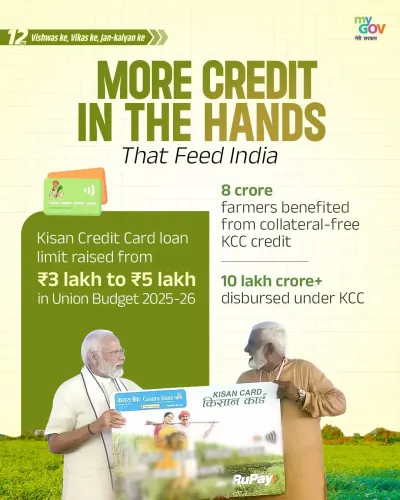
The Kisan Credit Card scheme, launched in 1998 , provides subsidised short-term and term credit to farmers through the formal banking system.
The State Level Bankers' Committee (SLBC) quarterly figures and upcoming budget session proposals will be key indicators of follow-through.
Bihar's small and marginal farmers, MSME units, and prospective industrial investors are the primary stakeholders in focus.
The Chief Minister's Office of Bihar, posting on Wednesday, 1 July 2026, shared remarks by Chief Minister Nitish Kumar stressing expanded institutional credit access for farmers and calling for active banker participation to drive industrial growth across the state.
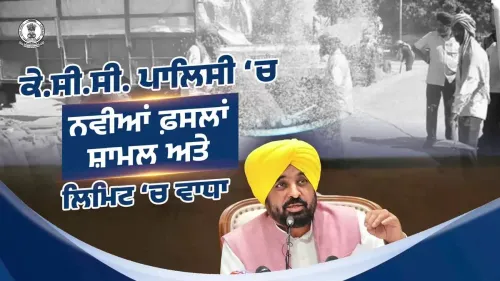
In the post, replying to @samrat4bjp, the office quoted the Chief Minister as saying that special emphasis must be placed on increasing the availability of institutional credit for farmers and ensuring that the benefits of the Kisan Credit Card (KCC) reach the maximum number of cultivators. The original Hindi reads: 'किसानों के लिए संस्थागत ऋण की उपलब्धता बढ़ाने तथा किसान क्रेडिट कार्ड (केसीसी) का लाभ अधिक से अधिक किसानों तक पहुंचाने पर विशेष जोर दिया' — 'special emphasis was placed on increasing the availability of institutional credit for farmers and extending the benefits of the Kisan Credit Card to as many farmers as possible.' The Chief Minister further stated that active participation of bankers is 'extremely necessary' for the comprehensive expansion of industries in Bihar.
Context
The remarks come against the backdrop of Bihar's ongoing push to deepen formal financial inclusion in its predominantly agrarian economy. A large share of the state's workforce depends on farming, and the gap between eligible cultivators and those holding active KCC accounts has been a persistent concern for state planners. The Chief Minister's public emphasis on bridging this gap signals continued administrative pressure on the banking sector to accelerate outreach.Policy Backdrop
The Kisan Credit Card scheme was launched nationally in 1998 through NABARD and the Reserve Bank of India to replace informal, often exploitative moneylending with structured, subsidised short-term crop loans and term credit. The Government of India subsequently ran saturation drives — notably around 2018-19 — to bring all eligible farmers under KCC coverage, with state governments including Bihar tasked with coordinating district-level banking campaigns. Bihar's administrations have, over successive terms, linked higher agricultural credit flow to crop diversification and risk mitigation for small and marginal farmers. On the industrial side, Bihar has for roughly two decades pursued a strategy of courting private investment in food processing, textiles, and emerging manufacturing sectors. Coordinated term lending by public-sector banks has been a recurring instrument in the state's industrial policy toolkit since the mid-2000s, and the Chief Minister's latest remarks reaffirm that approach.Stakeholders and Impact
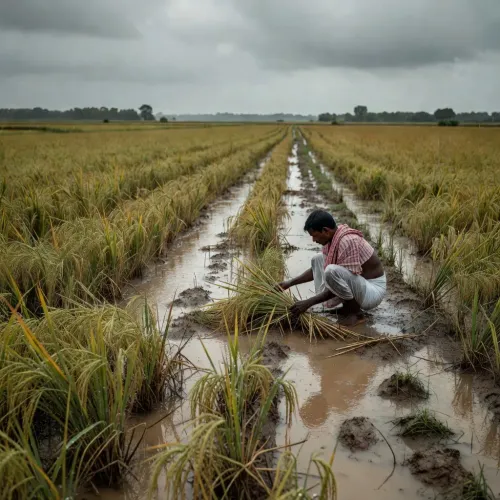
The immediate beneficiaries of expanded KCC coverage would be Bihar's small and marginal farmers, who currently rely on informal credit at significantly higher interest rates. For the banking sector, the call signals that the state expects lenders to play a proactive, not merely reactive, role in credit disbursement. MSME units and prospective industrial investors stand to benefit if banks respond with faster processing of term loans and working-capital facilities, reducing a bottleneck that entrepreneurs frequently cite as a barrier to setting up or scaling operations in the state.What's Next
Attention will now turn to the State Level Bankers' Committee (SLBC) of Bihar, whose quarterly agricultural credit disbursement figures will serve as an early indicator of whether the Chief Minister's directive translates into measurable on-ground action. Any fresh industrial investment proposals tabled in the next Bihar budget session will also be watched as a gauge of whether banker engagement has improved. A follow-up review meeting between the state government and bank representatives is widely anticipated.Frequently Asked Questions
What is the Kisan Credit Card scheme and how does it help Bihar farmers?
The Kisan Credit Card (KCC) is a central government scheme launched in 1998 that gives farmers access to short-term crop loans and term credit through banks at subsidised interest rates, replacing costly informal borrowing. Bihar has been running drives to extend KCC coverage to all eligible cultivators in the state.
Why is CM Nitish Kumar asking bankers to participate in Bihar's industrial growth?
CM Nitish Kumar has stated that active banker participation is 'extremely necessary' for the comprehensive expansion of industries in Bihar, reflecting the state's reliance on public-sector bank lending to fund MSME units and attract larger private investment in sectors like food processing and textiles.
What is the State Level Bankers' Committee (SLBC) in Bihar?
The State Level Bankers' Committee is a forum that coordinates between the state government and banks operating in Bihar. It publishes quarterly data on agricultural and priority-sector credit disbursement, making it a key metric for tracking whether government directives on farm credit translate into actual lending.
How many farmers in Bihar have Kisan Credit Cards?
Exact current figures for active KCC holders in Bihar are published periodically by the SLBC and NABARD; the Government of India ran a saturation drive around 2018-19, but a gap between eligible farmers and active cardholders has remained a stated concern for the Bihar government.
What industries is Bihar trying to attract through its banking policy?
Bihar has focused on food processing, textiles, and emerging manufacturing sectors, with coordinated term lending from public-sector banks serving as a key policy instrument to reduce financing barriers for MSME units and larger industrial investors.