Digital India at 11: How PM Modi shaped the vision, from logo to DigiLocker
Synopsis
Two former bureaucrats who built Digital India from the ground up reveal that PM Modi personally finalised its logo and reframed DigiLocker with a job-applicant analogy when officials couldn't explain it plainly. Eleven years on, those early instincts — simplify, reach the last mile — explain why India's digital public infrastructure is now a global reference point.
Key Takeaways
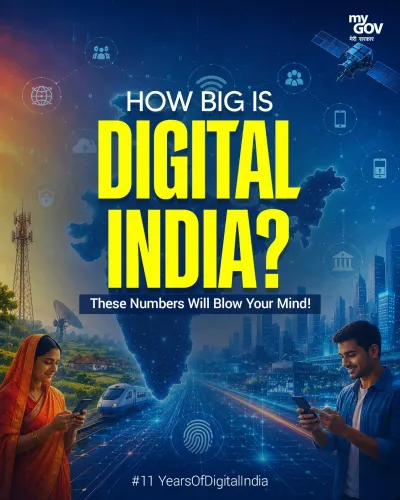
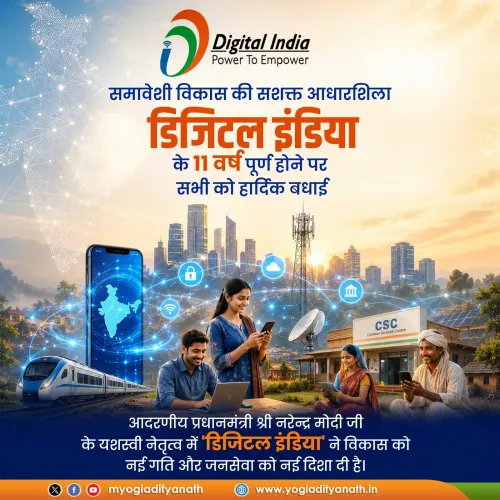
Digital India was formally launched on 1 July 2015 and completes 11 years in 2025.
Former bureaucrat Tapan Ray was entrusted with steering the initiative shortly after 2014 ; he recalled that PM Modi personally finalised the Digital India logo .
Former bureaucrat RS Sharma recalled Modi reframing DigiLocker with a plain-language analogy when officials defaulted to technical jargon.
UPI and Direct Benefit Transfer (DBT) are among the initiative's most visible outcomes, reshaping payments and welfare delivery.
India's digital public infrastructure , including the India Stack, is now studied and replicated internationally.
Eleven years after Prime Minister Narendra Modi launched Digital India on 1 July 2015, two former senior bureaucrats have shared firsthand accounts of how the initiative moved from concept to one of the most consequential governance transformations in independent India. Their recollections, shared on the Modi Story handle on X, offer a rare window into the Prime Minister's personal involvement in the programme's design and execution.
How It Began: A Mandate From the Top
Shortly after assuming office in 2014, Prime Minister Modi entrusted former bureaucrat Tapan Ray with steering the Digital India and e-Governance agenda. The brief was sweeping: build robust digital infrastructure, extend broadband connectivity to every village, accelerate electronics manufacturing, and ensure technology benefits reached the last mile of Indian society.
Ray recalled that the Prime Minister's involvement went well beyond policy direction. According to Ray, Modi himself finalised the iconic Digital India logo — a detail that underscores the hands-on approach he brought to the initiative from its earliest days.
The DigiLocker Question That Defined the Mission
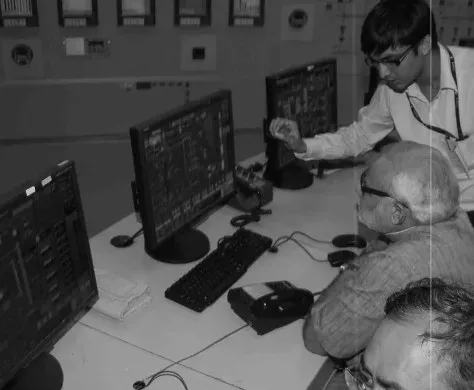
Former bureaucrat RS Sharma, who was closely involved in the programme's preparatory phase, recalled briefing the Prime Minister on key components including DigiLocker, online hospital registrations, and digital KYC (know your customer) processes.
At one such briefing, Modi posed a direct question: 'How will you explain DigiLocker to an ordinary citizen?' When officials struggled to move beyond technical language, the Prime Minister offered his own analogy — a job applicant rushing to an interview, fumbling through physical certificates. 'If all documents are safely stored in a DigiLocker on the phone,' Modi explained, 'they can be accessed and shared instantly whenever needed.'
The exchange, as Sharma recalled it, captures a defining feature of the initiative: technology designed not for administrators, but for the citizen at the counter.
What Digital India Has Delivered
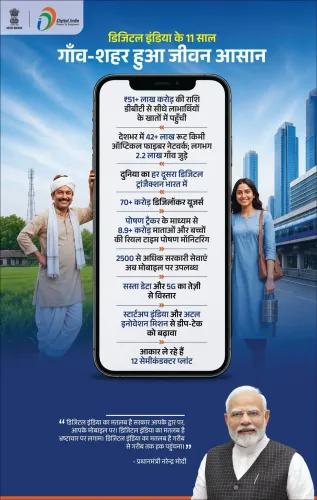
Over the past decade, the outcomes have been substantial. Villages once without reliable connectivity now have broadband access. The Unified Payments Interface (UPI) has reshaped everyday commerce, processing billions of transactions monthly. Direct Benefit Transfer (DBT) has reduced leakages in welfare disbursements by routing funds directly to beneficiaries' accounts.
India has, by several assessments, built one of the world's most extensive digital public infrastructures — spanning banking, healthcare, education, and governance. The India Stack, which underpins much of this architecture, is now studied and replicated by other countries.
Significance of the 11-Year Milestone
The anniversary arrives at a moment when India's digital economy is projected to be among the fastest-growing globally. Notably, the initiative's early emphasis on last-mile connectivity and simplified citizen interfaces — rather than technology for its own sake — is now credited by policy analysts as a key reason for its scale of adoption.
As India marks 11 years of Digital India, the accounts of Ray and Sharma add institutional texture to a programme whose impact is now embedded in daily life — from scanning a QR code at a vegetable stall to filing taxes on a smartphone.
Point of View
Not just policy sign-off. That granularity — unusual in large government programmes — may partly explain why Digital India achieved adoption at scale where earlier e-governance pushes stalled. The harder question, which these accounts do not address, is whether the infrastructure built over eleven years has meaningfully reduced inequality in digital access, or whether the last mile remains as contested as ever. UPI's transaction volumes are impressive; whether they reflect genuine financial inclusion or urban-skewed usage is a distinction that anniversary narratives tend to flatten.
NationPress
30 Sept 2026
Frequently Asked Questions
When was Digital India launched and who initiated it?
Digital India was formally launched on 1 July 2015 by Prime Minister Narendra Modi. The groundwork began shortly after Modi assumed office in 2014, with former bureaucrat Tapan Ray entrusted to lead the Digital India and e-Governance agenda.
What did PM Modi personally contribute to Digital India's design?
According to former bureaucrat Tapan Ray, PM Modi personally finalised the Digital India logo, reflecting his hands-on involvement from the outset. He also reframed complex tools like DigiLocker in plain citizen-friendly language during official briefings, as recalled by former bureaucrat RS Sharma.
What is DigiLocker and how did PM Modi explain it?
DigiLocker is a government platform that allows citizens to store and share official documents digitally. PM Modi explained it to officials using the analogy of a job applicant who, instead of fumbling with physical certificates, could instantly access and share all documents stored on a phone.
What has Digital India achieved in 11 years?
Over eleven years, Digital India has expanded broadband connectivity to villages, enabled UPI-based digital payments at scale, and reduced welfare leakages through Direct Benefit Transfer. India has also built a widely recognised digital public infrastructure — the India Stack — that other countries are now studying and adapting.
Who are Tapan Ray and RS Sharma in the context of Digital India?
Tapan Ray is a former senior bureaucrat who was tasked by PM Modi to lead the Digital India and e-Governance initiative from its inception in 2014. RS Sharma is another former bureaucrat closely involved in the programme's preparatory phase, responsible for briefing the Prime Minister on components such as DigiLocker and digital KYC.