Digital India turns 11: Modi's two-decade vision behind the landmark push
Synopsis
Digital India turns 11 — but the story behind it stretches back over two decades. Archival footage from 2003 shows Modi framing e-governance as 'effective, easy and economical' long before it became national policy. The initiative he launched in 2015 has since reshaped how a billion people interact with the state, and its next chapter will test whether that reach extends to India's last mile.
Key Takeaways
Digital India completed 11 years on 1 July 2025 , marking over a decade since its formal launch on 1 July 2015 .
PM Modi's advocacy for digital governance dates to at least 2003 , including a speech at Nirma University and the 2011 e-India ICT Conference .
The Modi Archive released archival footage tracing his two-decade emphasis on technology as a tool for grassroots empowerment.
Modi described the initiative as 'the strong foundation of a developed and self-reliant India' in a post on X .
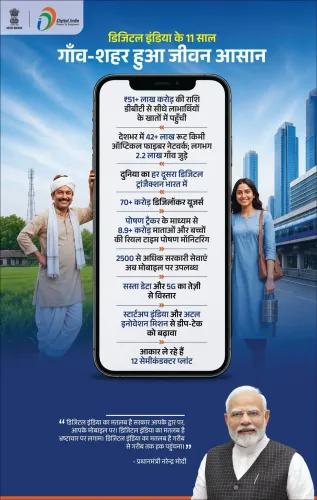
Key outcomes include expanded optical fibre networks, scaled digital payments, and direct benefit transfers reaching citizens with greater transparency.
Innovation from Tier 2 and Tier 3 cities and villages has grown on the back of the digital public infrastructure built over the past 11 years.
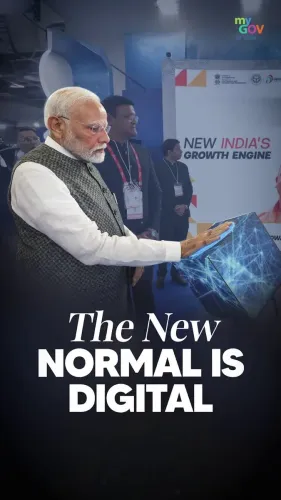
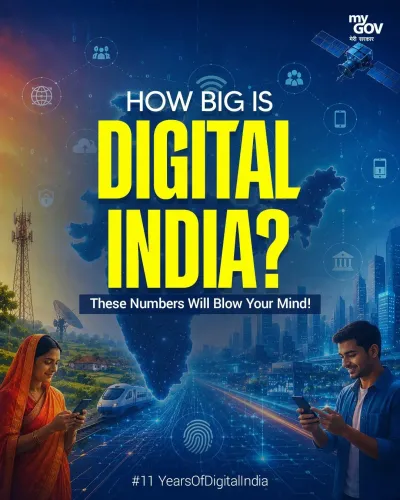
Prime Minister Narendra Modi on 1 July 2025 marked 11 years of the Digital India initiative, crediting the programme with transforming governance, empowering marginalised citizens, and placing India on the global map as a technology-driven democracy. The occasion prompted a wider look at how Modi's advocacy for digital governance — dating back more than two decades before the initiative's formal launch — shaped the country's sweeping digital transformation.
Two Decades in the Making
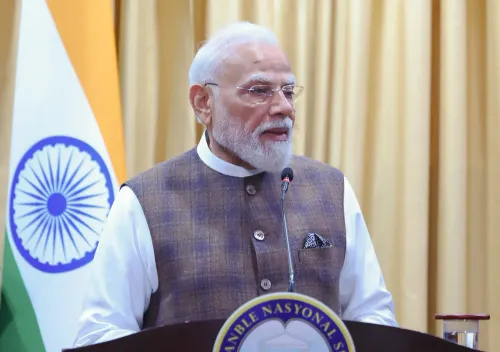
The Modi Archive, which curates historical records of the Prime Minister's public addresses, shared archival footage tracing his emphasis on technology-driven governance as far back as 2003. The footage includes speeches delivered at a 2003 event at Nirma University and the 2011 e-India ICT Conference, where he described e-governance as 'effective, easy and economical'.
'Long before the launch of the Digital India mission on 1 July 2015, PM Narendra Modi viewed technology as a tool of absolute empowerment for the grassroots, rather than a luxury for the few,' the Modi Archive noted. The archive also documented his consistent focus on mobile governance and technology-led public service delivery during his tenure as Chief Minister of Gujarat, which it described as the foundation for India's subsequent expansion of digital infrastructure.
What Modi Said on the Anniversary
In a post on X, Prime Minister Modi said the successful completion of 11 years had given the country 'a new identity on the global stage' and reflected Indians' determination to embrace innovation. 'Digital India is the strong foundation of a developed and self-reliant India. Over the past 11 years, it has played a crucial role in empowering the poor and deprived, while making the lives of citizens easier,' he said.
He added: 'When over a billion people embrace technology, the impact is transformative.' Modi also underscored the programme's reach beyond metros: 'Digital India has taken the wave of innovation to all parts of India, especially villages and Tier 2 and Tier 3 cities.'
Key Milestones and Impact
Since its launch on 1 July 2015 — which was followed by Modi's address in Silicon Valley later that year — the initiative has expanded optical fibre networks, scaled digital payment infrastructure, and enabled direct benefit transfers to reach beneficiaries with greater transparency. The growth of India's digital public infrastructure has drawn international attention, with the country's Unified Payments Interface (UPI) widely cited as a model for other emerging economies.
Young entrepreneurs, startups, and innovators from across the country — including from smaller towns — have increasingly built solutions on this digital backbone, according to the Prime Minister's remarks.
Significance and What Comes Next
The Digital India initiative is widely seen as one of the most consequential governance reforms of the past decade, reshaping how citizens interact with the state — from tax filing and welfare disbursements to healthcare and education. Analysts note that India's rapid rise in global digital rankings has been underpinned by the programme's scale and reach.
As the initiative enters its twelfth year, attention is expected to shift to deepening digital access in the most remote regions, bridging remaining infrastructure gaps, and ensuring that the benefits of digitisation translate into measurable improvements in living standards for those still on the margins.
Point of View
But the last-mile reality — unreliable connectivity in remote districts, digital literacy gaps, and exclusion of the elderly from benefit delivery — remains a live policy challenge. The initiative's next decade will matter more than its first if it is to fulfil the grassroots empowerment promise that has been its stated purpose since those early Gujarat speeches.
NationPress
30 Sept 2026
Frequently Asked Questions
When was Digital India launched and what is it?
Digital India was launched on 1 July 2015 by Prime Minister Narendra Modi. It is a flagship government initiative aimed at transforming India into a digitally empowered society and knowledge economy, covering digital infrastructure, digital services delivery, and digital literacy.
How long has PM Modi advocated for digital governance?
According to archival records shared by the Modi Archive, Modi's advocacy for technology-driven governance dates back to at least 2003, including speeches at Nirma University and the 2011 e-India ICT Conference. This predates the formal launch of Digital India by over a decade.
What has Digital India achieved in 11 years?
Over 11 years, Digital India has expanded optical fibre networks, scaled digital payment infrastructure including UPI, and enabled direct benefit transfers with greater transparency. It has also spurred startup and innovation activity from Tier 2 and Tier 3 cities and villages across the country.
What did PM Modi say on the 11th anniversary of Digital India?
In a post on X, Modi said Digital India had given India 'a new identity on the global stage' and called it 'the strong foundation of a developed and self-reliant India.' He added that the initiative had empowered the poor and made citizens' lives easier over the past 11 years.
What is the Modi Archive and what did it release?
The Modi Archive is a repository of historical records and speeches by Prime Minister Narendra Modi. On the 11th anniversary of Digital India, it released archival footage from as early as 2003, tracing Modi's consistent emphasis on e-governance and technology-led public service delivery across two decades.