Pradhan Marks 11 Years of Digital India, Hails Modi's Vision

Synopsis
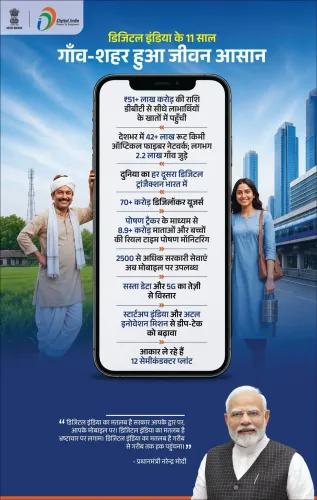
Union Education Minister Dharmendra Pradhan on 1 July 2026 celebrated 11 years of the Digital India programme, crediting Prime Minister Narendra Modi's vision for transforming governance and accelerating digital inclusion across India over the past decade.
Key Takeaways
Digital India completed 11 years on 1 July 2026 , having been launched by Prime Minister Narendra Modi on 1 July 2015 .
Union Education Minister Dharmendra Pradhan marked the anniversary on X, calling it a 'visionary initiative' that has 'transformed governance and empowered millions.' The programme rests on nine pillars covering broadband, e-governance, digital literacy, electronics manufacturing, and more.
Key infrastructure built under Digital India underpins Aadhaar -linked direct benefit transfers and the Unified Payments Interface (UPI) .
In education, Digital India's backbone powers platforms such as DIKSHA , delivering digital content to students and teachers across India.
Future focus areas include deeper integration with education platforms and potential new digital literacy targets in the next Union Budget or NEP review.
Union Education Minister Dharmendra Pradhan on Wednesday, 1 July 2026 marked the 11th anniversary of the Digital India programme, calling it a 'visionary initiative' of Prime Minister Narendra Modi that has transformed governance, accelerated digital inclusion, and empowered millions of citizens across the country.
Context
The Digital India programme was formally launched on 1 July 2015 by Prime Minister Narendra Modi with the stated goal of transforming India into a digitally empowered society and knowledge economy. The initiative rests on nine pillars, covering broadband highways, universal access to mobile connectivity, a public internet access programme, e-governance, e-Kranti, information for all, electronics manufacturing, IT for jobs, and early harvest programmes.
Pradhan, in his post on X, described the programme as one that has 'transformed governance, accelerated digital inclusion and empowered millions of citizens,' directly crediting the Prime Minister's leadership for the decade-long push.
Policy Backdrop
Digital India sits at the centre of a decade-long government effort to use technology as the primary lever for inclusive governance. The programme's infrastructure has underpinned major delivery mechanisms, including Aadhaar-linked direct benefit transfers and the Unified Payments Interface (UPI), which together have reshaped how welfare and financial services reach citizens, particularly in rural households.
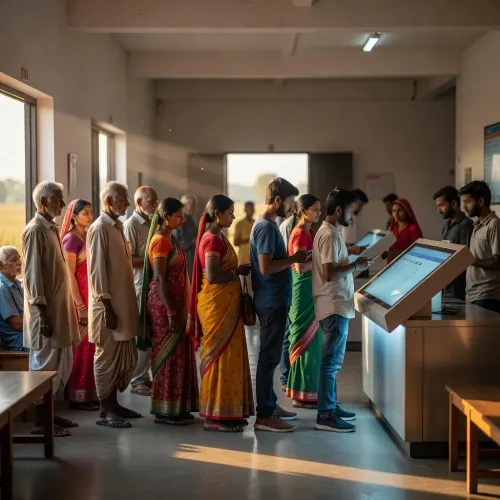
Successive Union Budgets have expanded the network of Common Service Centres (CSCs) — physical access points that bring digital government services to the last mile — and integrated digital public infrastructure into an expanding range of welfare schemes. The broader ambition has been to reduce leakages in public expenditure and bring transparency to service delivery.
For the education sector, which Pradhan now oversees, Digital India's backbone has enabled platforms such as DIKSHA (Digital Infrastructure for Knowledge Sharing), which delivers curriculum-linked content to students and teachers across states.
Stakeholders and Impact
The programme's primary beneficiaries are Indian citizens, with a particular emphasis on rural households that previously lacked access to banking, government services, and digital connectivity. The convergence of low-cost smartphones, affordable data, and government-built digital infrastructure has been cited as a structural shift in how citizens interact with the state.
For the ruling Bharatiya Janata Party (BJP), the Digital India anniversary is also a political milestone — an opportunity to reinforce the narrative of technology-led development as a signature achievement of the Modi government. Senior ministers across portfolios routinely mark the occasion, reflecting the programme's cross-cutting relevance to nearly every ministry's mandate.
What's Next
With the programme now in its second decade, attention is turning to deeper integration of Digital India tools with education and skilling platforms, as well as potential new digital literacy targets that may feature in the next Union Budget or a forthcoming review of the National Education Policy (NEP). The government's broader digital public infrastructure ambitions — including expansion of the India Stack — suggest the programme's scope will continue to grow rather than consolidate. As minister responsible for education and skill development, Pradhan is positioned at the intersection of Digital India's next frontier: ensuring that digital access translates into measurable learning and economic outcomes for young Indians.
Point of View
But it also signals the Education Ministry's intent to deepen Digital India's footprint in learning and skilling — areas Pradhan directly controls. The framing of Digital India as a 'visionary' Modi initiative reinforces the BJP's consistent strategy of linking flagship technology programmes to the Prime Minister's personal brand ahead of political cycles. More substantively, the post reflects a genuine policy continuity: Digital India is no longer a standalone scheme but the connective tissue of India's entire public service delivery architecture. The next test is whether digital access, now broadly expanded, translates into measurable outcomes in education, employment, and rural economic mobility.
NationPress
30 Sept 2026
Frequently Asked Questions
When was Digital India launched and by whom?
Digital India was launched on 1 July 2015 by Prime Minister Narendra Modi to transform India into a digitally empowered society and knowledge economy.
What are the main pillars of the Digital India programme?
The programme rests on nine pillars including broadband highways, universal mobile connectivity, e-governance, e-Kranti, electronics manufacturing, IT for jobs, and a public internet access programme through Common Service Centres.
Why did Dharmendra Pradhan post about Digital India?
Dharmendra Pradhan , Union Education Minister and senior BJP leader, posted on X to mark the 11th anniversary of Digital India on 1 July 2026, hailing PM Modi's vision for the programme.
How has Digital India helped rural citizens?
Digital India has expanded Common Service Centres to rural areas, enabled Aadhaar -linked direct benefit transfers, and supported affordable digital connectivity, bringing government services closer to rural households.
What is the connection between Digital India and education in India?
Digital India's infrastructure powers DIKSHA (Digital Infrastructure for Knowledge Sharing), a national platform that delivers curriculum-linked digital content to students and teachers, directly linking the programme to the Education Ministry's mandate.