Bihar CM's Office Urges Banks to Push CD Ratio to 100%

Synopsis
The Chief Minister's Office of Bihar shared a call for banks to raise the state's credit-deposit ratio to 100 per cent, with the government pledging to strengthen loan repayment mechanisms and framing Bihar's economic growth as central to national progress.
Key Takeaways
The Chief Minister's Office of Bihar shared remarks urging banks to push the credit-deposit (CD) ratio to 100 per cent .
The leader stated that Bihar's prosperity is essential to the nation's overall progress.
The state government promised full support to strengthen and ensure a robust loan-repayment mechanism for banks.
Bihar has historically had one of India's lowest CD ratios, with figures below 40 per cent recorded in the early 2000s.
The appeal aligns with RBI's long-standing push for priority-sector lending and financial inclusion in eastern states.
State budget presentations and RBI quarterly banking data will be key indicators of follow-through.
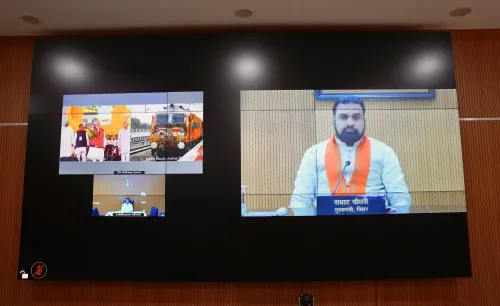
The Chief Minister's Office of Bihar shared remarks on Wednesday, 1 July 2026, in which a senior leader called for banks operating in the state to make serious efforts to raise the credit-deposit (CD) ratio to 100 per cent, asserting that the prosperity of Bihar would pave the way for national progress.
Context
The post, shared as a reply on the official CMO Bihar account, quotes the leader as saying — 'Bihar ki samridhi se hi desh ki unnati ka marg prashast hoga' ('It is through Bihar's prosperity that the path to the nation's progress will be laid'). The statement was made alongside a direct appeal to banks to take the CD ratio — the proportion of deposits lent out as credit — up to 100 per cent.
The leader also assured banks that the state government would extend every possible support to strengthen and ensure a robust loan-repayment mechanism, signalling an intent to reduce the credit risk that banks often cite as a reason for cautious lending in the state.
Policy Backdrop
Bihar has historically recorded among the lowest CD ratios in India. In the early 2000s, the figure hovered below 40 per cent, meaning banks collected far more in deposits from the state than they lent back into its economy. Successive governments under Chief Minister Nitish Kumar — who has led the state since 2005 with brief interruptions — have repeatedly urged public sector banks to close this gap.
The Reserve Bank of India has, over successive years, emphasised priority-sector lending and financial inclusion, particularly in eastern and north-eastern states, as a tool to correct regional imbalances in credit flow. Bihar's push fits squarely within this national framework, linking state-level growth ambitions to broader goals of balanced development.
Stakeholders and Impact
A higher CD ratio would directly benefit Bihar's farmers, small traders, and micro-enterprises, who depend on institutional credit for working capital and investment. Public sector banks with large deposit bases in the state stand to expand their loan books, provided the government follows through on its promise to reinforce repayment infrastructure.
The state government's assurance of support for loan repayment is significant: weak recovery mechanisms have historically discouraged aggressive lending in Bihar. A credible backstop from the government could shift the risk calculus for banks and unlock credit for underserved borrowers across the state's 38 districts.
What's Next
Analysts and banking officials will watch upcoming state budget presentations and quarterly RBI banking statistics to assess whether CD ratio figures in Bihar show measurable improvement. Coordination meetings between the state administration and bank leadership are likely to be the next concrete step in translating this political commitment into operational change.
If the government formalises its loan-repayment support mechanism — through a guarantee fund or dedicated monitoring cell — it could set a replicable model for other credit-starved states in eastern India seeking to close the gap between deposits mobilised and credit deployed locally.
Point of View
But framing the government as an active guarantor of loan repayment adds a concrete policy edge that earlier exhortations lacked. By tying Bihar's financial inclusion drive to national development rhetoric, the leadership is also making a political argument — that the state's economic lag is a national problem requiring institutional redress, not just local effort. If the government backs the promise with a formal mechanism such as a credit guarantee or recovery support fund, it could meaningfully shift bank behaviour. The statement, however, remains a commitment without a disclosed timeline or instrument, and observers will need to see follow-up action before assessing its real impact.
NationPress
30 Sept 2026
Frequently Asked Questions
What is the credit-deposit ratio and why does it matter for Bihar?
The credit-deposit (CD) ratio measures what proportion of deposits collected by banks in a region is lent back as credit within that region. For Bihar, a historically low CD ratio — below 40 per cent in the early 2000s — means the state's savings have largely been deployed elsewhere, starving local farmers, traders, and small businesses of institutional finance.
What did Bihar's Chief Minister's Office say about banks on 1 July 2026?
The CMO Bihar shared remarks calling on banks to make serious efforts to raise the state's CD ratio to 100 per cent, while assuring them that the state government would provide every possible support to strengthen loan-repayment mechanisms.
Has Bihar pushed banks on the CD ratio before?
Yes. Since 2005, successive governments under Chief Minister Nitish Kumar have repeatedly urged public sector banks to increase credit disbursement in Bihar, making the 100 per cent CD ratio target a recurring policy goal.
How does Bihar's CD ratio compare to other Indian states?
Bihar and several other eastern states have historically recorded some of the lowest CD ratios in India, a pattern the RBI has flagged as a regional imbalance that priority-sector lending and financial inclusion policies are meant to correct.
What will indicate whether this banking push leads to real change in Bihar?
Quarterly RBI banking statistics tracking Bihar's CD ratio, upcoming state budget allocations for credit-support or guarantee mechanisms, and any formal coordination meetings between the Bihar government and bank leadership will be the key signals to watch.