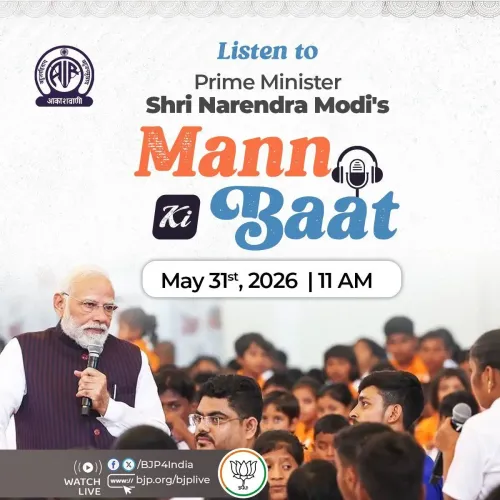
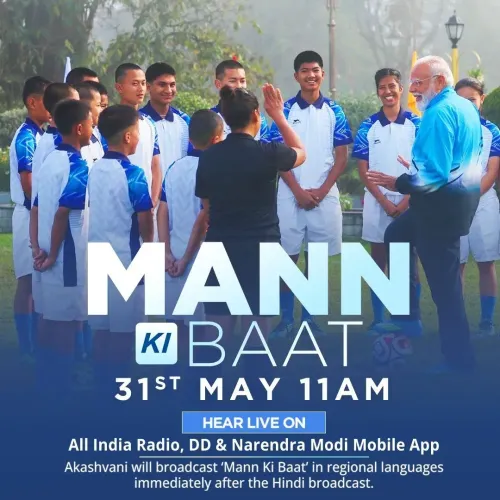
PM Modi's Mann Ki Baat spotlights inspiring efforts from across India
Synopsis
Prime Minister Narendra Modi aired the October 2026 edition of Mann Ki Baat on All India Radio on 25 October, spotlighting inspiring citizen-led efforts from across India. Launched in 2014, the monthly address remains his primary direct-communication channel with ordinary citizens.
Key Takeaways
Mann Ki Baat aired on Sunday, 25 October 2026 , with PM Modi highlighting 'very inspiring efforts from across India.' The programme was first launched on 3 October 2014 , making it over 12 years old as a direct-communication platform.
It broadcasts over All India Radio and is simultaneously amplified on social media to reach both traditional and digital audiences.
The episode's central focus was on grassroots, citizen-led initiatives rather than government policy announcements.
PM Modi's post on X directly invited followers to 'join in,' extending the broadcast's reach beyond radio listeners.
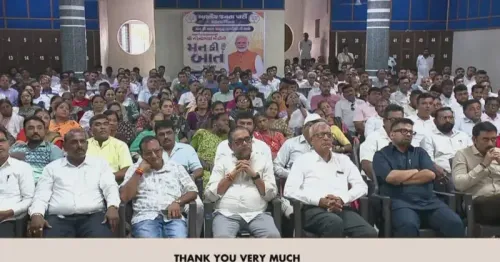
Every month, a radio broadcast turns grassroots India into the headline — and on Sunday, 25 October 2026, Prime Minister Narendra Modi took to Mann Ki Baat once again, calling out what he described as 'very inspiring efforts from across India' and urging citizens to tune in.
Twelve years of a radio experiment that stuck
Mann Ki Baat was launched on 3 October 2014 as a direct, unmediated line between the Prime Minister and ordinary citizens over All India Radio. The format was deliberately simple: no press briefings, no parliamentary protocol — just a monthly address that could be heard on a transistor in a village as easily as streamed on a smartphone in a metro.
What began as a novel governance experiment has now stretched across more than a decade, making it one of the longest-running direct-communication formats by any Indian Prime Minister. Its recurring architecture — broadcast followed by social media amplification — lets a single episode travel from a rural radio set to a national digital conversation within hours.
Grassroots stories as the engine of the format
The programme's signature move has always been the same: reach past policy announcements and pull up a citizen's story — a farmer's innovation, a teacher's quiet revolution, a young volunteer's community drive — and hold it up to a national audience. Modi's post described today's episode as carrying 'very inspiring efforts from across India,' signalling that the spotlight fell on ground-level initiatives rather than government schemes.
That framing is deliberate. By centering citizen action, the broadcast positions the state as a witness and amplifier of India's social energy rather than its sole driver. Over twelve years, that formula has proven durable across election cycles and policy shifts.
The dual-audience strategy behind every episode
The Prime Minister's post on X — with its direct call to 'join in' — is itself part of the strategy. The broadcast reaches All India Radio's vast traditional listenership; the social post pulls in the platform audience that may never switch on a radio. Together they create a two-channel reach that few other government communication formats can match.
As today's episode enters the public record, the stories highlighted within it may yet surface in follow-up coverage on government portals or inspire state-level recognition — the downstream effect that turns a radio minute into a policy footnote.
Point of View
The BJP has converted a radio slot into an institutional fixture that is difficult for any successor to simply discontinue. The grassroots-story format also insulates the broadcast from direct policy criticism, making it one of the least politically vulnerable tools in the Prime Minister's public-outreach arsenal. Each episode, reinforced by social media, extends the government's narrative reach into audiences that conventional press briefings rarely touch.
NationPress
25 Oct 2026
Frequently Asked Questions
What is Mann Ki Baat?
Mann Ki Baat is a monthly radio address by Prime Minister Narendra Modi broadcast on All India Radio, launched on 3 October 2014 to facilitate direct communication between the Prime Minister and Indian citizens.
When was the October 2026 Mann Ki Baat episode aired?
The October 2026 episode of Mann Ki Baat was broadcast on Sunday, 25 October 2026.
What did PM Modi highlight in today's Mann Ki Baat?
PM Modi described the episode as featuring 'very inspiring efforts from across India,' focusing on grassroots and citizen-led initiatives from different parts of the country.
How can I listen to Mann Ki Baat?
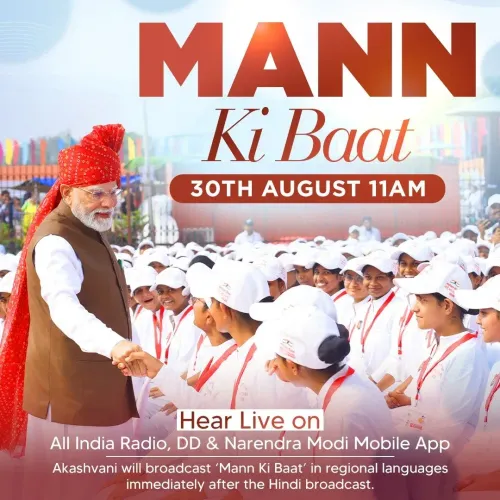
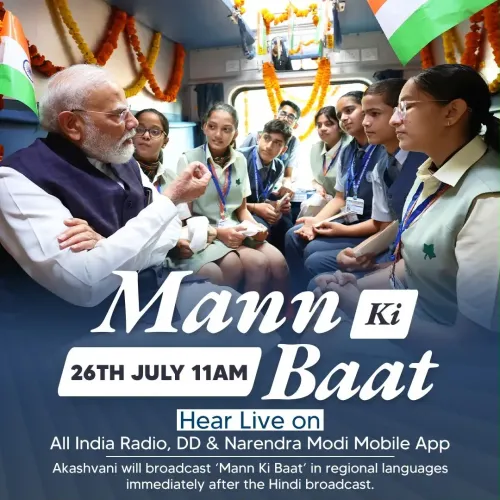
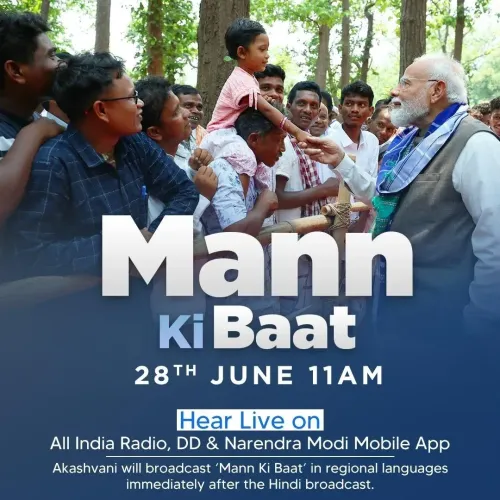
Mann Ki Baat is broadcast on All India Radio and is also available for streaming online; PM Modi regularly shares links and invitations on his social media channels.
How long has Mann Ki Baat been running?
Mann Ki Baat has been running since 3 October 2014, making the October 2026 episode part of a series spanning more than 12 years.