PM Modi praises Shivani's organ donation in Mann Ki Baat, links it to IIT Madras Brain Research Mission

Synopsis
In a rare convergence of human tragedy and scientific ambition, PM Modi used Mann Ki Baat to honour a Madhya Pradesh family's organ donation decision — and pivoted it into a case for India's world-first mission to create 3D maps of 100 human brains at IIT Madras, with open-source data targeting Alzheimer's and dementia. It is a deliberate framing: every organ donation, Modi suggested, is also a contribution to science.
Key Takeaways
PM Modi praised the organ donation by the family of Bilash Tanti Sharma (Shivani) of Narmadapuram, Madhya Pradesh in his Mann Ki Baat address on 25 October 2026 .
Shivani met with a road accident on 10 October during Navratri and was declared brain-stem dead on 14 October at AIIMS Bhopal .
Her organs were donated on 15 October , saving three patients — one kidney at AIIMS Bhopal, and the other kidney and liver at a private Bhopal hospital.
Modi linked organ donation to India's Brain Research Mission at the Sudha Gopalakrishnan Brain Centre, IIT Madras , which aims to create 3D maps of 100 human brains — a world first .
The Param Shakti supercomputer is being used for brain imaging; research data will be shared as open source to aid Alzheimer's and dementia research.
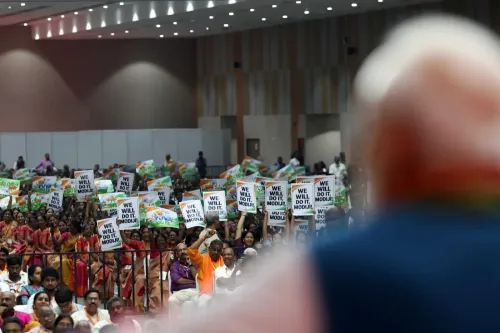
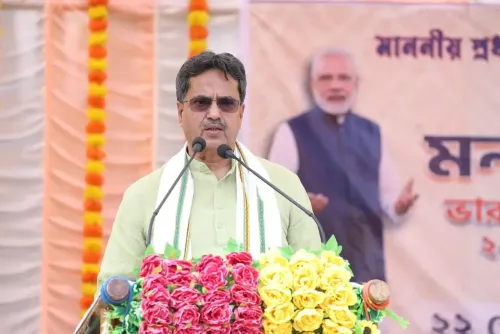
Prime Minister Narendra Modi on Sunday, 25 October 2026, used his monthly Mann Ki Baat radio address to honour the family of Bilash Tanti Sharma, popularly known as Shivani, from Narmadapuram (Hoshangabad) in Madhya Pradesh, who donated her organs following a fatal road accident — and connected their act of courage to India's emerging Brain Research Mission at IIT Madras.
Shivani's Story: From Tragedy to Inspiration
Bilash Tanti Sharma (Shivani), a resident of Khapa Khurd village in Bankhedi tehsil of Narmadapuram district, sustained critical head injuries on 10 October when she met with a severe road accident while travelling with her family for darshan at the Vijayasan Devi Temple in Salkanpur during the Navratri festival. She was admitted to AIIMS Bhopal, where doctors declared her brain-stem dead on 14 October. Her family, in a moment of profound grief, chose to donate her organs. The organ retrieval was completed on 15 October.
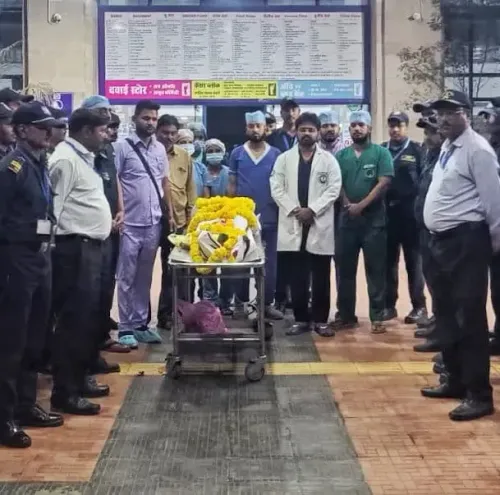
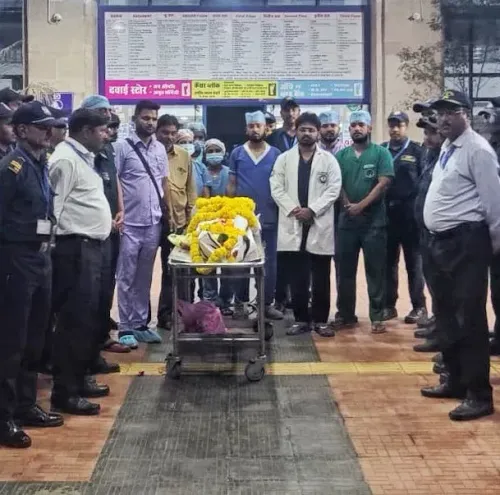
One of her kidneys was successfully transplanted at AIIMS Bhopal, while the other kidney and liver were transplanted at a private hospital in Bhopal, giving a new lease of life to three patients. She was cremated with the 'God of Honour' ceremony.
Modi's Mann Ki Baat: The Bigger Message
Referring to 'Shivani ji', Prime Minister Modi said her family's decision to donate her organs, even in that moment of immense grief, had sent a powerful message to society and the entire country. He said such decisions not only save multiple lives but also make advanced scientific research possible.
Notably, Modi did not stop at the humanitarian dimension — he drew a direct line from this act of donation to one of India's most ambitious scientific undertakings.
The Link to IIT Madras's Brain Research Mission
Modi connected Shivani's story to the cutting-edge work underway at the Sudha Gopalakrishnan Brain Centre at IIT Madras, which he had inaugurated recently. The centre has developed a world-class brain imaging technology platform capable of creating high-resolution digital 3D images of the human brain. Its mission — described as the first such initiative of its kind in the world — is to carry out detailed 3D mapping of 100 human brains.
The Param Shakti supercomputer is being deployed for this complex computational work. Both the government and Indian industry have reportedly played a major role in establishing the centre, according to the Prime Minister's address.
Why Brain Research and Organ Donation Are Interlinked
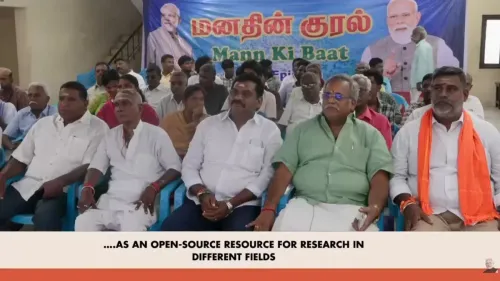
Modi emphasised that diseases such as Alzheimer's and dementia still lack definitive treatments. The deeper the understanding of how the human brain functions, he said, the greater the chances of finding new pathways for medical intervention. The data generated from the brain mapping research at IIT Madras is set to be made available as open source for scientists across disciplines.
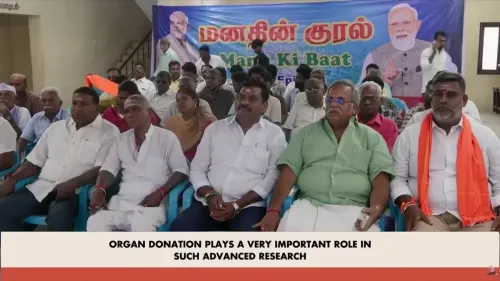
Highlighting the critical role of organ donation in such advanced studies, Modi stated that people who donate organs after death not only give the gift of life to others but also enable breakthrough research — positioning Shivani's family's decision as both a humanitarian and a scientific contribution.
A Call for Society to Follow
The Prime Minister held up the decision of Shivani's family as an example worthy of emulation across Indian society. This comes amid a broader national effort to increase organ donation awareness, with India's donor rates still significantly below global averages. Modi's remarks are likely to amplify public conversation around pledging organs, particularly in the context of brain-death scenarios.
All eyes will now be on whether the Brain Centre at IIT Madras accelerates its outreach for brain donation alongside its high-resolution mapping mission.
Point of View
He simultaneously humanises a complex scientific agenda and gives organ donation a national purpose beyond the immediate act of saving lives. India's organ donation rates remain among the lowest globally, and the messaging gap — not infrastructure alone — has long been identified as a key barrier. The move to position the Sudha Gopalakrishnan Brain Centre as a world-first is also a soft-power signal, especially with open-source data as the vehicle. Whether this translates into measurable uptick in brain-death organ donations, particularly in tier-2 and tier-3 districts like Narmadapuram, will be the real test of whether a radio address can shift social behaviour.
NationPress
25 Oct 2026
Frequently Asked Questions
Who is Shivani and why did PM Modi mention her in Mann Ki Baat?
Shivani, formally known as Bilash Tanti Sharma, was a resident of Khapa Khurd village in Narmadapuram district, Madhya Pradesh, who died after a road accident on 10 October during Navratri. PM Modi praised her family in his Mann Ki Baat address on 25 October for donating her organs after she was declared brain-stem dead, and used her story to highlight the link between organ donation and advanced brain research.
Which patients benefited from Shivani's organ donation?
Three patients received organs from Shivani after her death on 14–15 October. One kidney was transplanted at AIIMS Bhopal, while her second kidney and liver were transplanted at a private hospital in Bhopal.
What is the Sudha Gopalakrishnan Brain Centre at IIT Madras?
The Sudha Gopalakrishnan Brain Centre at IIT Madras is a research facility inaugurated by PM Modi that aims to create detailed 3D maps of 100 human brains — described as a world-first initiative. It uses the Param Shakti supercomputer for high-resolution brain imaging and plans to make the resulting data open source for global research on conditions like Alzheimer's and dementia.
Why did PM Modi link organ donation to brain research?
Modi argued that brain donations enable advanced scientific research, specifically the 3D brain mapping mission at IIT Madras. He said people who donate organs after death not only save lives but also contribute to breakthrough research that could eventually help find treatments for diseases like Alzheimer's and dementia.
What is India's Brain Research Mission and how does it work?
India's Brain Research Mission, based at the Sudha Gopalakrishnan Brain Centre at IIT Madras, aims to build a world-class brain imaging technology platform producing high-resolution 3D digital maps of 100 human brains. The Param Shakti supercomputer processes the imaging data, and the results will be made openly available to scientists across fields — marking it as the first such comprehensive brain mapping initiative globally.