Chouhan Highlights Punjab's Chemical-Free Cotton Push on Mann Ki Baat
Synopsis
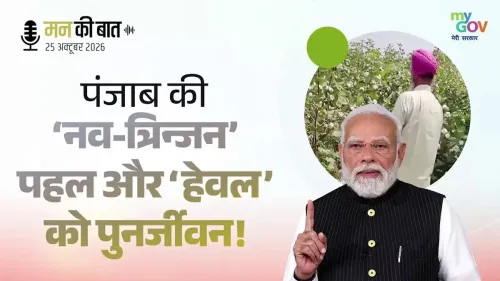
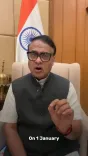
Union Agriculture Minister Shivraj Singh Chouhan shared on X how Kheti Virasat Mission's 'Nav-Trinjan' initiative is growing chemical-free and naturally coloured cotton in Punjab's Malwa region, as highlighted on Prime Minister Modi's Mann Ki Baat.
Key Takeaways
Kheti Virasat Mission , a Punjab-based organisation, is reviving organic and traditional farming practices in the Malwa region .
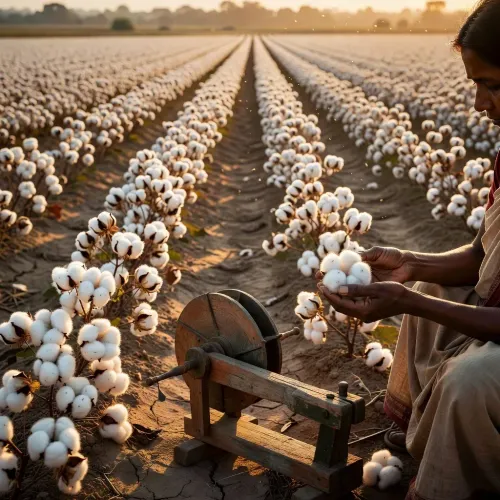
Its initiative 'Nav-Trinjan' promotes cotton cultivation with zero synthetic chemical inputs.
Naturally coloured cotton varieties grown under the initiative eliminate the need for chemical dyeing of yarn and fabric.
Union Agriculture Minister Shivraj Singh Chouhan shared the story on 25 October 2026 , attributing it to PM Modi's Mann Ki Baat radio programme.
The effort aligns with the Central government's Paramparagat Krishi Vikas Yojana (2015) and its natural farming component aimed at reducing chemical dependency in Indian agriculture.
The Malwa belt has a documented history of pesticide-linked health issues, giving this organic cotton model added public-health significance.
In Punjab's cotton belt, a quiet revolution is taking root — one that swaps pesticide drums for earthworm compost and chemical dyes for seeds that grow colour into the fibre itself. Union Agriculture Minister Shivraj Singh Chouhan shared the story on X on Sunday, 25 October 2026, spotlighting a Punjab-based organisation that is breathing new life into traditional farming — and doing it entirely without chemicals.
What 'Nav-Trinjan' is doing in Malwa's cotton fields
The organisation at the centre of this story is Kheti Virasat Mission, a Punjab group dedicated to reviving organic and traditional agricultural practices. Its latest initiative, branded 'Nav-Trinjan', is focused on the Malwa region of southern Punjab — historically one of the country's most chemically intensive cotton-growing zones, notorious for its heavy pesticide burden on soil, water, and farmer health.
Under Nav-Trinjan, farmers are cultivating cotton entirely without synthetic chemicals. The initiative goes a step further with prakritik rang wali kapas (naturally coloured cotton) — varieties that grow coloured fibres directly, eliminating the need for chemical dyeing downstream. The thread and fabric produced require no separate dye process. That means fewer chemicals at the farm, and fewer at the loom.
The Mann Ki Baat connection — and what it signals
Chouhan's post explicitly attributes the example to Prime Minister Narendra Modi's Mann Ki Baat radio programme — the weekly public address that has long served as a platform for amplifying grassroots stories the Prime Minister wants the country to hear. When a local civil-society model appears on Mann Ki Baat, it typically signals that the Centre views it as replicable, and ministerial amplification on social media extends that reach further.
This fits a consistent pattern in Central government agricultural messaging: identify a working ground-level model, tie it to national sustainability goals, and use the Prime Minister's communication machinery to scale attention. The Paramparagat Krishi Vikas Yojana (PKVY), launched in 2015, and its Bharatiya Prakritik Krishi Padhati component are the policy scaffolding beneath such stories — both designed to build organic farming clusters and reduce chemical dependency across Indian agriculture.
Why Punjab's Malwa makes this story matter
The Malwa belt is not an arbitrary setting. For decades it carried the grim label 'Cancer Train corridor' — a reference to the disproportionately high rates of pesticide-linked illness among farming families there, documented by health researchers and public advocates alike. An organic cotton model taking root precisely in this zone carries symbolic weight that goes well beyond agronomy. It positions Nav-Trinjan not just as a farming experiment but as a potential public-health intervention.
Naturally coloured cotton adds an industrial logic too: textile manufacturers sourcing from such farmers could market genuinely chemical-free fabric end-to-end, a growing premium segment in both domestic and export markets. Whether Nav-Trinjan scales to meet that demand is a question the initiative's next phase will have to answer.
For now, a minister's repost and a Prime Minister's radio mention have given a small Punjab organisation a very large audience — and the organic cotton experiment in Malwa is no longer a quiet story.
Point of View
Then a Union Minister's social reach, effectively inserting a local experiment into national discourse at zero policy cost. The choice of Malwa — Punjab's pesticide-burdened cotton belt — as the setting is not incidental; it lets the Centre frame organic farming as both an agronomic and a public-health solution simultaneously. This narrative architecture, tying PKVY's policy lineage to a visible on-ground story, is how the government builds political momentum for natural-farming expansion ahead of potential scheme revisions. Watch whether Nav-Trinjan's model gets formally cited in the next PKVY cycle or state agriculture budget as a replication template.
NationPress
25 Oct 2026
Frequently Asked Questions
What is the Nav-Trinjan initiative in Punjab?
Nav-Trinjan is an organic cotton farming initiative by the Kheti Virasat Mission in Punjab's Malwa region, promoting chemical-free cultivation and naturally coloured cotton varieties that do not require synthetic dyes.
What is Kheti Virasat Mission?
Kheti Virasat Mission is a Punjab-based organisation working to revive traditional and organic farming practices, with a focus on reducing chemical inputs in agriculture.
Why did PM Modi mention Nav-Trinjan on Mann Ki Baat?
Prime Minister Modi highlighted the Nav-Trinjan initiative on his Mann Ki Baat radio programme as an example of grassroots organic farming aligned with national goals of sustainable agriculture and reduced chemical dependency.
What is naturally coloured cotton and why does it matter?
Naturally coloured cotton refers to varieties that grow with pigment already in the fibre, removing the need for chemical dyeing during textile processing and making the entire supply chain from farm to fabric chemical-free.
What is the Paramparagat Krishi Vikas Yojana (PKVY)?
PKVY is a Central government scheme launched in 2015 to develop organic farming clusters across India and reduce chemical inputs; its Bharatiya Prakritik Krishi Padhati component specifically promotes natural, chemical-free farming practices.