Modi's Tashkent visit upgrades India-Uzbekistan ties to Comprehensive Strategic Partnership
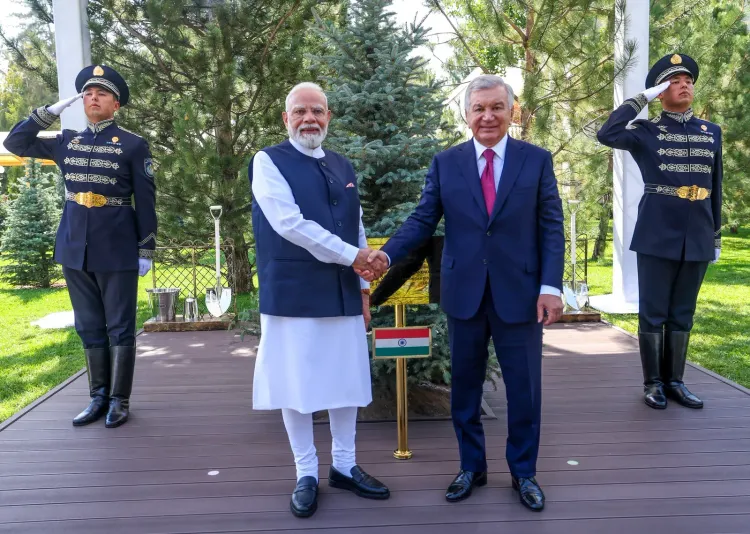
Synopsis
Modi's Tashkent visit did more than upgrade a diplomatic label — it locked in uranium supply frameworks, critical mineral value chains, and a foreign-ministers-led trade mechanism that gives India a rare, structured foothold in Central Asia. With Uzbekistan sitting on 139,000 tonnes of identified uranium reserves, the strategic upside extends well beyond bilateral goodwill.
Key Takeaways
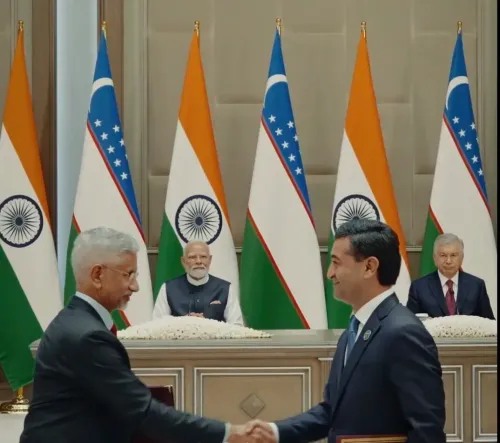
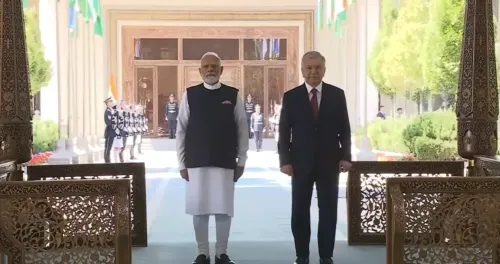
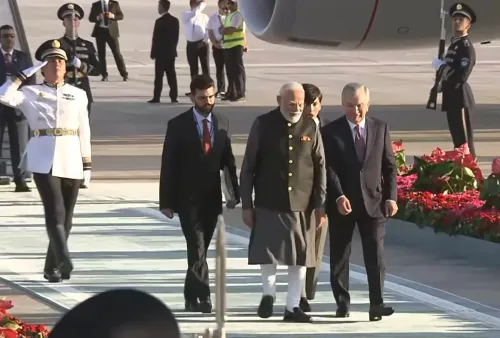
PM Modi 's 29–30 August visit to Tashkent elevated India-Uzbekistan ties to a Comprehensive Strategic Partnership .
11 agreements were signed covering uranium supply, critical minerals, trade routes, digital payments, and skills development.
Bilateral trade target set at $5 billion by 2030 , up from $1.3 billion , backed by a foreign-ministers-led coordination mechanism .
Uzbekistan produced 7,000 tonnes of uranium in 2025 and holds identified reserves of 139,000 tonnes , making it a significant potential supplier for India's civil nuclear programme.
Joint framework covers integrated value chains — exploration, mining, processing, and recycling — for critical minerals needed in EVs, defence, and clean energy.
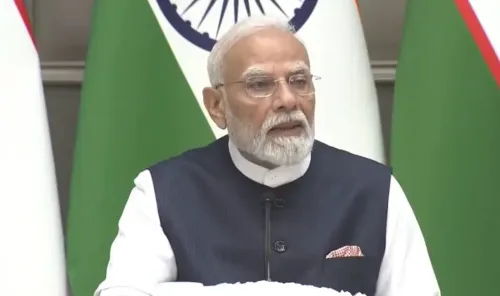
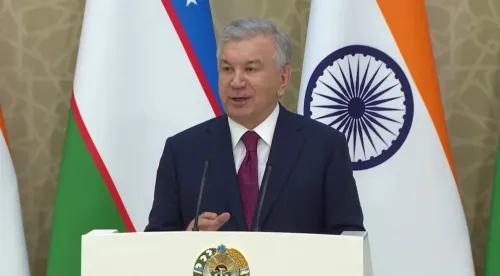
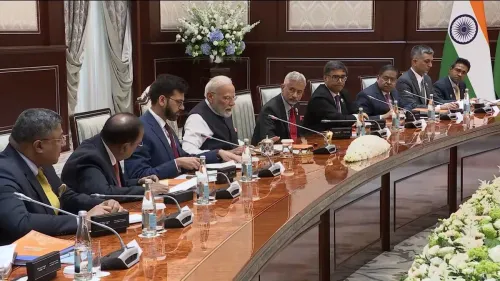
Prime Minister Narendra Modi's 29–30 August visit to Tashkent has formally elevated the India-Uzbekistan relationship from a strategic partnership to a Comprehensive Strategic Partnership, with 11 agreements signed across critical minerals, nuclear energy, trade routes, and digital payments. The visit, analysts say, positions India to build durable strategic options in a region long overshadowed by Russia, China, and Afghanistan.
What the 11 Agreements Cover
The agreements span a broad architecture: uranium supply frameworks, joint mineral exploration, digital payment interoperability, skills development, and cultural institutions. Crucially, the two sides agreed to a working group on non-tariff and investment barriers, a time-bound exploration of a preferential-trade agreement, and a business summit. These implementation mechanisms — investor-grievance redressal, regulatory dialogue, and possible mutual-recognition arrangements — are what separate paper commitments from on-ground outcomes.
According to analysis published in One World Outlook, 'The architecture of the agreements links the hard power of uranium and minerals, the practical power of trade routes and digital payments, and the durable power of skills, culture and institutions.'
Trade Target Backed by Implementation Mechanisms
The two countries have set a bilateral trade target of $5 billion by 2030, up from the current $1.3 billion. Unlike many such targets, this one is reportedly backed by a foreign-ministers-led coordination mechanism to oversee implementation — a structural detail that gives the figure some credibility. As the One World Outlook article notes, 'A trade target without these details is a slogan; with them, it becomes a testable development strategy.'
Critical Minerals and Nuclear Energy: The Strategic Core
The most consequential commitments concern geology, mining, and nuclear energy. India and Uzbekistan intend to pursue joint exploration, mining, processing, value-added production, and recycling of critical minerals required for electric vehicles, power grids, electronics, defence hardware, and solar units. Indian firms are also being encouraged to develop Uzbek mineral deposits directly.
On nuclear energy, the two sides advanced a long-term framework for Uzbek uranium supplies to India for civil nuclear cooperation. Uzbekistan produced 7,000 tonnes of uranium in 2025, with identified reserves reportedly reaching 139,000 tonnes, according to the Uzbek government. For India, which treats nuclear power as a pillar of its energy transition, a durable supply arrangement reduces dependence on a narrow set of existing suppliers.
Notably, the joint statement's emphasis on integrated value chains — covering processing, contractual reliability, environmental standards, and recycling — is seen as a more mature approach than a simple race to lock up raw materials.
Why This Region Matters for India
Central Asia has historically been treated as a geopolitical buffer zone between larger powers. India's deepened engagement with Uzbekistan signals an attempt to move beyond that framing and establish independent economic and strategic footholds. This comes amid India's broader push to diversify critical mineral sourcing and reduce supply-chain vulnerabilities — a priority that has gained urgency as global competition for EV and clean-energy inputs intensifies.
For Uzbekistan, the partnership offers a route to capture more industrial value domestically rather than exporting raw ore, aligning with its own economic diversification goals. The next test will be whether the implementation mechanisms translate the 11 signed agreements into verifiable contracts, investments, and jobs on both sides.
Point of View
India needs diversified upstream access, not just trade MoUs. Whether Indian firms actually develop Uzbek deposits — rather than simply signing intent documents — will be the true measure of this partnership's value.
NationPress
1 Sept 2026
Frequently Asked Questions
What is the India-Uzbekistan Comprehensive Strategic Partnership?
It is an upgraded bilateral framework formalised during PM Modi's 29–30 August 2025 visit to Tashkent, elevating the relationship from a strategic partnership to a Comprehensive Strategic Partnership. The upgrade was accompanied by 11 agreements covering uranium supply, critical minerals, trade, digital payments, and institutional cooperation.
What is the bilateral trade target between India and Uzbekistan?
India and Uzbekistan have set a bilateral trade target of $5 billion by 2030, compared to the current level of $1.3 billion. The target is backed by a foreign-ministers-led coordination mechanism and investor-grievance redressal processes to support implementation.
Why is Uzbekistan's uranium significant for India?
Uzbekistan produced 7,000 tonnes of uranium in 2025 and holds identified reserves of 139,000 tonnes, according to the Uzbek government. India, which relies on nuclear power as part of its energy transition strategy, has advanced a long-term framework for Uzbek uranium supplies to diversify its civil nuclear fuel sources.
Which sectors do the 11 agreements between India and Uzbekistan cover?
The agreements span critical mineral exploration and processing, uranium supply for civil nuclear use, trade route development, digital payment interoperability, skills development, and cultural and institutional cooperation. A working group on non-tariff barriers and a preferential-trade agreement exploration were also agreed upon.
How does this visit fit into India's broader Central Asia strategy?
The Tashkent visit signals India's intent to establish independent economic and strategic footholds in a region historically dominated by Russia and China. It aligns with India's push to diversify critical mineral supply chains for EVs, clean energy, and defence manufacturing, reducing reliance on a narrow set of existing suppliers.