Modi's tenure marked by stability and progress, says Sharmistha Mukherjee
Synopsis
In a striking cross-party assessment, Sharmistha Mukherjee — daughter of the late President Pranab Mukherjee and a Congress figure — has called PM Modi one of India's strongest Prime Ministers, crediting him with 12 years of governmental stability and citing Digital India as a landmark achievement. Her invocation of her father's own words lends the endorsement unusual political weight.
Key Takeaways
Sharmistha Mukherjee , daughter of former President Pranab Mukherjee , described PM Narendra Modi as 'one of the strongest Prime Ministers' of India.
She credited Modi with delivering a 'strong and stable Central government' over the past 12 years .
Her father had called the 2014 Lok Sabha elections a watershed, describing Modi as India's 'first directly elected Prime Minister in the true sense.' She cited the Digital India initiative as a standout policy, noting digital payments now reach remote villages.
On comparisons with past Prime Ministers, she said 'history will judge' and called direct comparisons 'not the right thing to do.'
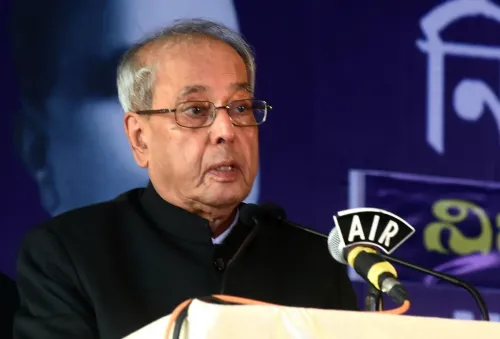
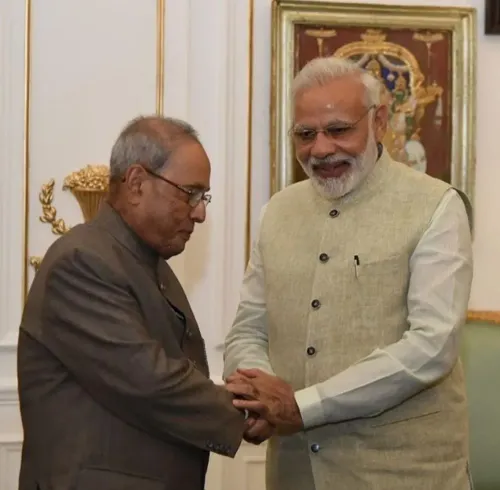
Sharmistha Mukherjee, daughter of former President Pranab Mukherjee, has described Prime Minister Narendra Modi's leadership over the past 12 years as a period of stability and progress — even as global uncertainty has deepened. Speaking in an interview from Gurugram on 28 June, she offered a rare cross-party assessment of Modi's political legacy, drawing on her father's own characterisation of the 2014 Lok Sabha elections as a watershed moment in Indian democracy.
A Personal Mandate, Not Just a Party Win
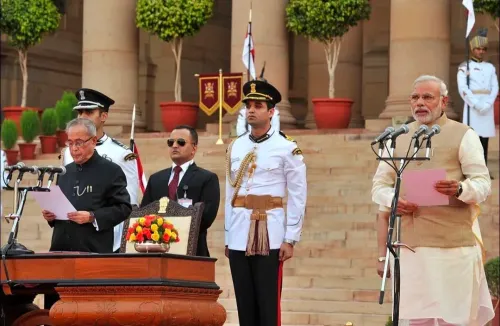
Mukherjee recalled that the political landscape was 'unique' when the Bharatiya Janata Party (BJP) announced then-Gujarat Chief Minister Narendra Modi as its prime ministerial candidate in 2013 — breaking with the convention, particularly in the Indian National Congress (Congress), of letting the parliamentary party elect its leader after winning elections.
'For the first time, Narendra Modi was a declared prime ministerial face. So people knew that if the BJP won the elections, Narendra Modi would become the Prime Minister,' she said. She argued that the 2014 victory was therefore 'not only for the BJP but also a personal mandate for Narendra Modi.'
Her father, the late Pranab Mukherjee, had described that election as the moment India got its 'first directly elected Prime Minister in the true sense' — a formulation Sharmistha cited from a recent article she published in a leading newspaper.
Stability as the Defining Achievement
'I have written in my article that he is one of the strongest Prime Ministers. It does not mean that there were no other strong Prime Ministers,' Mukherjee said. 'Narendra Modi has been successful in giving a strong and stable Central government to the country in the last 12 years. Many can criticise his policies because we are a democracy. However, one cannot deny that it has been a period of stability.'
She contextualised this against India's history of coalition politics, noting that the United Progressive Alliance (UPA) 1 and UPA 2 governments — despite being relatively stable — were coalition arrangements that constrained decision-making. 'In the history of India, one cannot help but wonder how a period of coalition government arrived and how it kept falling apart, and elections were held again and again,' she said.
Digital India Cited as a Landmark Policy
Among Modi's policy achievements, Mukherjee specifically highlighted the Digital India initiative, crediting it with 'significantly advancing the digitisation of the Indian economy.' She pointed to the reach of digital payments as evidence: 'You can even make online payments in any remote village of India,' she said, describing this as one of several impactful policies of the Modi government.
On Comparisons and History's Verdict
When asked whether Modi would be remembered as the strongest politician of independent India, Mukherjee was measured. 'Every Prime Minister contributes to the country's development. Each Prime Minister has different strengths and weaknesses. History will judge the strengths and shortcomings of each leader,' she said, adding that she did not think direct comparisons between Prime Ministers were appropriate.
She did, however, reserve specific praise for Modi's stewardship during the current period of global turbulence: 'Now, in the times of global uncertainty, the way PM Modi is taking forward a stable government is praiseworthy. He has done some of the most incredible work.' Critics, she acknowledged, retain the democratic right to question specific policies — but argued that the overall record of stability was difficult to dispute.
As Modi's government enters what Mukherjee frames as a consolidation phase, her cross-party voice adds an unusual dimension to the ongoing debate over his political legacy.
Point of View
Which suggests the endorsement is more about democratic process than ideological alignment. The more interesting question her interview raises — but does not answer — is whether stability alone is a sufficient metric for historical greatness, or whether it is the floor rather than the ceiling of good governance.
NationPress
28 Jun 2026
Frequently Asked Questions
What did Sharmistha Mukherjee say about PM Modi?
Sharmistha Mukherjee said PM Narendra Modi is 'one of the strongest Prime Ministers' India has had, crediting him with providing a stable Central government for 12 years. She made these remarks in an interview on 28 June, drawing on an article she had recently published in a leading newspaper.
Why is Sharmistha Mukherjee's opinion on Modi significant?
Sharmistha Mukherjee is the daughter of the late President Pranab Mukherjee, a towering Congress figure, making her positive assessment of a BJP Prime Minister politically notable. Her citation of her father's own description of 2014 as a watershed moment adds further weight to the endorsement.
What did Pranab Mukherjee say about the 2014 Lok Sabha elections?
According to Sharmistha Mukherjee, her father described the 2014 Lok Sabha elections as a watershed moment in Indian politics and said Narendra Modi became the country's 'first directly elected Prime Minister in the true sense.' She cited this characterisation in a recently published newspaper article.
Which Modi government policy did Sharmistha Mukherjee highlight?
She specifically highlighted the Digital India initiative, saying it had 'significantly advanced the digitisation of the Indian economy' and enabled digital payments even in remote villages. She described it as one of several impactful policies of the Modi government.
Did Sharmistha Mukherjee compare Modi to other Prime Ministers?
She declined to rank Modi above all other Prime Ministers, saying every leader has different strengths and weaknesses and that 'history will judge' each one. She said direct comparisons between Prime Ministers were 'not the right thing to do,' though she consistently described Modi as 'one of the strongest.'