Tripura plans 58 new agri markets in 2026-27, eyes food grain self-reliance
Synopsis
Tripura is pushing hard on farm infrastructure — 58 new agricultural markets planned for 2026-27 alone, backed by ₹461.83 crore allocated since 2018-19. Minister Ratan Lal Nath framed it as Tripura's contribution to PM Modi's goal of making India a global grain storage hub, with 70% of the state's population depending on agriculture for their livelihoods.
Key Takeaways
Tripura plans to develop 58 new agricultural markets in the 2026-27 financial year .
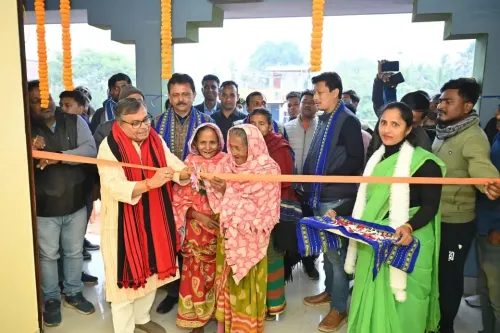
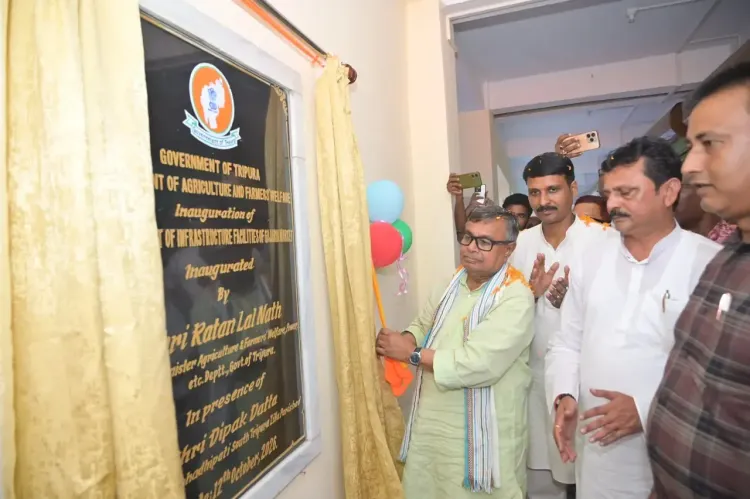
Minister Ratan Lal Nath inaugurated a ₹4.51 crore rural market at Gajaria Market , South Tripura , on 12 October 2026 .
A total of ₹461.83 crore has been allocated for infrastructure work at 204 markets between 2018-19 and 2026-27 ; 87 projects completed, 117 ongoing.
Tripura has 554 agricultural markets in total, including 84 primary wholesale markets and 470 rural markets.
The 2013–2017 period saw only 71 projects with an allocation of ₹20.27 crore — a fraction of the current investment pace.
About 70% of Tripura's population depends directly or indirectly on agriculture for their livelihoods.
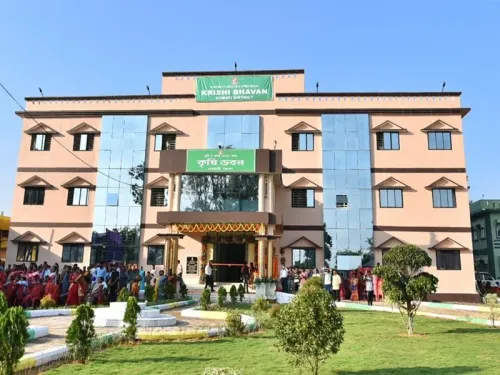
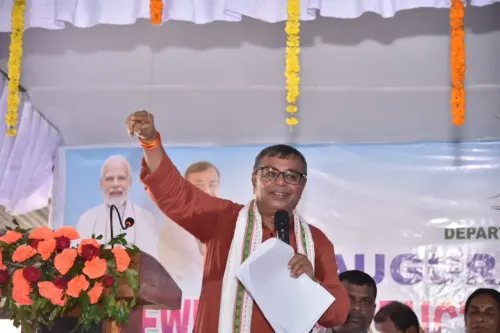
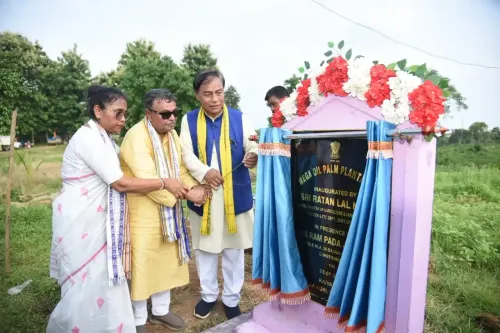
Tripura Agriculture and Farmers' Welfare Minister Ratan Lal Nath on Monday, 12 October 2026, announced that the state government plans to develop 58 additional agricultural markets during the 2026-27 financial year to strengthen rural infrastructure, boost farm incomes, and facilitate easier trade in agricultural produce. The announcement came during the inauguration of a new two-storey rural market at Gajaria Market in South Tripura district, built at a cost of ₹4.51 crore.
PM Modi's Vision and Tripura's Role
Minister Nath invoked Prime Minister Narendra Modi's broader ambition of establishing India as a global grain storage hub, framing Tripura's market expansion as part of that national goal. He said the state government was simultaneously working toward making Tripura self-sufficient in food grain production. Nath underscored that agriculture remains the backbone of India's economy, and that national development would remain incomplete without sustained growth in the sector.
'About 70 per cent of the people in our state are directly or indirectly dependent on agriculture for their livelihoods. Therefore, achieving self-reliance in agriculture means taking the state forward on the path of self-reliance. The development of agricultural infrastructure is essential to achieve this goal,' Nath said at the event.
Scale of Market Infrastructure in Tripura
Nath said Tripura currently has 554 agricultural markets in total — comprising 84 primary wholesale markets (of which 21 are agricultural produce markets) and 470 primary or rural markets. Between 2018-19 and 2026-27, infrastructure development work was undertaken at 204 markets, with a total allocation of ₹461.83 crore. Of these, 87 projects have been completed, while work on the remaining 117 is still in progress.
A Sharp Contrast With the Previous Period
The scale of the current investment stands in sharp relief against the previous administration's record. During the five-year period from 2013 to 2017, only 71 market development projects were undertaken with a total allocation of approximately ₹20.27 crore — a fraction of the current outlay. The Agriculture and Farmers' Welfare Department is now implementing multiple schemes for both primary rural markets and regulated agricultural markets based on identified proposals.
Expected Impact on Farmers and Rural Economy
Nath said the expansion of rural market infrastructure would help farmers market their produce more efficiently, reduce dependence on middlemen, and contribute directly to rising agricultural incomes. He expressed hope that better facilities would benefit both local farmers and traders, ultimately strengthening the rural economy and advancing the state's self-reliance goals. This comes amid a broader national push to modernise agricultural supply chains and reduce post-harvest losses across states.
Point of View
But the 117 projects still in progress warrant scrutiny on timelines and fund utilisation. Tripura's geographic isolation and weak connectivity historically blunted the value of market infrastructure — better mandis alone will not raise farm incomes if logistics and cold-chain gaps persist. The framing of a state-level scheme under PM Modi's 'global grain storage hub' vision also reflects the Centre-state messaging alignment characteristic of BJP-governed states, which can sometimes obscure the degree to which delivery depends on state-level capacity rather than central vision.
NationPress
13 Oct 2026
Frequently Asked Questions
How many agricultural markets does Tripura plan to develop in 2026-27?
Tripura plans to develop 58 additional agricultural markets in the 2026-27 financial year, according to Agriculture and Farmers' Welfare Minister Ratan Lal Nath. The move is aimed at improving facilities for farmers and traders and boosting rural incomes.
What is PM Modi's vision for India as a global grain storage hub?
Prime Minister Narendra Modi's vision, as cited by Minister Nath, is to establish India as a global grain storage hub — positioning the country as a major node in international food supply chains. State-level efforts like Tripura's market infrastructure expansion are being framed as contributions toward this national goal.
What is the total investment in Tripura's agricultural market infrastructure since 2018-19?
A total of ₹461.83 crore has been allocated for infrastructure development work at 204 agricultural markets in Tripura between 2018-19 and 2026-27. Of these, 87 projects have been completed and 117 are still in progress.
How does the current pace of development compare with the 2013–2017 period?
Between 2013 and 2017, only 71 market development projects were undertaken with an allocation of around ₹20.27 crore. The current allocation is more than 22 times higher, reflecting a sharp increase in public investment in agricultural infrastructure.
Why is agricultural market infrastructure important for Tripura?
About 70% of Tripura's population depends directly or indirectly on agriculture for their livelihoods, making farm infrastructure critical to the state's economic development. Better rural markets are expected to help farmers sell produce more efficiently, reduce middlemen dependency, and raise agricultural incomes.