How is Tripura Enhancing Self-Reliance in Crop Production with Rural Markets?
Synopsis
Tripura's government is making significant strides towards achieving self-reliance in agriculture by investing Rs 303.44 crore in 144 rural markets since 2018. Minister Ratan Lal Nath highlights the state's focus on enhancing farmers' income and promoting sustainable practices in crop production.
Key Takeaways
Investment of Rs 303.44 crore in rural markets.
144 rural markets established since 2018.
Focus on self-reliance in crop production.
Targeting urban farming initiatives.
Tripura ranks sixth in rice production in India.
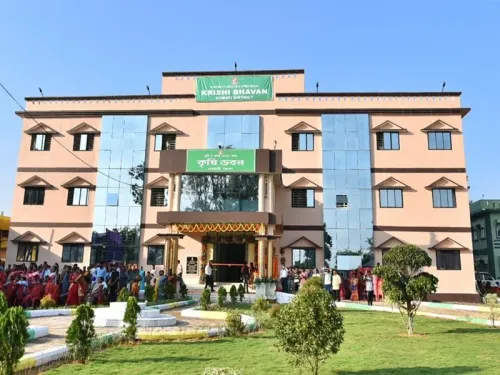
Agartala, Nov 5 (NationPress) To promote self-sufficiency in crop production, the Tripura government has successfully established 144 rural markets with an investment of Rs 303.44 crore since the BJP assumed power in 2018, as stated by state Agriculture and Farmers' Welfare Minister Ratan Lal Nath on Wednesday.
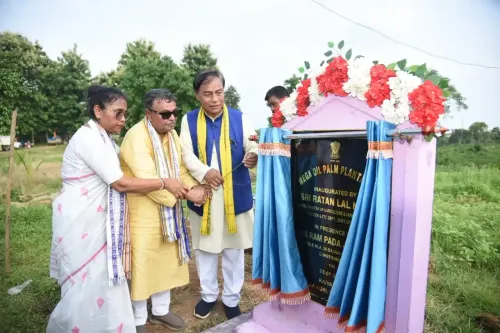
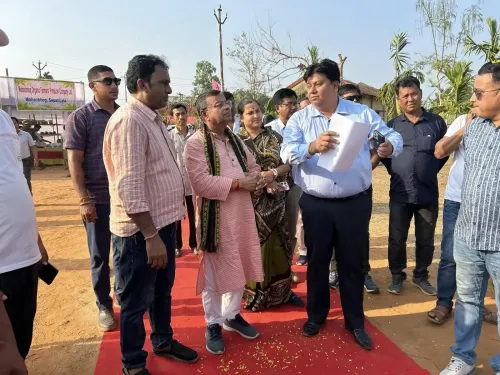
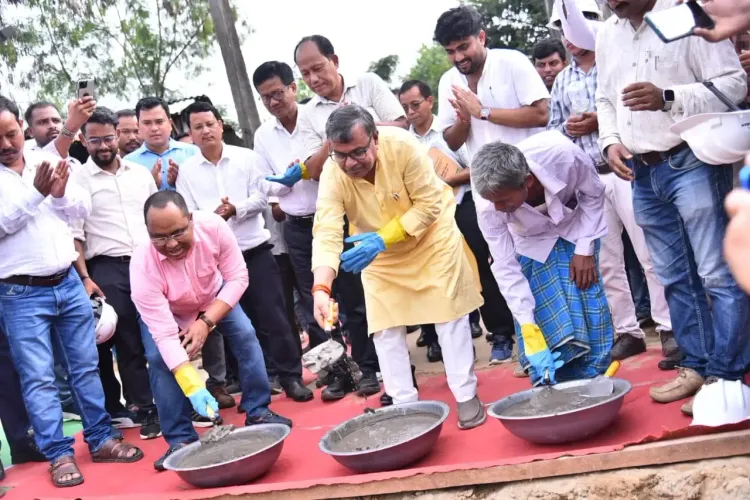
During an official event in Khowai district, the minister revealed that in addition to the 144 rural markets already operational, plans are underway to set up one market in each of the 60 Assembly constituencies throughout Tripura, enabling farmers to sell their products effortlessly.
Minister Nath, who also oversees the Power and Parliamentary Affairs portfolio, mentioned that these 144 rural markets were constructed with the financial support of NABARD under the RIDF (Rural Infrastructure Development Fund) project since 2018.
"From 2018-19 to the present, Rs 303.44 crore has been invested to develop the 144 rural markets in Tripura, whereas during the last seven years of the previous Left Front government, only Rs 20 crore was allocated for market development," the Minister pointed out.
He further indicated that two additional districts in Tripura, Dhalai and Khowai, are on track to achieve self-sufficiency in food grain production, and the state government is prioritizing urban farming initiatives.
Minister Nath asserted that among the eight districts, South Tripura, Sepahijala, and Gomati are already self-reliant in food grain production.
He highlighted that while Tripura benefits from ample rainfall, crop damage due to insect infestations remains a significant challenge.
"In the past, we relied on importing potatoes from other regions, but within three years, we aim to become self-sufficient in potato and onion production. We are also encouraging farmers to cultivate more pulses and focus on organic farming, with production steadily increasing," asserted the Minister.
Pointing out the limitations of cultivable land in Tripura, he remarked, "If more land were available, our production capacity would rise. Our farmers are dedicated and hardworking. With favorable rainfall, Dhalai and Khowai will also achieve self-sufficiency in food grain production. In the West District, we are concentrating on urban farming, particularly horticulture, due to higher population density and limited land availability."
The Agriculture Minister noted that the 'Pradhan Mantri Dhan Dhaanya Krishi Yojana', launched by Prime Minister Narendra Modi on October 11, aims to accelerate agricultural progress in 100 districts nationwide, including North Tripura District.
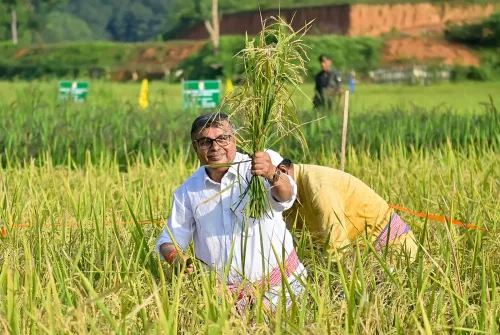
"Tripura ranks sixth in all-India rice production, with an average yield of 3,299 kg per hectare, surpassing the national average of 2,882 kg per hectare," said Minister Nath.
He mentioned that the national average for pulses is 881 kg per hectare, while Tripura's stands at 856 kg per hectare, which is slightly below average.
In terms of agricultural loans, Sepahijala district leads, followed by South District and West District, while North District has received fewer agricultural loans. All these metrics are being monitored at the national level, the Minister emphasized.
The agriculture department is particularly focused on increasing pulse production. "Agriculture is the backbone of India. The Prime Minister envisions modern, innovative, and stable management in agriculture to position the country as the world's grain bank," he concluded.
Minister Nath highlighted that approximately 70 percent of Tripura's population is directly or indirectly reliant on agriculture for their livelihoods.
"Achieving self-reliance in agriculture translates to advancing the state towards self-sufficiency. The Agriculture and Farmers' Welfare Department is working diligently to enhance farmers' income and ensure self-sufficiency in food crop production," the Minister affirmed.
Point of View
It's essential to recognize Tripura's proactive measures in enhancing agricultural self-reliance. The government's investment in rural markets is a commendable step towards empowering farmers and ensuring food security. Such initiatives reflect a broader commitment to sustainable agricultural practices, which is crucial for the nation's agricultural landscape.
NationPress
25 Sept 2026
Frequently Asked Questions
What is the purpose of the rural markets established in Tripura?
The rural markets aim to empower farmers by providing them with a platform to sell their produce without any hindrances, promoting self-reliance in crop production.
How much has the Tripura government invested in rural markets?
The Tripura government has invested Rs 303.44 crore for the establishment of 144 rural markets since 2018.
What is the current status of food grain production in Tripura?
Currently, South Tripura, Sepahijala, and Gomati districts are self-sufficient in food grain production, with Dhalai and Khowai districts on track to achieve the same.
What challenges does Tripura face in crop production?
Insect attacks on crops pose a significant challenge to Tripura's agricultural production.
How does Tripura's rice production compare to the national average?
Tripura ranks sixth in all-India rice production, yielding 3,299 kg per hectare, which exceeds the national average of 2,882 kg per hectare.