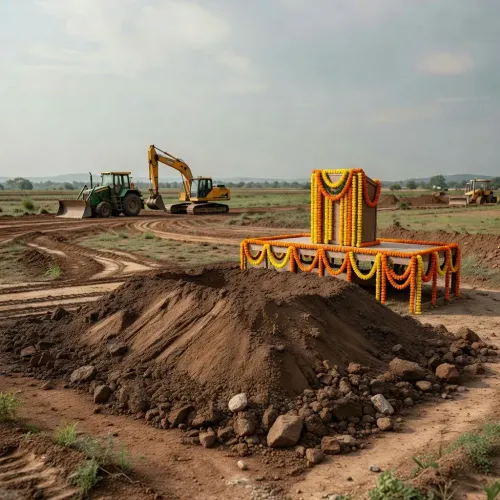
Kishan Reddy: PM Modi to lay stone of ₹25,016 cr coal project
Synopsis
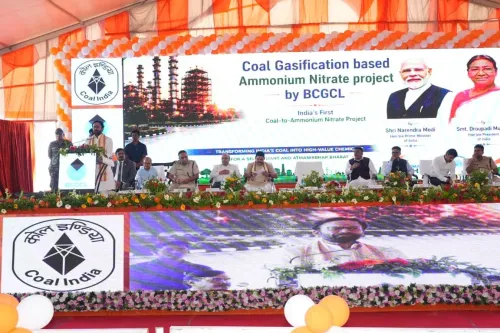
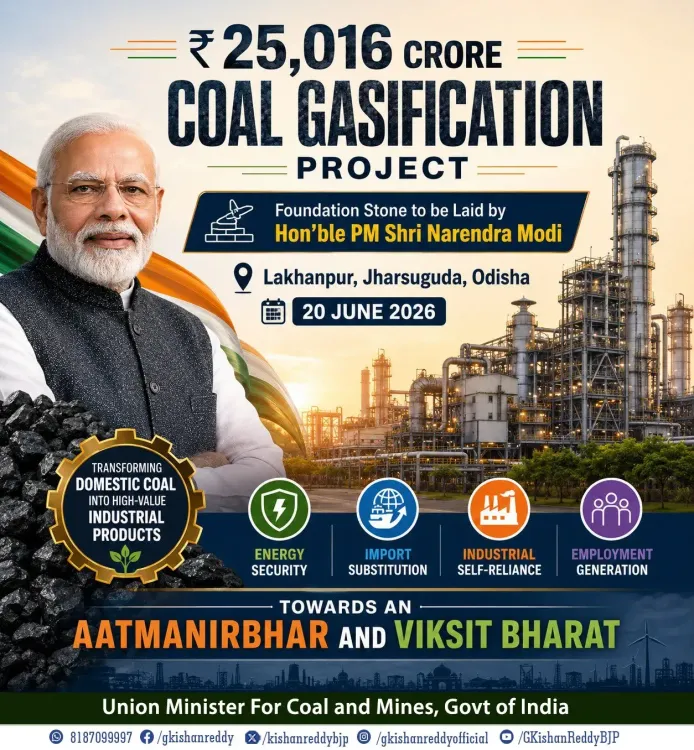
Prime Minister Modi will on 20 June 2026 lay the foundation stone of India's first commercial-scale Coal-to-Ammonium Nitrate plant in Jharsuguda, Odisha. The ₹25,016 crore project by BCGCL — a BHEL–Coal India joint venture — will produce 2,000 tonnes of ammonium nitrate daily and is anchored in the government's Coal Gasification Mission.
Key Takeaways
PM Modi will lay the foundation stone of the ₹25,016 crore Lakhanpur Coal Gasification Project on 20 June 2026 in Jharsuguda, Odisha .
The facility is India's first commercial-scale Coal-to-Ammonium Nitrate plant, with a daily production capacity of 2,000 tonnes .
It will be developed by Bharat Coal Gasification and Chemicals Limited (BCGCL) , a joint venture of BHEL and Coal India Limited .
The project uses indigenously developed coal gasification technology by BHEL and receives ₹1,350 crore under the Ministry of Coal's incentive scheme.
Spread across 350 acres , the project is expected to generate around 50,000 direct and indirect jobs in coal-bearing regions.
The broader Coal Gasification Mission is expected to attract total investments of ₹2.5–3 lakh crore .
Union Coal and Mines Minister G. Kishan Reddy announced on 19 June 2026 that Prime Minister Narendra Modi will lay the foundation stone of the ₹25,016 crore Lakhanpur Coal Gasification Project at Jharsuguda, Odisha, on 20 June 2026. The project, described as India's first commercial-scale Coal-to-Ammonium Nitrate facility, is a joint venture between BHEL and Coal India Limited under the entity Bharat Coal Gasification and Chemicals Limited (BCGCL).
Context
Reddy's post frames the project as 'a major step towards strengthening India's energy security, promoting import substitution, and accelerating industrial self-reliance.' The facility will be spread across approximately 350 acres in Lakhanpur, Odisha, and will have a production capacity of 2,000 tonnes of ammonium nitrate per day. It is built on coal gasification technology indigenously developed by BHEL, making it a flagship demonstration of public-sector R&D translated into commercial scale.
The project receives ₹1,350 crore in support under the Ministry of Coal's incentive scheme, underlining the government's financial commitment to scaling domestic coal-to-chemicals capacity. Ammonium nitrate is a critical industrial input used in mining explosives and fertilisers, sectors where India has historically depended on imported feedstocks.
Policy Backdrop
The Lakhanpur project is a key component of the government's Coal Gasification Mission, which was conceptualised around 2020 to convert domestic coal into chemicals and reduce import dependence on natural gas and fertiliser feedstocks. The Mission is expected to attract investments of ₹2.5–3 lakh crore in total, of which this project represents an early anchor investment.
The broader Aatmanirbhar Bharat programme, launched in 2020, explicitly included substitution of imported feedstocks through indigenous coal gasification as a strategic priority. India holds some of the world's largest proven coal reserves, concentrated in eastern states including Odisha, Jharkhand, and Chhattisgarh, yet has historically used coal almost exclusively for power generation rather than chemicals production.
BHEL, a public-sector engineering major, developed the gasification technology deployed here — a significant milestone for domestic industrial R&D. The joint venture structure between BHEL and Coal India Limited through BCGCL mirrors a broader pattern of pairing equipment manufacturers with resource companies to commercialise indigenously developed technologies at scale.
Stakeholders and Impact
The project is projected to generate around 50,000 direct and indirect employment opportunities across coal-bearing regions, according to the announcement. Odisha, which hosts the facility, stands to benefit from industrial investment in Jharsuguda, a district in the state's coal-rich western belt that has long sought to diversify beyond raw coal extraction.
The fertiliser and mining industries are the primary downstream beneficiaries: domestic ammonium nitrate production at this scale would reduce the import bill for nitrate-based explosives and agricultural inputs. The Ministry of Coal serves as the nodal ministry administering both the Mission and the incentive disbursements that underpin the project's financial viability.
What's Next
The 20 June 2026 foundation-stone ceremony marks the formal commencement of construction rather than production. Attention will now turn to rollout timelines for the remaining projects under the Coal Gasification Mission and to parliamentary scrutiny of incentive disbursements during the 2026–27 budget session. The success of the Lakhanpur facility in achieving its production targets will be closely watched as a proof-of-concept for scaling coal gasification technology across India's eastern coal belt.
Point of View
Commercial-scale project anchored by two public-sector giants. By routing the facility through a BHEL–Coal India joint venture, the Centre is simultaneously validating indigenous technology and insulating the project from private-sector execution risk — a pattern consistent with how it has handled other strategic infrastructure. The ₹1,350 crore incentive disbursement will be a test of the Ministry of Coal's administrative capacity and will set a precedent for how subsequent Coal Gasification Mission projects are funded. For Odisha and the broader eastern coal belt, the project's success or delay will shape the political economy of industrial diversification in a region long defined by raw resource extraction.
NationPress
19 Sept 2026
Frequently Asked Questions
What is the Lakhanpur Coal Gasification Project?
The Lakhanpur Coal Gasification Project is a ₹25,016 crore facility in Jharsuguda, Odisha, that will convert coal into ammonium nitrate. It is India's first commercial-scale Coal-to-Ammonium Nitrate plant, with a daily production capacity of 2,000 tonnes, and will be built by BCGCL, a joint venture of BHEL and Coal India Limited.
When will PM Modi lay the foundation stone of the Lakhanpur project?
Prime Minister Narendra Modi is scheduled to lay the foundation stone on 20 June 2026 at Jharsuguda, Odisha, as announced by Union Coal and Mines Minister G. Kishan Reddy.
Who is developing the Lakhanpur Coal Gasification Project?
The project will be developed by Bharat Coal Gasification and Chemicals Limited (BCGCL), a joint venture between BHEL (Bharat Heavy Electricals Limited) and Coal India Limited, using indigenously developed coal gasification technology.
What is India's Coal Gasification Mission?
India's Coal Gasification Mission is a government initiative to convert domestic coal into chemicals and fuels, reducing dependence on imported feedstocks. The Mission is expected to attract total investments of ₹2.5–3 lakh crore, with the Lakhanpur project being one of its key early components.
How many jobs will the Lakhanpur project create?
The project is expected to generate around 50,000 direct and indirect employment opportunities across coal-bearing regions, according to the announcement by Coal Minister G. Kishan Reddy.