Should the Tamil Nadu government directly procure sugarcane for the Pongal gift scheme?
Click to start listening
Synopsis
As the Pongal festival approaches, PMK President Anbumani Ramadoss emphasizes the urgent need for the Tamil Nadu government to directly procure sugarcane from farmers. He warns that delays in policy announcement are causing distress among cultivators, pushing for reforms to support the agricultural community during this critical time.
Key Takeaways
- Direct procurement of sugarcane is crucial for farmer welfare.
- The cost of sugarcane cultivation is rising, impacting farmers' profits.
- Middlemen are taking advantage of farmers, leading to financial strain.
- Current procurement norms are considered impractical by farmers.
- Government intervention is needed to support the agricultural sector.
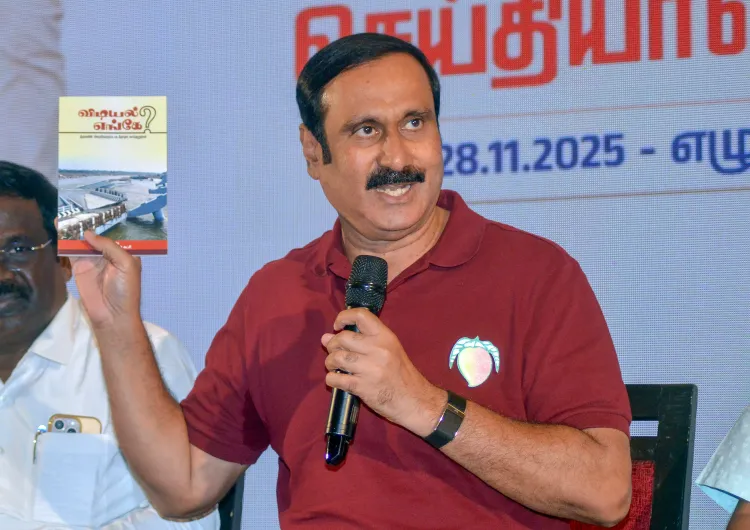
Chennai, Jan 1 (NationPress) PMK President Anbumani Ramadoss has called on the Tamil Nadu government to directly buy sugarcane from farmers and distribute two canes per family as part of the Pongal gift scheme, expressing concern that delays and vague policies are driving farmers into distress.
In a statement released on Thursday, Anbumani pointed out that with only two weeks remaining until the Pongal festival, there has been no clear announcement regarding the gift package or the inclusion of sugarcane.
This lack of clarity has led to anxiety among farmers who cultivated paneer karumbu (or SengKarumbu) in anticipation of guaranteed procurement by the state.
Addressing the financial burdens faced by farmers, Anbumani noted that the expense of cultivating sugarcane has surged to nearly Rs 2.25 lakh per acre, including costs for planting, maintenance, harvesting, and labor. Despite this, farmers are receiving only Rs 18 to Rs 19 per cane, while the official procurement price remains at Rs 35.
He accused middlemen of taking advantage of farmers by claiming a portion of the harvest and imposing high transport and handling fees, leaving cultivators with minimal profits.
The PMK leader criticized what he described as unreasonable procurement standards, particularly the stipulation that only sugarcane longer than seven feet will be accepted. Such criteria lead to the rejection of significant quantities of produce.
Moreover, he argued that distributing just one sugarcane per family contradicts tradition and diminishes demand, consequently impacting farmers' earnings. Anbumani pointed out that the area dedicated to sugarcane farming in Tamil Nadu has been gradually declining due to ongoing losses. To reverse this trend, he urged the government to set the procurement price at Rs 50 per cane, eliminate middlemen, and guarantee the distribution of two sugarcanes per ration card as part of the Pongal package.
In a separate declaration, he expressed alarm over escalating law and order issues, referencing a recent violent incident involving a migrant worker at the Tiruttani railway station. This incident underscores the growing threat of drug abuse and violence in the state.
Additionally, CPI(M) state secretary P. Shanmugam urged the government to enhance the Pongal gift scheme by including one kilogram of jaggery along with rice and sugar. He emphasized that direct procurement from farmers would not only benefit cultivators but also honor the essence of the harvest festival.
Point of View
The situation reflects broader challenges faced by farmers across India. The call for direct procurement underscores the need for government intervention in agricultural practices, ensuring that farmers receive fair compensation and support. As the Pongal festival approaches, it is crucial to address these issues to sustain the agricultural sector and uphold traditions.
NationPress
08/01/2026
Frequently Asked Questions
What is the Pongal gift scheme?
The Pongal gift scheme is a government initiative in Tamil Nadu aimed at providing essential items, including sugarcane, to families during the Pongal festival.
Why is direct procurement of sugarcane important?
Direct procurement helps ensure that farmers receive fair prices for their produce, reduces exploitation by middlemen, and supports their livelihoods.
What are the current challenges faced by sugarcane farmers?
Farmers are facing rising cultivation costs, low procurement prices, and unfavorable procurement standards, which threaten their financial stability.
How does the sugarcane procurement process work?
Typically, the government sets a procurement price, and farmers sell their sugarcane to state agencies, but this process can be hampered by middlemen and complex regulations.
What changes are being proposed by Anbumani Ramadoss?
Anbumani Ramadoss proposes fixing the procurement price at Rs 50 per cane, removing middlemen, and ensuring two sugarcanes per family in the Pongal package.