Pradhan flags tribal education journey from Eklavya to Utkarsh
Synopsis
Union Education Minister Dharmendra Pradhan invoked the journey from Eklavya Model Residential Schools to excellence in tribal education, addressing the Vice President on 15 November 2026 and reflecting the government's shift from access to quality outcomes for Scheduled Tribe children.
Key Takeaways
Union Education Minister Dharmendra Pradhan posted on 15 November 2026 framing tribal schooling as a journey 'from Eklavya to excellence.' The post was addressed directly to the Vice President of India , signalling high-level political priority for tribal education outcomes.
Eklavya Model Residential Schools (EMRS) were launched in 1997–98 to provide quality residential education to Scheduled Tribe children in remote areas.
Policy focus has shifted from mere access to quality outcomes, in line with National Education Policy 2020 mandates for tribal learners.
Odisha , Pradhan's home state, has one of India's largest tribal populations and a significant number of EMRS institutions.
From the forests of remote India to the threshold of quality learning — Union Education Minister Dharmendra Pradhan framed the story of tribal schooling as a transformative arc on Sunday, 15 November 2026, invoking the journey from Eklavya Model Residential Schools to a new standard of excellence, in a message addressed to the Vice President of India.
The Odia-language post, titled 'Ekalabyaru Utkarsha Paryanta' ('From Eklavya to Excellence'), captures the government's framing of tribal education as a journey — not just an infrastructure programme. Pradhan addressed the Vice President directly, signalling the high political weight the administration now attaches to outcomes in Scheduled Tribe learning.
What the Eklavya schools were built to do
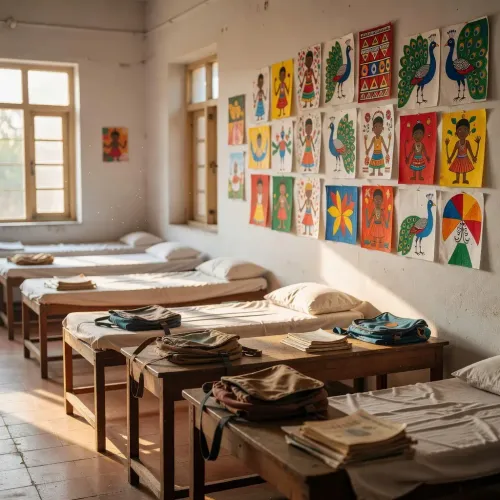
Launched in 1997–98 under the Ministry of Tribal Affairs, the Eklavya Model Residential Schools (EMRS) were designed to deliver quality, government-funded residential education to Scheduled Tribe children in India's most geographically isolated blocks. Each school is intended to be on par with Navodaya Vidyalayas in infrastructure and academic standards, bringing boarding facilities to communities where daily commutes to schooling are simply not possible.
Successive governments expanded the network, and the current administration has pushed aggressively to close the gap between sanctioned and operational schools. Odisha — Pradhan's home state — holds one of the country's largest tribal populations and a significant cluster of EMRS institutions, giving the minister a personal stake in the programme's performance.
'Utkarsh': raising the ceiling, not just the floor
The pivot from Eklavya to 'Utkarsha' (excellence or uplift) in Pradhan's framing is deliberate. Where the original scheme was about access — getting tribal children into school at all — the current policy conversation has shifted to quality outcomes: learning levels, teacher training, and integration with the provisions of the National Education Policy 2020, which specifically mandates mother-tongue instruction and targeted support for Scheduled Tribe learners in early grades.
The involvement of the Vice President underscores that tribal education is no longer treated solely as a welfare measure — it is being elevated to a constitutional and civilisational priority in official discourse.
The road from a mythological archer who taught himself in the forest to a residential school that opens doors for thousands of children across tribal India is exactly the kind of narrative the government wants to own. Whether Eklavya's students reach Utkarsha will be measured in classrooms, not posts — and those numbers are the real scorecard.
Point of View
Looping in the Vice President as a constitutional anchor. The shift in vocabulary — from 'access' (Eklavya) to 'excellence' (Utkarsh) — mirrors the broader NEP 2020 framing that quality, not just enrolment, is the new benchmark. For a minister from Odisha, a state with deep tribal demographics and ongoing EMRS expansion, this is also local political messaging with national resonance. The question analysts will ask is whether school-level learning data backs the rhetorical leap.
NationPress
15 Nov 2026
Frequently Asked Questions
What are Eklavya Model Residential Schools?
Eklavya Model Residential Schools (EMRS) are government-funded residential schools launched in 1997–98 to provide quality education to Scheduled Tribe children in remote and tribal areas of India, comparable in standard to Navodaya Vidyalayas.
What did Dharmendra Pradhan post about tribal education?
On 15 November 2026, Union Education Minister Dharmendra Pradhan posted in Odia framing the journey of tribal education as moving 'from Eklavya to excellence,' addressing the Vice President of India directly on the subject.
How does NEP 2020 address tribal education in India?
The National Education Policy 2020 specifically mandates mother-tongue instruction in early grades and targeted support for Scheduled Tribe learners to ensure equitable and inclusive outcomes across India's tribal communities.
Which state has the most Eklavya Model Residential Schools?
States with large tribal populations such as Odisha, Madhya Pradesh, Jharkhand, and Chhattisgarh have significant clusters of Eklavya Model Residential Schools, with Odisha being particularly prominent given its tribal demographic.
Why is the Vice President involved in tribal education discussions?
The Vice President of India chairs the Rajya Sabha and holds a constitutional role; the Education Minister's direct address signals the government's intent to elevate tribal education from a welfare programme to a constitutional and national priority.