Rajasthan CMO highlights EMRS push for tribal children
Synopsis
The Chief Minister's Office of Rajasthan spotlighted the Centre's Eklavya Model Residential Schools scheme on 27 September 2026, highlighting hundreds of free residential schools and hostel facilities being provided for tribal children across India under the Ministry of Tribal Affairs programme.
Key Takeaways
The Chief Minister's Office of Rajasthan posted on 27 September 2026 highlighting the EMRS scheme for tribal children, tagging CM Bhajanlal Sharma .
The Eklavya Model Residential Schools (EMRS) scheme was launched in 1997-98 by the Ministry of Tribal Affairs to provide residential schooling to Scheduled Tribe students in remote areas.
The scheme was significantly revamped in 2018-19 with higher per-school grants and a target to establish hundreds of new EMRS across India.
Both dedicated EMRS campuses and free hostel facilities are part of the national rollout.
Rajasthan's tribal population is concentrated in districts including Dungarpur, Banswara, and Udaipur , making the scheme directly relevant to the state.
State-wise operationalisation and enrolment numbers remain the key measure of scheme delivery beyond political communication.
Hundreds of Eklavya Model Residential Schools (EMRS) and free hostel facilities are being extended to tribal children across India — a fact the Chief Minister's Office of Rajasthan put front and centre on Sunday, 27 September 2026, tagging Chief Minister Bhajanlal Sharma in a post that amplified the Centre's flagship tribal education drive under the hashtag #आपणो_अग्रणी_राजस्थान ('Our Progressive Rajasthan').
What the Eklavya scheme actually does
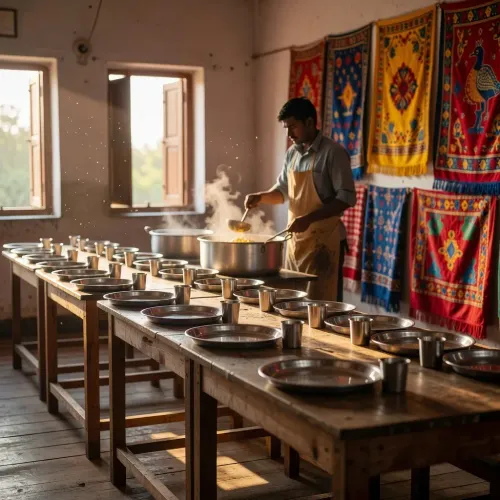
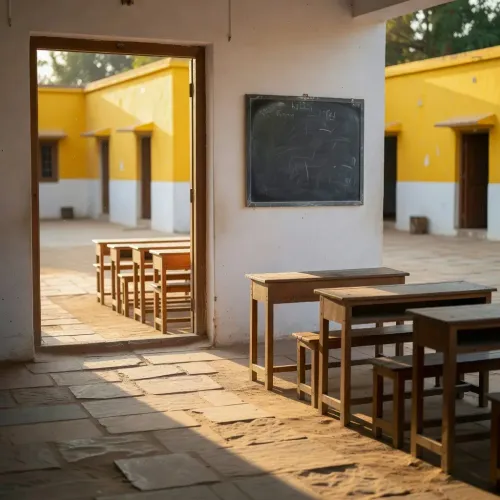
Launched in 1997-98 by the Ministry of Tribal Affairs, the EMRS scheme was designed with a single, urgent purpose: bring quality residential schooling to Scheduled Tribe children in India's most remote corners — places where daily commutes to school are not an option and dropout rates have historically been high. The schools provide not just classrooms but dormitories, meals, and an uninterrupted academic environment, removing the twin barriers of distance and cost that have long kept tribal families out of the education mainstream.
The scheme got a significant structural upgrade in 2018-19, when per-school grants were raised and a target was set to establish hundreds of additional EMRS across states. The post from the Rajasthan CMO flags both residential schools and free hostel facilities as part of this national rollout — underscoring that the programme's reach extends beyond purpose-built EMRS campuses to standalone hostel infrastructure in tribal belts.
Rajasthan's place in the tribal education picture
Rajasthan is home to a substantial Scheduled Tribe population concentrated in districts like Dungarpur, Banswara, Udaipur, and the Vagad region — areas where the EMRS model has particular relevance. CM Bhajanlal Sharma, who took office in December 2023 leading the state's BJP government, has made aligning Rajasthan's welfare communications with Central scheme branding a visible political priority. The CMO's post is consistent with that pattern: state machinery highlighting a nationally funded programme, signalling active participation and ownership.
The Ministry of Tribal Affairs funds and designs the EMRS framework; states handle land, local administration, and operationalisation. How many additional schools are sanctioned or made operational in Rajasthan in upcoming budget cycles will be the concrete measure of progress beyond the messaging.
Why tribal residential schooling remains the hardest problem to solve
The EMRS model exists because the alternative — day schools in forested or hilly terrain — has a poor track record. Children who must walk hours to class rarely complete secondary education. Residential schools collapse that geography problem, but they also require sustained per-pupil expenditure, trained teachers willing to serve in remote postings, and governance oversight that is consistently hard to maintain at scale. The 2018-19 revamp addressed funding, but the quality and staffing challenge is ongoing across states.
For tribal families, an EMRS seat is not just an education — it is often the first uninterrupted, fully supported path through secondary school a child in that household has ever had. That is the stakes behind a scheme that can sound bureaucratic in policy documents but plays out as a life-altering intervention on the ground.
The question for Rajasthan — and for every state with a tribal population — is not whether the scheme exists, but how fast new schools are built, staffed, and filled. Budget announcements set targets; enrolment numbers and infrastructure completion rates tell the real story.
Point of View
But its expansion in the 2018-19 revamp aligns it firmly with BJP-era tribal welfare messaging. The broader policy arc here is the Centre's shift from access-only metrics (are schools available?) to quality-and-completion metrics — a harder challenge the post sidesteps. How Rajasthan converts scheme announcements into operational schools and verifiable enrolment gains will determine whether this communication reflects substance or stays at the level of optics.
NationPress
27 Sept 2026
Frequently Asked Questions
What is the Eklavya Model Residential School scheme?
The Eklavya Model Residential School (EMRS) scheme is a centrally sponsored programme launched in 1997-98 by India's Ministry of Tribal Affairs to provide free quality residential schooling to Scheduled Tribe children, particularly in remote areas where access to regular schooling is difficult.
How many Eklavya Model Residential Schools are there in India?
Hundreds of EMRS have been sanctioned across India, with a major expansion target set during the 2018-19 revamp of the scheme. Specific up-to-date operational counts by state are updated periodically by the Ministry of Tribal Affairs.
What does the EMRS scheme provide to tribal children?
EMRS provides tribal children with residential schooling, hostel accommodation, meals, and an uninterrupted academic environment — removing barriers of distance and cost that have historically led to high dropout rates among Scheduled Tribe students.
What is Rajasthan CM Bhajanlal Sharma's role in the EMRS scheme?
Bhajanlal Sharma is the BJP Chief Minister of Rajasthan since December 2023. The EMRS scheme is centrally funded and designed by the Ministry of Tribal Affairs; the state government's role is to facilitate land, local administration, and operationalisation of sanctioned schools in Rajasthan.
Which districts in Rajasthan have a large tribal population benefiting from EMRS?
Rajasthan's Scheduled Tribe population is concentrated in southern districts including Dungarpur, Banswara, and Udaipur — the regions where residential school programmes like EMRS have the most direct impact.