Pradhan Spotlights Bhitarkanika's Mangroves and Crocodiles
Synopsis
Union Education Minister Dharmendra Pradhan spotlighted Bhitarkanika National Park on November 11, 2026, celebrating its mangroves, saltwater crocodiles, and biodiversity as symbols of Odisha's ecological heritage and calling for their protection.
Key Takeaways
Dharmendra Pradhan posted on November 11, 2026 celebrating Bhitarkanika's mangroves and saltwater crocodiles.
Bhitarkanika National Park , in Kendrapara district, Odisha , was declared a national park in 1998 and a Ramsar wetland site in 2002 .
The park hosts one of India's largest saltwater crocodile populations and rich avian and marine biodiversity.
Odisha's mangrove belts are part of India's coastal resilience strategy under the National Action Plan on Climate Change .
India's National Mangrove Conservation Programme has funded restoration in Odisha since the 1990s .
Pradhan called on citizens to 'celebrate and safeguard' Odisha's natural coastal heritage.
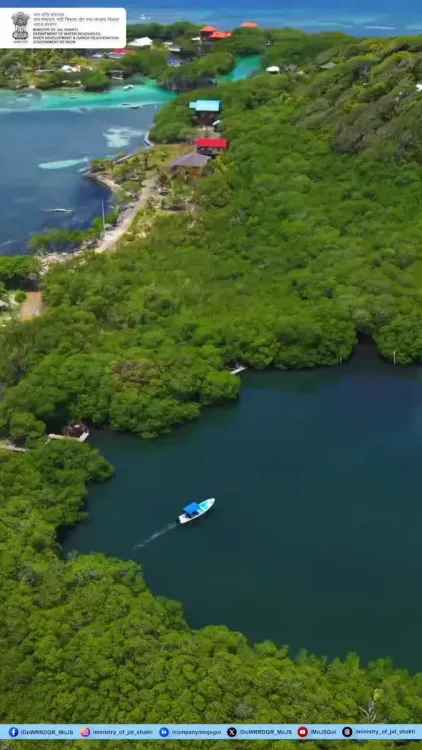
A coastal shield built over millennia, quietly absorbing cyclones and cradling life — Union Education Minister Dharmendra Pradhan turned the national spotlight on Bhitarkanika National Park on Wednesday, November 11, 2026, celebrating Odisha's mangrove heartland and calling on citizens to protect it.
Pradhan's post saluted 'nature's own shield, thriving with life' — framing the park's dense mangrove canopy, extraordinary biodiversity, and its famous saltwater crocodile population as emblems of Odisha's ecological wealth. The message ended with a direct appeal: 'Let us celebrate and safeguard this natural heritage.'
Bhitarkanika: Ramsar Wetland, Crocodile Capital
Bhitarkanika, nestled in Kendrapara district on Odisha's northern coast, was declared a national park in 1998 and listed as a Ramsar wetland site in 2002 — global recognition of its irreplaceable status. The park hosts one of India's largest populations of saltwater crocodiles (Crocodylus porosus), alongside an astonishing variety of migratory birds, sea turtles, and estuarine fish species. Few ecosystems in India pack this much ecological punch into a single stretch of coastline.
The mangroves themselves are the story. Dense, interlocking root systems trap sediment, buffer storm surges, and act as nursery grounds for marine species — a natural infrastructure no engineered seawall fully replicates. For the fishing communities along Odisha's coast, that protection is not abstract; it is the difference between a cyclone season survived and livelihoods lost.
India's Mangrove Push and Odisha's Role
India's National Mangrove Conservation Programme has channelled restoration funding into Odisha since the 1990s, and the state's coastline has become a reference point for national coastal resilience planning under the National Action Plan on Climate Change. Mangrove belts here are explicitly counted among India's natural defences against the increasingly intense cyclones that batter the Bay of Bengal.
Pradhan, a senior BJP leader from Odisha, has consistently flagged the state's natural and cultural assets on social media — positioning Odisha's biodiversity alongside its economic and infrastructure story. This post fits that pattern while also landing at a moment when eco-tourism and conservation funding for mangrove zones remain live policy conversations at both the central and state levels.
Bhitarkanika's crocodiles are thriving. Its mangroves are standing. The harder question — whether conservation budgets and eco-tourism policy keep pace with the pressure on these shores — will be answered not by a post, but by the next forest-department census and the next spending cycle.
Point of View
Cyclone resilience, and eco-tourism potential, making it a politically safe yet genuinely important cause to champion. The broader signal is that mangrove conservation is now part of the mainstream BJP communication playbook on climate and environment, not just the domain of specialist ministries. Whether this social-media momentum translates into faster forest-department budgets or accelerated eco-tourism infrastructure is the real test.
NationPress
11 Nov 2026
Frequently Asked Questions
Where is Bhitarkanika National Park located?
Bhitarkanika National Park is located in Kendrapara district on the northern coast of Odisha , eastern India. It is one of the country's most significant mangrove ecosystems.
Why is Bhitarkanika famous?
Bhitarkanika is famous for housing one of India's largest populations of saltwater crocodiles , dense mangrove forests, migratory birds, and sea turtles. It was declared a Ramsar wetland site in 2002 .
When was Bhitarkanika declared a national park?
Bhitarkanika was declared a national park in 1998 . It had earlier been a wildlife sanctuary and was subsequently recognised as a Ramsar wetland in 2002 .
What is India's National Mangrove Conservation Programme?
India's National Mangrove Conservation Programme is a central government initiative that has funded mangrove restoration and protection projects across coastal states, including Odisha, since the 1990s .
Why are mangroves important for Odisha's coast?
Mangroves act as a natural buffer against cyclones and storm surges , protect coastal fishing communities, and serve as breeding grounds for marine species. Odisha's mangrove belts are formally recognised under India's National Action Plan on Climate Change as part of coastal resilience strategy.