Nadda at First BIMSTEC Health Ministers' Meet in Colombo
Synopsis
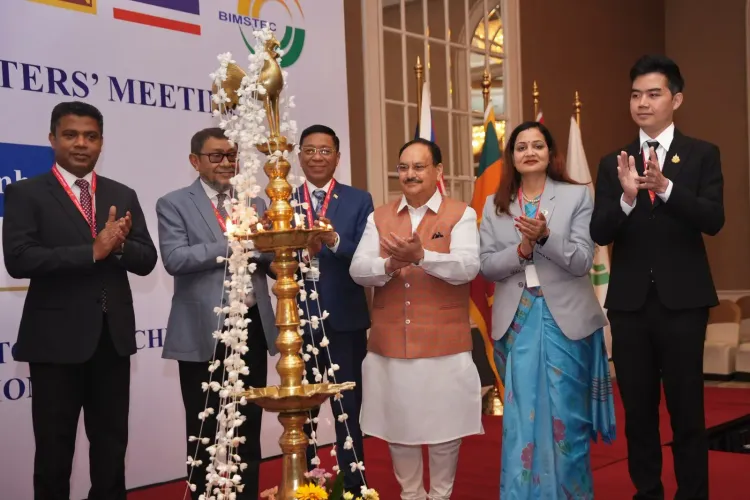
Union Health Minister J. P. Nadda addressed the first BIMSTEC Health Ministers' Meeting in Colombo on November 11, 2026, offering India's Ayushman Bharat, eSanjeevani, and a new traditional medicine centre at Jamnagar as regional public goods for the Bay of Bengal bloc.
Key Takeaways
Nadda addressed the first-ever BIMSTEC Health Ministers' Meeting in Colombo, Sri Lanka on November 11, 2026 .
India offered Ayushman Bharat and the eSanjeevani telemedicine platform as models for regional health access and affordability.
India will host the BIMSTEC Centre of Excellence in Traditional Medicine at Jamnagar, Gujarat , focusing on joint research and capacity building.
The meeting emphasised pandemic preparedness , One Health frameworks, and regional health security across the seven-member Bay of Bengal bloc.
Nadda invoked PM Modi's 'One Earth, One Family, One Future' vision, the same frame used during India's G20 presidency in 2023 .
The ministerial forum marks a structural shift from ad-hoc BIMSTEC health exchanges to formal, binding regional health cooperation.
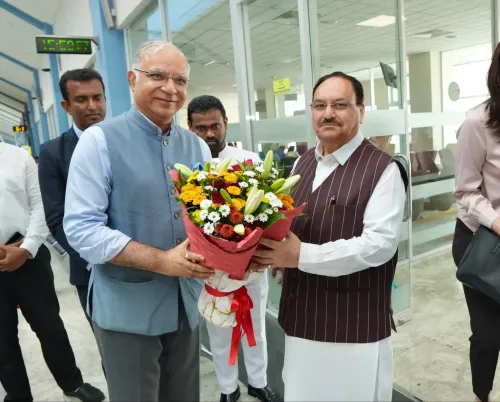
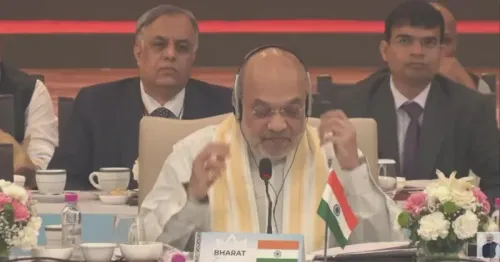
India carried its most ambitious health programmes to a regional stage on Wednesday, November 11, 2026, as Union Health Minister J. P. Nadda addressed the historic first-ever BIMSTEC Health Ministers' Meeting in Colombo, Sri Lanka — pitching Ayushman Bharat, digital health, and traditional medicine as shared assets for the entire Bay of Bengal neighbourhood.
Nadda told fellow ministers that India was 'ready to share expertise and best practices with BIMSTEC partners', invoking Prime Minister Narendra Modi's Vasudhaiva Kutumbakam-rooted vision of 'One Earth, One Family, One Future' — the same rallying phrase India placed at the heart of its G20 presidency in 2023. The framing was deliberate: India is not asking for a seat at the table, it is offering to build the table.
Ayushman Bharat and eSanjeevani go regional
Ayushman Bharat, launched in 2018 as India's flagship public health insurance scheme covering hundreds of millions of low-income citizens, was front and centre in Nadda's address. So was eSanjeevani, the government's telemedicine platform that has normalised remote doctor consultations across India's vast geography. The pitch to BIMSTEC partners is straightforward: if these tools transformed healthcare delivery at Indian scale, they carry real export value for neighbours facing similar access and affordability challenges. The seven-member bloc — grouping countries that share the Bay of Bengal's coastline and hinterland — has historically moved slowly on health cooperation. This ministerial meeting marks a structural shift from ad-hoc exchanges to formal, leader-level commitment on pandemic preparedness, One Health frameworks, and cross-border health security.Jamnagar's new role as BIMSTEC's traditional medicine hub
Perhaps the sharpest institutional signal from Colombo was Nadda's affirmation that India will host the BIMSTEC Centre of Excellence in Traditional Medicine at Jamnagar, Gujarat — already home to world-class AYUSH research infrastructure. The centre is designed to drive joint research, capacity building, and knowledge exchange across member states, giving India's traditional medicine ecosystem a concrete multilateral mandate. Jamnagar's selection is no accident. The city houses one of the most established classical Ayurveda institutions in the country, and the Ministry of AYUSH — created in 2014 to elevate traditional medicine systems — has been systematically internationalising these assets ever since. The COVID-19 pandemic accelerated that push, as regional governments sought alternatives and supplements to conventional health infrastructure.What Colombo's agenda means for India's neighbourhood diplomacy
India's health diplomacy has quietly become one of its most effective soft-power instruments since the pandemic. Vaccine supply, telemedicine tie-ups, and AYUSH promotion have all doubled as trust-building mechanisms with neighbours who might otherwise look elsewhere for partnerships. A formal BIMSTEC health ministerial — the first of its kind — institutionalises what was previously informal goodwill. The watch item now is whether the Colombo meeting produces a binding action plan: a timeline for operationalising the Jamnagar centre, specific data-sharing protocols under One Health, and a joint pandemic early-warning mechanism for the Bay of Bengal region. Nadda's post signals political will; the architecture still needs to be built. For a region that stretches from Nepal and Bhutan through Bangladesh, India, Myanmar, Sri Lanka, and Thailand, closing the healthcare equity gap is not just a moral imperative — it is a strategic one. And India, for the first time in a structured ministerial forum, has formally volunteered to lead.Point of View
Not just bilateral goodwill. Hosting the BIMSTEC Centre of Excellence in Traditional Medicine at Jamnagar gives India a durable, infrastructure-backed presence in regional health governance that rivals cannot easily replicate. The 'One Earth, One Family, One Future' framing, carried over from the G20, also shows a deliberate continuity in how New Delhi projects its development identity abroad. The unanswered question is whether this first ministerial meeting translates into enforceable commitments or remains aspirational — the gap between political declaration and operational architecture has historically been BIMSTEC's Achilles heel.
NationPress
11 Nov 2026
Frequently Asked Questions
What is the BIMSTEC Health Ministers' Meeting?
The BIMSTEC Health Ministers' Meeting is a ministerial-level forum within the Bay of Bengal Initiative for Multi-Sectoral Technical and Economic Cooperation (BIMSTEC), bringing together health ministers from its seven member states to coordinate on regional health priorities. The November 2026 meeting in Colombo was the first of its kind.
What is the BIMSTEC Centre of Excellence in Traditional Medicine?
India is hosting the BIMSTEC Centre of Excellence in Traditional Medicine at Jamnagar, Gujarat. It is designed to facilitate joint research, capacity building, and knowledge exchange in traditional medicine systems among BIMSTEC member states.
What is Ayushman Bharat and why is it relevant to BIMSTEC?
Ayushman Bharat is India's flagship public health insurance scheme launched in 2018 to provide healthcare coverage to hundreds of millions of low-income citizens. J. P. Nadda presented it at the Colombo meeting as a scalable model that BIMSTEC partners could learn from and potentially adapt.
What is eSanjeevani?
eSanjeevani is India's government-run telemedicine platform that enables patients across the country to consult doctors remotely. It was highlighted at the BIMSTEC meeting as a digital health tool India is willing to share with regional partners.
Which countries are members of BIMSTEC?
BIMSTEC has seven member states: Bangladesh, Bhutan, India, Myanmar, Nepal, Sri Lanka, and Thailand — all sharing geographic or maritime links to the Bay of Bengal. The grouping was established in 1997 to promote regional technical and economic cooperation.