Pradhan Hails Paradip Port's Mega Port Tag Under New Ports Act
Synopsis
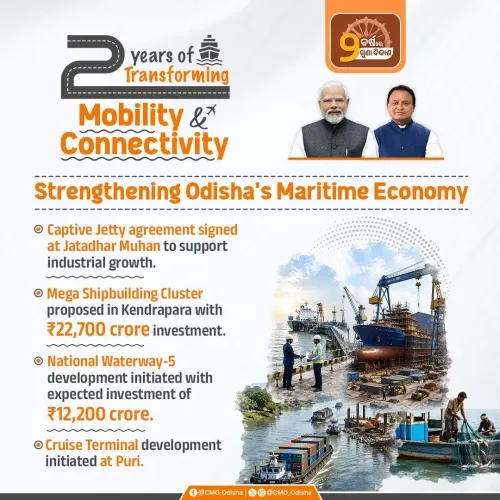
Paradip Port in Odisha has been designated as a 'Mega Port' under the Indian Ports Act, 2025 — the only such port on India's east coast. Union Minister Dharmendra Pradhan welcomed the move as a milestone under PM Modi's Purvodaya vision, signalling new momentum for eastern India's maritime trade and industrial growth.
Key Takeaways
Paradip Port has been officially designated a 'Mega Port' under the Indian Ports Act, 2025 , becoming the only Mega Port on India's east coast.
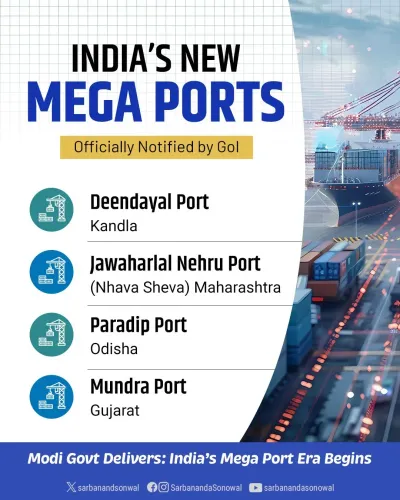
Three other ports — Deendayal (Kandla) , Jawaharlal Nehru Port (Nhava Sheva) , and Mundra — have also received Mega Port status under the same legislation.
Union Minister Dharmendra Pradhan credited PM Narendra Modi and Ports Minister Sarbanand Sonowal for the decision.
The move is framed as part of PM Modi's 'Purvodaya' vision for accelerated development of eastern Indian states.
Pradhan projected that the designation will drive maritime trade, logistics growth, industrial development, and new employment opportunities for eastern India's youth.
The policy connects to the Sagarmala Project launched in 2015 for port-led coastal development across India.
India's east coast just claimed a new landmark. Paradip Port in Odisha has been officially designated as a 'Mega Port' under the Indian Ports Act, 2025 — making it the only Mega Port on the country's eastern seaboard, a recognition that Union Education Minister and senior BJP leader Dharmendra Pradhan described on Saturday, September 26 as a 'golden chapter' for the economic backbone of eastern India.
Writing in both Odia and English, Pradhan called the designation 'suvarna adhyaya' (a golden chapter) for Paradip and extended gratitude to Prime Minister Narendra Modi and Union Minister of Ports, Shipping and Waterways Sarbanand Sonowal for the 'epoch-making decision.' The same legislation grants Mega Port status to Deendayal (Kandla), Jawaharlal Nehru Port (Nhava Sheva), and Mundra Port — placing Paradip in elite company alongside India's busiest cargo hubs.
East Coast's Only Mega Port — What That Means for Odisha
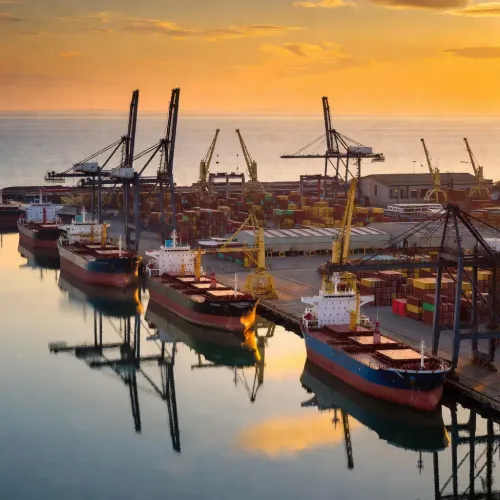
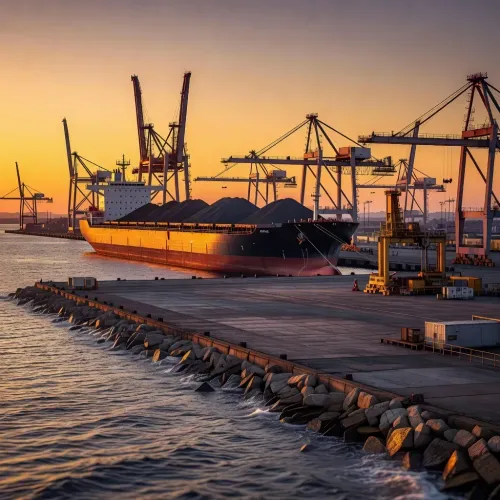
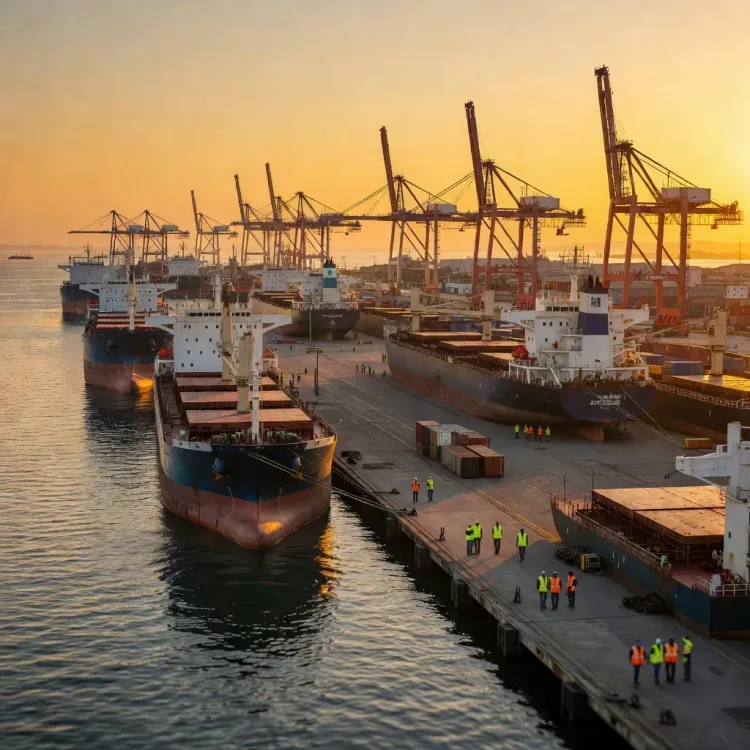
Paradip already punches hard. The deep-sea port handles bulk cargo ranging from coal and iron ore to petroleum products, and it sits at a natural chokepoint between India's hinterland industries and maritime trade routes to Southeast Asia. Pradhan argued that the Mega Port designation will give fresh momentum to maritime trade, logistics, and economic growth — and specifically create new employment opportunities for eastern India's youth.
The port's geographic advantage is significant. Unlike the western cluster — Kandla, Nhava Sheva, Mundra — Paradip faces the Bay of Bengal, positioning it as a natural gateway for India's Act East policy. Pradhan said he believes Paradip will become a 'prominent centre of maritime commerce' linking Odisha with Southeast Asia through deep-sea infrastructure, industrial facilities, and world-class logistics.
Purvodaya Vision and the Sagarmala Thread
The Mega Port designation slots directly into PM Modi's 'Purvodaya' vision — an accelerated development blueprint for eastern states including Odisha, Bihar, Jharkhand, and West Bengal that has framed much of the central government's recent infrastructure spending east of the Gangetic plain. The logic is straightforward: western India has long dominated port capacity and the industrial corridors that feed it. Purvodaya is an explicit correction.
The policy lineage runs deeper. The Sagarmala Project, launched in 2015, first articulated the vision of port-led industrial development along India's entire coastline. Mega Port status under the new Ports Act can be read as the legislative crystallisation of that decade-long push — translating a modernisation philosophy into formal statutory categories that unlock a different tier of investment, governance, and connectivity planning.
Three Other Mega Ports — and Why Paradip's Inclusion Stands Out
Deendayal Port in Gujarat is one of India's oldest and busiest cargo-handling facilities. Jawaharlal Nehru Port near Mumbai dominates container traffic on the west coast. Mundra, operated privately, ranks among India's largest ports by total cargo volume. All three serve the western seaboard's established industrial belt. Paradip's elevation signals that policymakers are now ready to invest equivalent institutional weight in the east — where industrial infrastructure, logistics depth, and port capacity have historically lagged.
What to watch next: how quickly the Mega Port designation translates into concrete capacity expansion projects and integration with the industrial corridors being planned across Odisha's mineral-rich interior. The designation sets the legal and symbolic stage. The infrastructure and investment must now follow.
One port, one new title — but the ambition is a rebalancing of India's entire maritime map. Eastern India is no longer waiting at the waterline.
Point of View
It reinforces the Purvodaya narrative in an electorally significant state like Odisha, where the party has been consolidating its position. The move also advances India's Act East trade policy by giving Paradip institutional weight to anchor deeper logistics and industrial corridors. The real test, however, will be whether the designation accelerates concrete investment and capacity expansion or remains largely symbolic.
NationPress
26 Sept 2026
Frequently Asked Questions
What is Mega Port status under the Indian Ports Act 2025?
Under the Indian Ports Act, 2025, 'Mega Port' is a formal statutory designation granted to India's largest and most strategically significant ports. Paradip, Deendayal, Jawaharlal Nehru Port, and Mundra have been designated Mega Ports under the Act.
Why is Paradip Port's Mega Port designation significant?
Paradip Port becomes the only Mega Port on India's east coast, elevating its status alongside the country's busiest western ports. This positions it as a key maritime gateway for eastern India and trade with Southeast Asia.
What is the Purvodaya vision and how does it relate to Paradip?
Purvodaya is Prime Minister Narendra Modi's vision for accelerated development of eastern Indian states including Odisha, Bihar, Jharkhand, and West Bengal. The Mega Port designation for Paradip is part of this broader push to boost infrastructure and economic growth in the region.
What is the Sagarmala Project and is it connected to this development?
The Sagarmala Project, launched in 2015, promotes port-led industrial development and modernisation of India's coastline. The Mega Port designation builds on that decade-long policy framework, giving it a new legislative form.
Who is Dharmendra Pradhan and why did he comment on Paradip Port?
Dharmendra Pradhan is the Union Education Minister and a senior BJP leader from Odisha. He welcomed the Mega Port designation because Paradip is in his home state, and he has been a prominent voice on Odisha's development agenda.