CM Majhi Outlines Odisha's Blue Economy Push on World Maritime Day
Synopsis
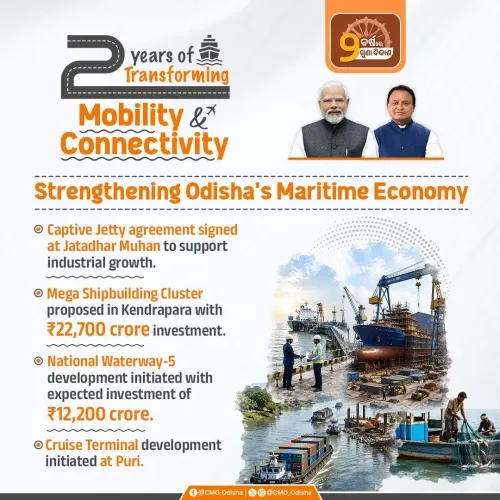
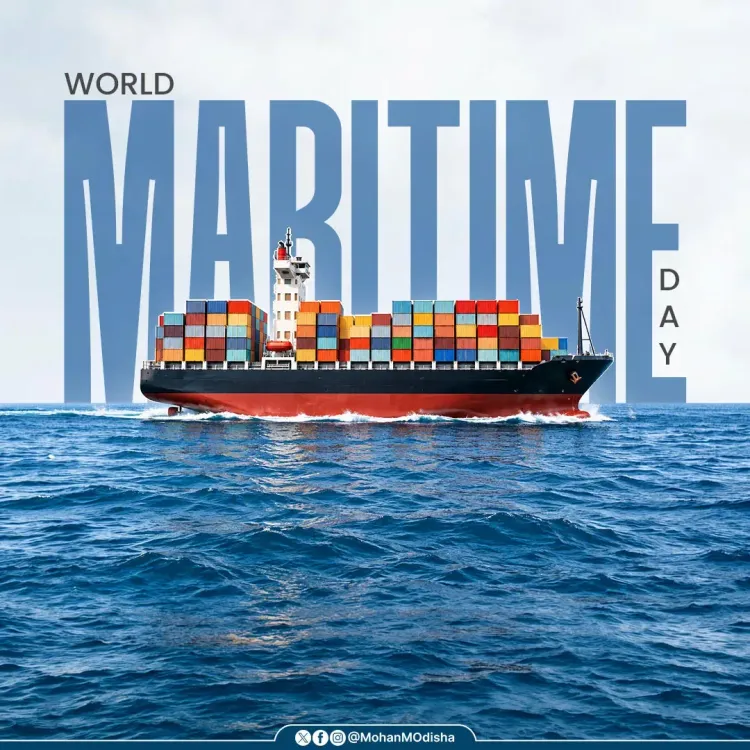
On World Maritime Day 2026, Odisha CM Mohan Charan Majhi outlined the state's Blue Economy agenda: expanding Paradip and Gopalpur ports, developing Bahuda Muhan Port, and building a National Mega Shipbuilding Cluster in Kendrapara, backed by National Waterway-5.
Key Takeaways
Paradip Port and Gopalpur Port are both undergoing expansion and modernisation as part of Odisha's coastal infrastructure push.
A Bahuda Muhan Port is in development, adding a third active maritime gateway to the state's coastline.
A National Mega Shipbuilding Cluster is planned for Kendrapara district , targeting vessel manufacturing rather than just cargo handling.
National Waterway-5 is being developed as the inland logistics backbone linking Odisha's ports to interior trade routes.
The push aligns with the central Sagarmala Project (launched 2015 ) and is coordinated through the Odisha Maritime Board (established 2018 ).
CM Majhi invoked Odisha's ancient Kalinga maritime legacy — celebrated through Bali Jatra and Boita Bandana — as the cultural foundation for the modern Blue Economy agenda.
Centuries before container ships and cargo manifests, Kalinga merchants set sail from Odisha's coast to trade with Southeast Asia — and on World Maritime Day, Thursday, 24 September 2026, Odisha Chief Minister Mohan Charan Majhi invoked that ancient legacy to frame an ambitious modern agenda: ports, waterways, and a planned shipbuilding cluster that could reshape the state's economic geography.
From Bali Jatra to Bahuda Muhan: The Ports Taking Shape
At the centre of the CM's vision are three maritime gateways in various stages of development. Paradip Port, already the dominant bulk-cargo hub on India's east coast, is being expanded further under ongoing central and state plans. Gopalpur Port in Ganjam district is undergoing modernisation to open regional trade corridors. And the Bahuda Muhan Port — a newer addition to Odisha's maritime map — is part of the state's push to build out coastal infrastructure beyond its two established harbours.
Together, Majhi argued, these projects are not just logistics upgrades — they are the physical expression of a maritime identity that Odisha celebrates every year through Bali Jatra, the Cuttack festival commemorating the ancient Kalinga voyages to Bali, Java, and Sumatra. 'Boita Bandana' — the ritual floating of small boats — keeps that memory alive; the new ports are meant to give it commercial weight.
The Kendrapara Shipbuilding Cluster: Odisha's Biggest Maritime Bet
The most consequential proposal in the CM's post is the National Mega Shipbuilding Cluster in Kendrapara. If realised, it would position Odisha not merely as a cargo-handling state but as a manufacturing hub for vessels — a significant step up the maritime value chain. The cluster concept fits squarely within India's broader push to develop domestic shipbuilding capacity, reducing dependence on foreign yards for both commercial and strategic tonnage.
The policy scaffolding already exists. The Sagarmala Project, launched in 2015, was designed precisely to enable port-led development and coastal economic zones — and Odisha has been a target state. The Odisha Maritime Board, set up in 2018, was built to coordinate exactly this kind of multi-project push. What the Kendrapara cluster would add is a manufacturing dimension that port expansion alone cannot deliver.
National Waterway-5 and the Inland Link
National Waterway-5, the inland waterway threading through Odisha and connecting to neighbouring states, is the logistics backbone that ties the coastal vision together. Since the Inland Waterways Authority of India began upgrading it for commercial navigation from 2016 onwards, the waterway has been positioned as a low-cost alternative for moving bulk cargo away from congested road and rail corridors. Integrating it with expanded port capacity at Paradip and Gopalpur is the unlock that could make the full Blue Economy model work in practice.
Majhi's post frames the entire package — ports, waterway, shipbuilding, coastal connectivity — as a unified 'Blue Economy' strategy that connects heritage with industry. Whether the Kendrapara cluster moves from announcement to tendering, and whether Paradip and Gopalpur hit their next capacity milestones, will be the real measure of how much of this vision leaves the policy document and reaches the water.
Odisha has the coastline, the history, and now a loudly stated political priority. The shipyard cranes are the next thing to watch.
Point of View
It signals Odisha's ambition to compete with established shipbuilding states rather than remain a bulk-cargo pass-through. The framing also dovetails neatly with the BJP-led Centre's Sagarmala and Blue Economy priorities, allowing Majhi to present state and national objectives as a unified arc — a classic double dividend in coalition-era politics.
NationPress
24 Sept 2026
Frequently Asked Questions
What is the National Mega Shipbuilding Cluster planned for Kendrapara?
It is a proposed large-scale maritime manufacturing facility in Kendrapara district, Odisha, intended to build and repair vessels domestically. The cluster is part of Odisha CM Mohan Charan Majhi's Blue Economy vision announced on World Maritime Day 2026, though tendering and timelines are yet to be publicly confirmed.
What is Bali Jatra and why is it linked to Odisha's maritime policy?
Bali Jatra is an annual festival held in Cuttack that commemorates the ancient Kalinga merchants who sailed to Bali, Java, and Sumatra. CM Majhi invoked it to connect Odisha's historical maritime identity with current infrastructure investments, framing port expansion and shipbuilding as a continuation of a centuries-old tradition.
What is National Waterway-5 in Odisha?
National Waterway-5 is an inland waterway project linking rivers and canals across Odisha and neighbouring states for commercial cargo movement. The Inland Waterways Authority of India has been upgrading it for commercial navigation since 2016, and it forms the logistics backbone of Odisha's Blue Economy strategy.
What is the Sagarmala Project and how does it relate to Odisha's ports?
The Sagarmala Project, launched in 2015, is a central government initiative to promote port-led development and coastal economic zones across India. Odisha's expansion of Paradip Port, Gopalpur Port, and other coastal infrastructure aligns directly with Sagarmala's objectives of reducing logistics costs and growing maritime trade.
What is the Odisha Maritime Board?
The Odisha Maritime Board was established in 2018 to coordinate port development and Blue Economy activities across the state. It serves as the nodal body overseeing infrastructure projects including port expansions and the integration of National Waterway-5 with coastal gateways.