Dharmendra Pradhan orders stronger NCERT textbook supply chains for 2025 session
Synopsis
Education Minister Dharmendra Pradhan has ordered a supply chain overhaul for NCERT textbooks, flagging last-mile delivery failures — especially in rural India — while the NHRC simultaneously fires notices at the Education Ministry and CBSE over private schools flouting norms by prescribing expensive private-publisher books instead of affordable NCERT editions.
Key Takeaways
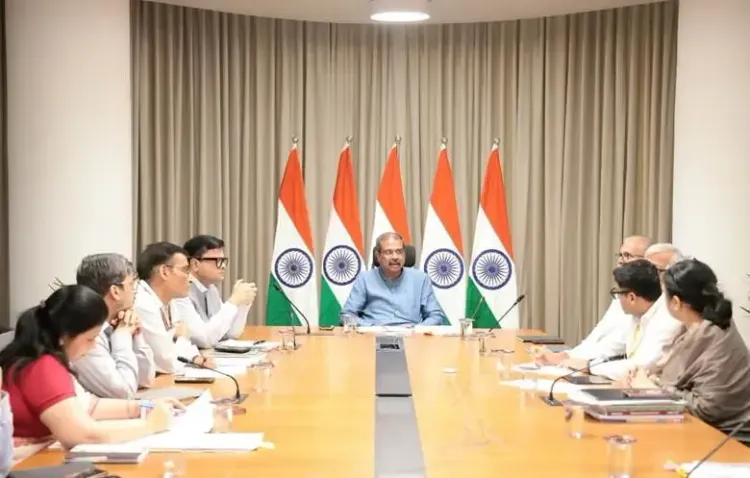
Dharmendra Pradhan reviewed NCERT textbook availability, printing, and distribution on 29 April 2025 in New Delhi .
Officials directed to strengthen supply chains, augment printing capacity, and monitor last-mile delivery — especially in rural areas. e-Pathshala digital textbooks cited as an interim measure to ensure uninterrupted learning.
The NHRC issued notices to the Union Ministry of Education , CBSE , and all state Chief Secretaries over private schools prescribing costly private-publisher books in violation of norms.
NHRC directed a school-wise audit of booklists within 30 days and called for strict implementation of the National School Bag Policy, 2020 .
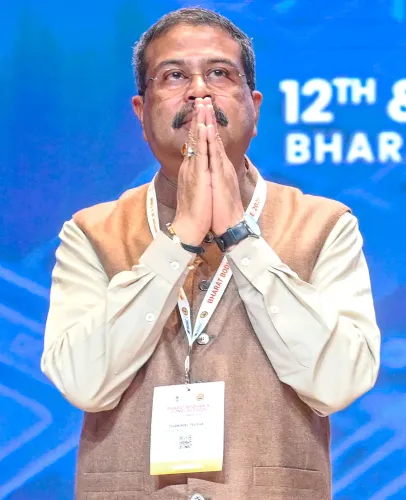
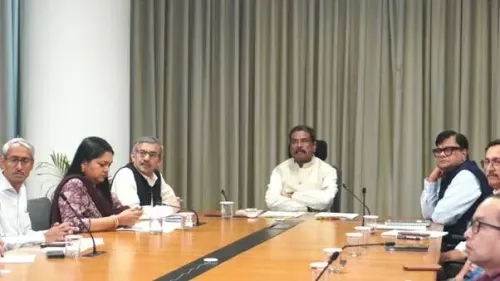
Union Education Minister Dharmendra Pradhan on Tuesday, 29 April 2025, reviewed the availability, printing, and distribution of textbooks published by the National Council of Educational Research and Training (NCERT), directing officials to strengthen supply chains, augment printing capacity, and ensure last-mile delivery reaches every student across India. The review, held in New Delhi, underscores growing concern over delays in physical book distribution at the start of the academic session.
Key Directives from the Review
Pradhan conducted the review alongside Department of School Education and Literacy Secretary Sanjay Kumar, taking stock of NCERT book availability for the ongoing academic session. He assessed stock positions across states and Union Territories and examined coordination between state authorities and distribution agencies.
The minister directed officials to augment printing capacity wherever necessary and to closely monitor last-mile delivery — particularly to students in rural areas, who are often the last to receive physical textbooks due to logistical challenges.
Notably, Pradhan also highlighted the availability of digital textbooks through e-Pathshala as an interim measure to support uninterrupted learning until physical copies reach all students. This signals a dual-track approach: accelerating physical distribution while deploying digital resources as a bridge.
Why Timely Textbook Distribution Matters
Delays in NCERT textbook availability at the start of academic sessions have been a recurring concern, particularly in remote and underserved districts. NCERT textbooks are subsidised by the government to ensure affordability, making them the primary learning resource for millions of students from economically weaker sections. Any disruption in their supply directly impacts classroom instruction and learning continuity.
This is not the first time the Education Ministry has been compelled to intervene on textbook logistics — similar reviews have been held in previous academic years, reflecting a systemic challenge in scaling distribution to match enrolment numbers.
NHRC Notices Over Private School Textbook Violations
In a related development, the National Human Rights Commission (NHRC) recently issued notices to the Union Ministry of Education, the Central Board of Secondary Education (CBSE), and Chief Secretaries of all states and Union Territories over allegations that private schools are prescribing costly textbooks from private publishers in violation of statutory norms.
An NHRC bench presided over by Member Priyank Kanoongo took cognisance of a complaint alleging that several private schools — including those affiliated with CBSE — continue to mandate books from private entities instead of those prescribed by NCERT or respective State Councils of Educational Research and Training (SCERTs).
According to the complaint, such practices impose an
Point of View
It is not just a norm violation but a regressive wealth transfer from low-income families to publishing interests. A 30-day audit is a start, but enforcement history on school bag policy and booklist norms suggests accountability has been the missing link, not awareness.
NationPress
19 Sept 2026
Frequently Asked Questions
Why did Dharmendra Pradhan review NCERT textbook distribution?
Education Minister Dharmendra Pradhan reviewed NCERT textbook availability to address delays in printing and distribution at the start of the 2025 academic session. He directed officials to strengthen supply chains and prioritise last-mile delivery, particularly to students in rural areas.
What is e-Pathshala and how does it help students?
e-Pathshala is a digital platform that provides NCERT textbooks and learning resources online. Pradhan highlighted it as an interim measure to ensure students can continue learning while physical copies are being distributed.
Why has the NHRC issued notices over school textbooks?
The NHRC issued notices to the Union Ministry of Education, CBSE, and state Chief Secretaries after a complaint alleged that private schools are mandating expensive private-publisher books instead of prescribed NCERT or SCERT textbooks, imposing a heavy financial burden on families.
What action has the NHRC directed regarding private school booklists?
The NHRC has directed authorities to conduct a school-wise audit of booklists within 30 days and submit their findings. It has also called for strict implementation of the National School Bag Policy, 2020.
Who is affected by delays in NCERT textbook distribution?
Students across India — particularly those in rural and remote areas — are most affected by NCERT textbook distribution delays. Since NCERT books are subsidised and serve as the primary learning resource for millions of students from economically weaker sections, any delay disrupts classroom instruction.