Pralhad Joshi meets CM Bhajanlal on education, renewable energy
Synopsis
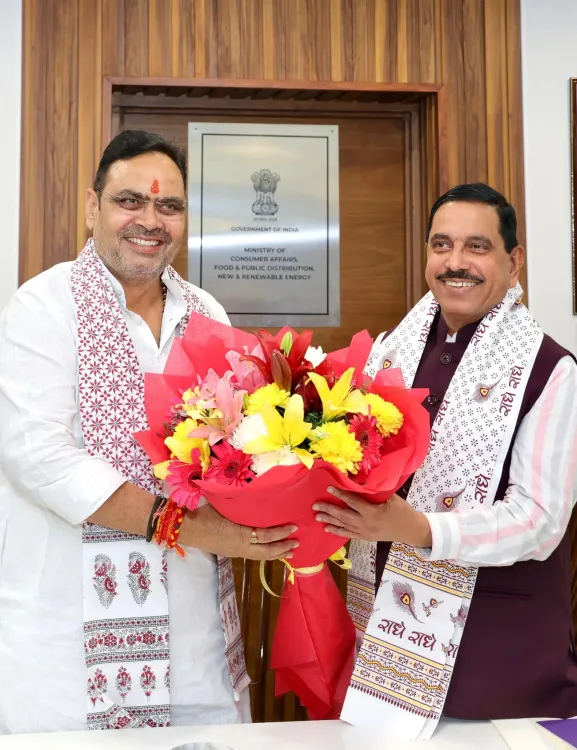
Union Minister Pralhad Joshi met Rajasthan Chief Minister Bhajan Lal Sharma on October 15 to align on educational infrastructure improvements and accelerate the implementation of MNRE renewable energy schemes in the state, signalling active Centre-state coordination.
Key Takeaways
Union Minister Pralhad Joshi held a coordination meeting with Rajasthan CM Bhajan Lal Sharma on October 15, 2026 .
Discussions covered education infrastructure strengthening, in line with the National Education Policy 2020 .
The meeting also addressed MNRE initiatives to accelerate renewable energy adoption in Rajasthan.
Rajasthan, with its vast solar and wind resources , is a key partner state for India's clean energy targets.
The BJP has governed Rajasthan since December 2023 , enabling tighter Centre-state policy alignment.
Follow-up on specific scheme targets is expected at upcoming state budget and central review meetings.
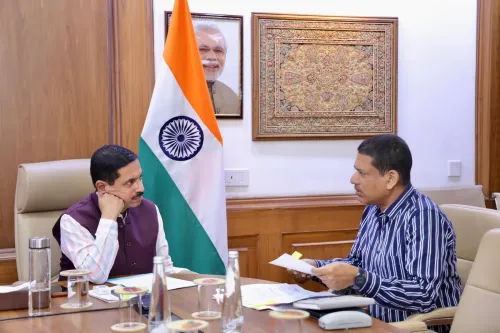
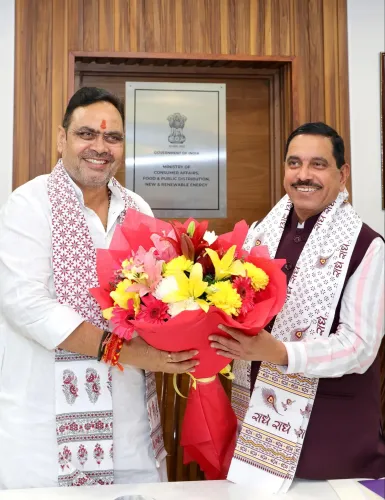
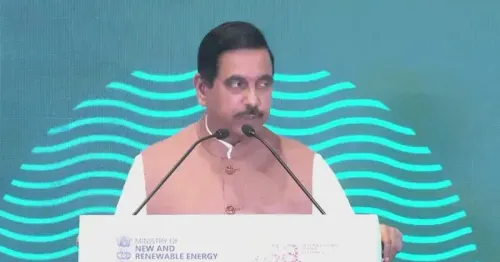
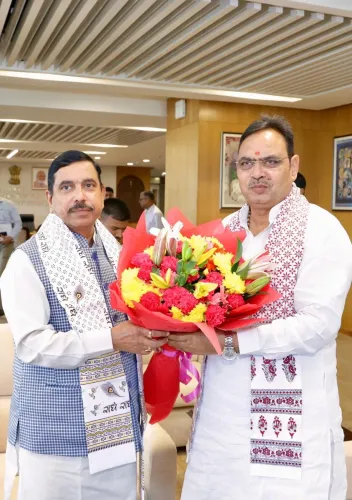
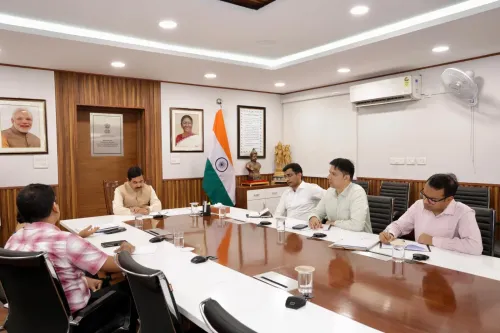
Two senior BJP leaders sat down on Thursday, October 15 to map out how Rajasthan can move faster on two of India's most urgent national priorities — school infrastructure and clean energy. Union Minister Pralhad Joshi, who holds charge of both Consumer Affairs and New and Renewable Energy, met Rajasthan Chief Minister Bhajan Lal Sharma to align on the implementation of key central schemes across the state.
Education infrastructure and NEP rollout on the table
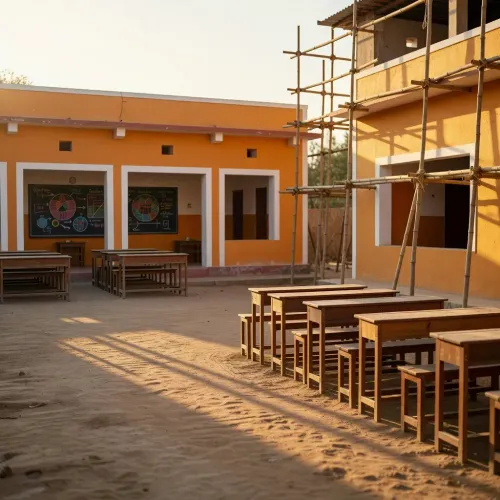
The two leaders discussed strengthening educational infrastructure in Rajasthan, a state that encompasses a vast rural geography where school access and quality remain persistent challenges. The conversation fits squarely within the broader frame of the National Education Policy (NEP) 2020, which tasks states with overhauling everything from early-childhood classrooms to higher-education institutions — and demands sustained capital investment to do it.
Rajasthan, with its large tribal and rural student population, is one of the states where effective NEP implementation carries outsized national significance. The meeting signals that the Centre is actively tracking progress rather than leaving execution entirely to state machinery.
Rajasthan's renewable energy potential and MNRE push
Equally important was the discussion around initiatives under the Ministry of New and Renewable Energy (MNRE). Rajasthan is arguably India's most richly endowed state for solar and wind energy — its vast Thar Desert geography and high solar irradiance make it a linchpin in the country's renewable capacity targets.
Joshi's ministry has been driving multiple central schemes — from rooftop solar programmes to large-scale park development — and state-level coordination with a willing BJP counterpart government is essential to accelerate on-ground deployment. The Rajasthan government, in power since December 2023 following the BJP's state election victory, has positioned itself as an active partner in central energy initiatives.
Centre-state coordination in a BJP-ruled Rajasthan
The meeting is part of a consistent pattern in which central ministers from the ruling party hold working-level coordination meetings with chief ministers of party-aligned states to iron out implementation bottlenecks. Since 2014, such interactions have become a routine governance mechanism, particularly for flagship schemes where central funding meets state delivery machinery.
With Rajasthan now firmly in the BJP fold at the state level, the administrative alignment between Jaipur and New Delhi has sharpened — clearing bureaucratic friction that often slows scheme roll-out in politically divided states.
The question that follows every such meeting is the same: when do commitments on paper become projects on the ground? The next signposts will be the state budget and central review meetings, where specific targets for Rajasthan's education and renewable energy build-out are expected to take shape.
Point of View
Rajasthan is a high-value target: its renewable energy potential is among the largest in the country, and credible progress there strengthens India's broader clean-energy narrative. The education angle is equally political — NEP implementation is a legacy project, and visible momentum in a major state like Rajasthan adds to its national scorecard. Whether this meeting translates into announced projects or remains a corridor conversation will test how substantive these coordination exercises actually are.
NationPress
15 Oct 2026
Frequently Asked Questions
Why did Pralhad Joshi meet Rajasthan CM Bhajan Lal Sharma?
The meeting focused on two areas: strengthening educational infrastructure in Rajasthan and accelerating the implementation of Ministry of New and Renewable Energy (MNRE) schemes in the state.
What is Rajasthan's role in India's renewable energy plans?
Rajasthan is one of India's most resource-rich states for solar and wind energy, thanks to the Thar Desert's high solar irradiance and vast open land, making it central to national clean energy capacity targets.
How does the National Education Policy relate to this meeting?
The NEP 2020 requires states to invest in and reform educational infrastructure across all levels. Aligning Rajasthan's implementation with central priorities was part of the discussion between Joshi and Chief Minister Sharma.
When did the BJP come to power in Rajasthan?
The BJP formed the Rajasthan government in December 2023 following state assembly elections, with Bhajan Lal Sharma sworn in as Chief Minister.
What MNRE schemes are relevant to Rajasthan?
MNRE runs multiple programmes including rooftop solar initiatives and large-scale renewable energy park development. Rajasthan's geography makes it a primary candidate for these central schemes.