Pralhad Joshi Pays Tribute to Kittur Rani Chennamma on Jayanti
Synopsis
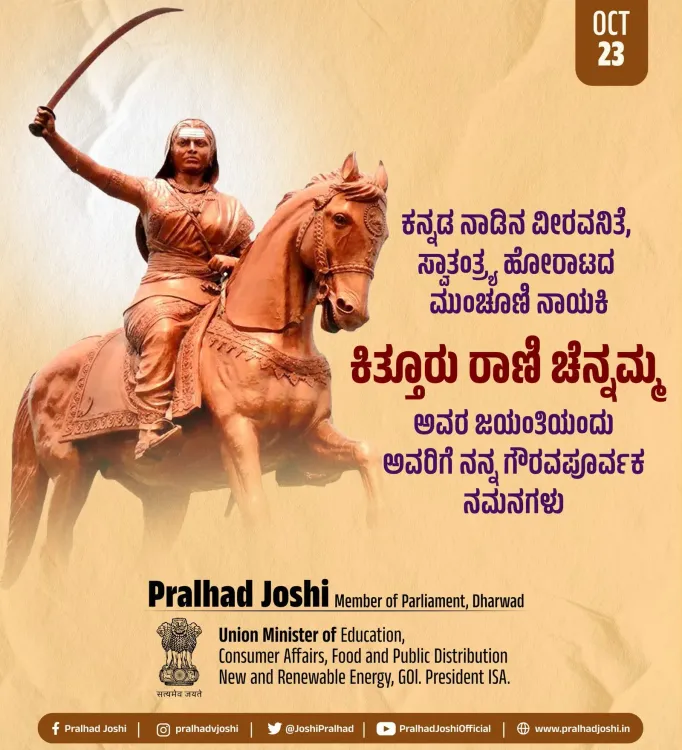
Union Minister Pralhad Joshi marked Kittur Rani Chennamma's Jayanti with a Kannada-language tribute on X, honouring the 1824 anti-British rebel queen as an immortal symbol of Karnataka's self-respect and a lasting inspiration for every Kannadiga.
Key Takeaways
Union Minister Pralhad Joshi posted a Kannada tribute to Kittur Rani Chennamma on her Jayanti on 23 October 2026 .
Chennamma led an armed revolt against the British in 1824 at Kittur in present-day Belagavi district, Karnataka — one of India's earliest armed resistances to colonial rule.
Her forces killed British Political Agent St.
John Thackeray in the first round of the uprising.
Chennamma was captured and died in captivity at Bailhongal Fort in 1829 ; her statue stands in the Parliament complex, New Delhi .
Joshi called her bravery 'immortal' and an 'eternal inspiration for every Kannadiga.' The tribute aligns with BJP Karnataka leaders' broader pattern of amplifying regional contributions to India's pre-1857 freedom struggle.
Nearly two centuries after she picked up arms against the British East India Company, Kittur Rani Chennamma continues to command reverence from every corner of Karnataka — and on her Jayanti, Union Consumer Affairs Minister Pralhad Joshi added his voice to that enduring salute.
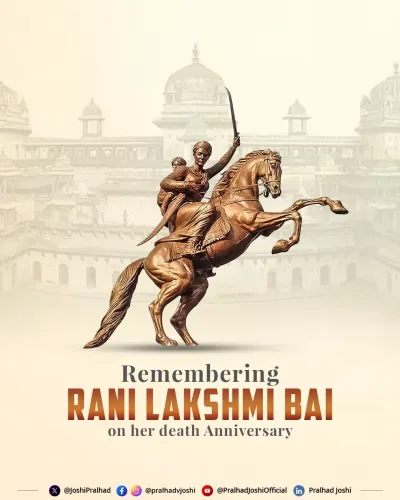
Posting in Kannada on Friday, 23 October 2026, Joshi wrote: 'Kannada naadina veeravanite, swaatantrya horaatada munchooni naayaki Kittur Rani Chennammavara Jayantiyandu avarigu nanna gauravapoorvaka namagalu' — ('My respectful tribute to Kittur Rani Chennamma, the valiant daughter of the Kannada land and the foremost leader of the freedom struggle, on her Jayanti'). He called her courage, daring, and patriotism an 'eternal inspiration for every Kannadiga,' and described her bravery as 'immortal.'
The Queen Who Fired the First Shot Against British Rule
Kittur Rani Chennamma became the queen of the princely state of Kittur — in present-day Belagavi district, Karnataka — after the death of her husband, Raja Mallasarja. When the British attempted to annex Kittur through the controversial Doctrine of Lapse in 1824, Chennamma refused to yield. She organised and led an armed uprising, making her one of the earliest known figures to take up arms against colonial rule — decades before the 1857 revolt. Her forces famously killed the British Political Agent, St. John Thackeray, in the first round of fighting, a startling early reversal that shook the Company's authority in the Deccan.
She was eventually captured and imprisoned at Bailhongal Fort, where she died in 1829. Yet her legacy only grew: she is remembered today as a symbol of Karnataka's self-respect and a pioneer of the Indian independence movement, her statue standing prominently in the Parliament complex in New Delhi.
Karnataka's Icons in the BJP's Patriotic Narrative
Joshi's tribute fits a well-established pattern among Karnataka's BJP leaders, who regularly mark the anniversaries of 19th-century regional heroes to underscore that the freedom movement drew strength from every corner of the country — not just from Delhi or Bengal. For a senior BJP leader and sitting Union Minister from Karnataka, invoking Chennamma on her Jayanti is both a cultural affirmation for Kannada-speaking constituents and a reminder that pre-1857 resistance to colonial rule had deep Deccan roots.
The post — carried under the hashtag #KitturRaniChennamma — drew wide engagement from Kannadiga social-media users, reflecting how durably the queen's story resonates across generations.
Two hundred years on, the flame Chennamma lit in a small Deccan kingdom refuses to go out — and Karnataka's leaders, from every political aisle, keep stoking it.
Point of View
Paying homage to a queen whose revolt took place in that very belt also carries clear electoral and cultural resonance. The timing on Jayanti ensures maximum organic amplification among Kannada speakers. Expect similar tributes from across Karnataka's political class as the 200th anniversary of the 1824 uprising draws closer.
NationPress
23 Oct 2026
Frequently Asked Questions
Who was Kittur Rani Chennamma?
Kittur Rani Chennamma was the queen of the princely state of Kittur in present-day Belagavi district, Karnataka. In 1824 she led one of India's earliest armed revolts against the British East India Company, making her a pioneering figure in the Indian independence movement.
When is Kittur Rani Chennamma Jayanti celebrated?
Kittur Rani Chennamma Jayanti commemorates her birth anniversary and is observed annually; in 2026 Union Minister Pralhad Joshi marked it on 23 October with a tribute on X.
What did Pralhad Joshi post about Kittur Rani Chennamma?
Joshi posted a Kannada-language tribute calling her the 'valiant daughter of the Kannada land' and an 'eternal inspiration for every Kannadiga,' describing her bravery as immortal under the hashtag #KitturRaniChennamma.
Why is Kittur Rani Chennamma important to Karnataka?
Chennamma symbolises Karnataka's defiance of colonial rule — her 1824 revolt predates the 1857 uprising by over three decades, her forces killed a British Political Agent, and her statue stands in India's Parliament complex as a tribute to her legacy.
What happened to Kittur Rani Chennamma after her revolt?
After the British suppressed the revolt, Chennamma was captured and imprisoned at Bailhongal Fort, where she died in 1829.