Pralhad Joshi Reviews Education Ministry's Implementation Roadmap
Synopsis
Union Minister Pralhad Joshi chaired a review meeting with senior officials of both education departments on October 26, focusing on a strategic roadmap for better coordination, monitoring and timely execution of key programmes under the NEP 2020 framework.
Key Takeaways
Pralhad Joshi met senior officials of the Department of Higher Education and the Department of School Education and Literacy on October 26, 2026 .
The meeting focused on a strategic roadmap for 'better coordination, regular monitoring and timely execution' of key programmes across both departments.
Samagra Shiksha Abhiyan , launched in 2018 , is the central school-support scheme whose implementation is subject to such reviews.
The National Education Policy 2020 sets enrolment and quality targets through 2030 , making mid-course execution reviews critical.
Chronic inter-departmental silos and slow fund utilisation have been recurring concerns flagged in successive budget reviews of education spending.
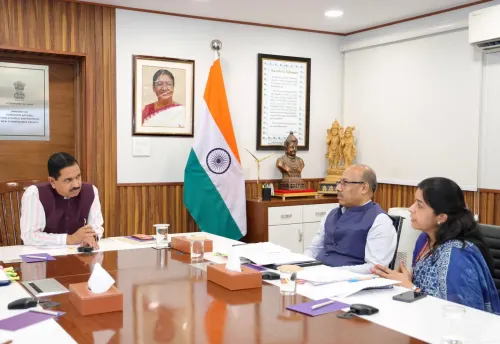
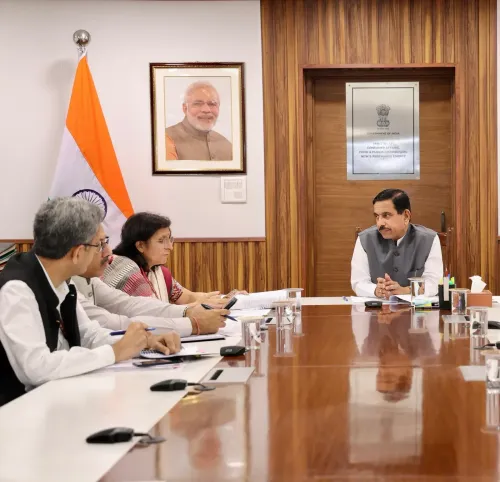
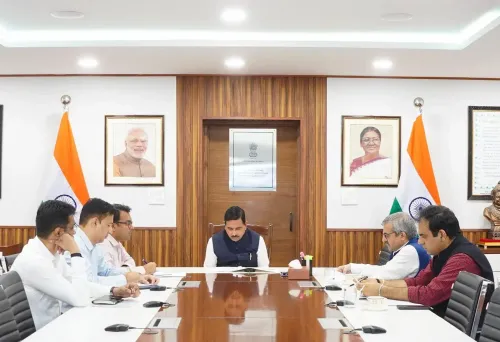
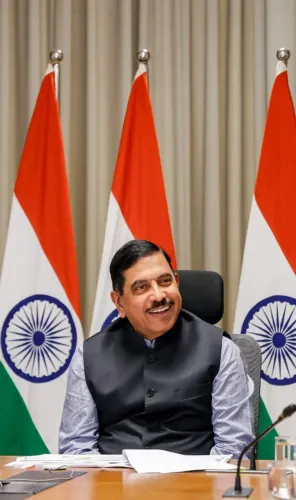
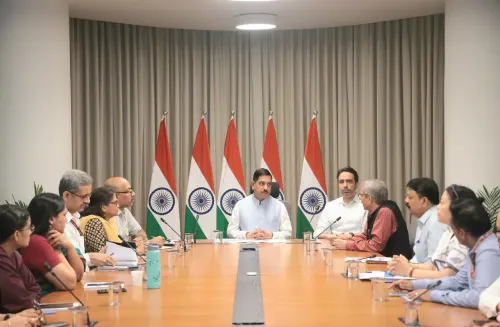
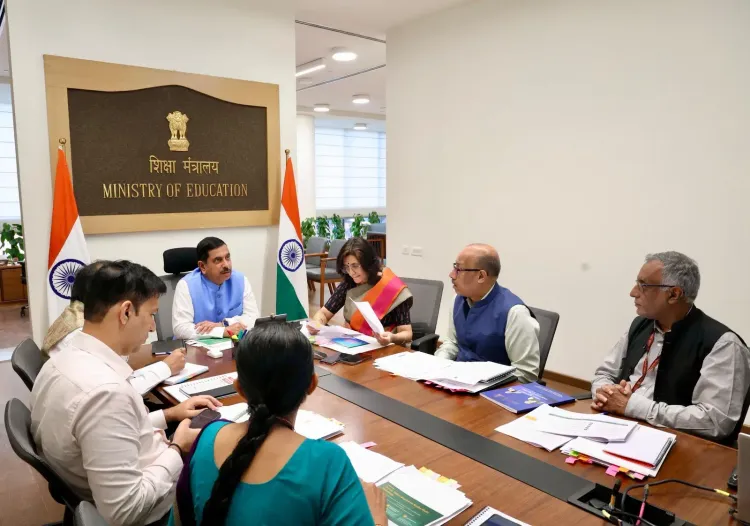
Cutting across the usual ministerial boundaries, Union Minister Pralhad Joshi on Monday, October 26, 2026, convened a high-level review meeting with senior officials of both the Department of Higher Education and the Department of School Education and Literacy under the Ministry of Education — signalling a hands-on push to tighten execution across India's sprawling education programmes.
The minister said the deliberations centred on a 'strategic roadmap for effective implementation of key programmes across both departments, with a focus on better coordination, regular monitoring and timely execution.' The framing — coordination, monitoring, timely delivery — is pointed: it targets the chronic gaps that have historically slowed fund utilisation and outcome tracking in centrally sponsored education schemes.
Why inter-departmental coordination is the pressure point
India's two education departments have long operated in largely separate silos, with school education managing flagship schemes like Samagra Shiksha Abhiyan — the integrated school-support programme launched in 2018 by merging three earlier schemes — while higher education steers university funding, regulation and research. Bridging these two verticals under a single strategic lens is a stated priority of the National Education Policy 2020, which set enrolment and quality targets running through 2030.
Successive budget cycles have flagged sluggish fund utilisation and delayed state-level execution as recurring pain points. A joint coordination review of the kind Joshi convened is a direct response to that pattern — putting implementation accountability in one room rather than leaving it to inter-departmental correspondence.
Joshi's role and the political context
Joshi holds the Consumer Affairs, Food and Public Distribution and New and Renewable Energy portfolios, making his engagement with the education ministry notable. His participation in a meeting with @EduMinOfIndia officials suggests either a cross-cabinet coordination mandate or a broader governance oversight role — the post does not specify the formal basis of the meeting, and no specific new mechanisms were announced publicly.
What the meeting does signal, unambiguously, is that the Centre intends to push state-level education departments harder on execution benchmarks — a recurrent theme as the NEP 2020 implementation window moves deeper into its second half before the 2030 deadline.
The next marker to watch: whether revised implementation guidelines or inter-departmental coordination protocols emerge from the Ministry of Education in the weeks ahead.
Point of View
The political cost of missed targets is rising sharply. Whether this review translates into enforceable inter-departmental protocols or remains a consultative exercise will determine its real impact. The meeting also fits a broader BJP governance pattern of using senior ministers as implementation watchdogs beyond their own portfolios.
NationPress
26 Oct 2026
Frequently Asked Questions
Why did Pralhad Joshi meet education department officials?
Joshi convened the meeting to deliberate on a strategic roadmap for effective implementation of key programmes across the Department of Higher Education and the Department of School Education and Literacy, with emphasis on coordination, monitoring and timely execution.
What is Samagra Shiksha Abhiyan?
Samagra Shiksha Abhiyan is an integrated school education support scheme launched in 2018 by merging three earlier programmes — Sarva Shiksha Abhiyan, Rashtriya Madhyamik Shiksha Abhiyan and teacher education schemes — to provide end-to-end support from pre-primary to Class 12.
What is the National Education Policy 2020?
The National Education Policy 2020 is a Cabinet-approved framework that sets goals for curriculum reform, teacher training and gross enrolment targets in both school and higher education, with a target horizon of 2030 .
Is Pralhad Joshi the Education Minister?
No. Joshi serves as Union Minister of Consumer Affairs, Food and Public Distribution and New and Renewable Energy . His meeting with education department officials reflects a cross-cabinet coordination or oversight engagement.
What are the key challenges in implementing India's education schemes?
Successive budget reviews have identified inter-departmental silos, slow fund utilisation by states and gaps in real-time outcome tracking as the primary obstacles to effective implementation of centrally sponsored education programmes.