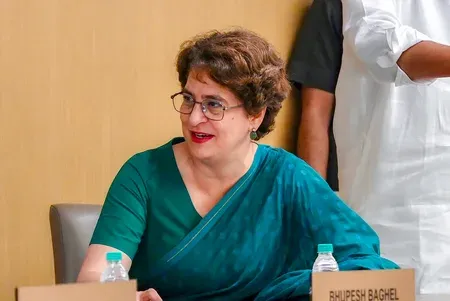
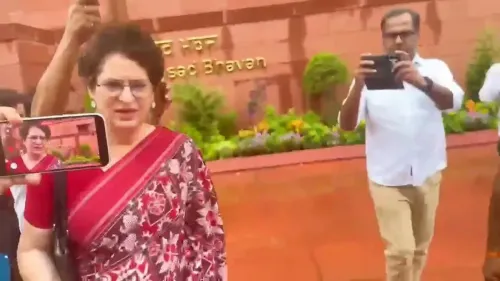
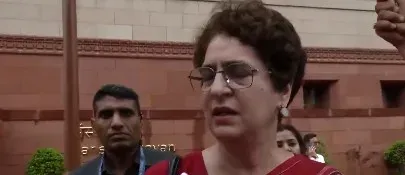
Priyanka Gandhi slams crackdown on exam-leak protesters, demands minister's exit
Synopsis
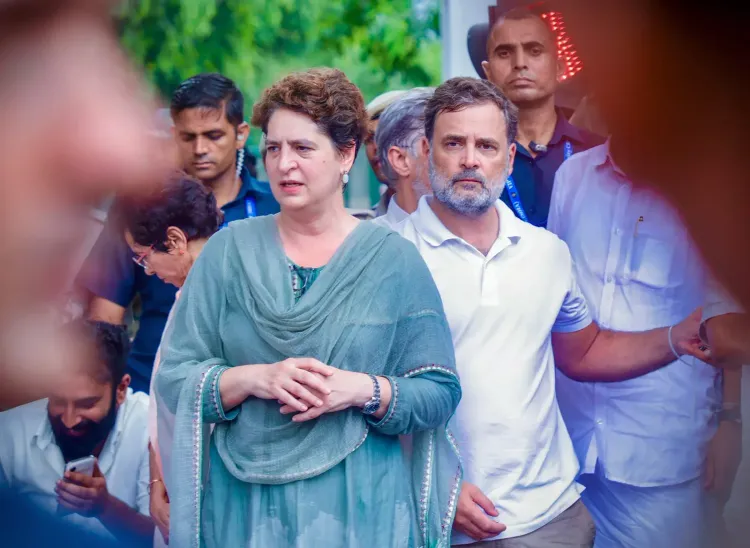
Priyanka Gandhi took the government head-on in Parliament, demanding Education Minister Dharmendra Pradhan's resignation and accusing the Modi government of being 'anti-youth, anti-poor, and anti-farmer.' Her remarks sharpen the Congress offensive on the NEET-UG paper leak crisis — a controversy that has shaken public trust in India's entire competitive examination infrastructure.
Key Takeaways
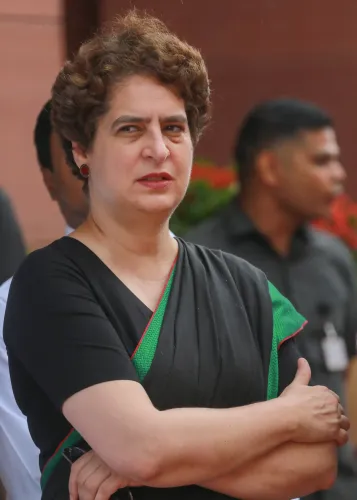
Priyanka Gandhi Vadra on 21 July condemned the police crackdown on students protesting exam paper leaks at the Parliament complex, New Delhi .
She demanded the resignation of Education Minister Dharmendra Pradhan , citing the principle of ministerial accountability.
Priyanka accused the government of being 'anti-youth, anti-poor, and anti-farmer,' echoing Rahul Gandhi's characterisation of PM Modi as 'anti-youth.' She argued that past leak investigations punished only junior officials, leaving those at the top unaccountable.
Priyanka called for an end to force against protesters, greater transparency, and stricter safeguards in India's examination and recruitment systems.
Student protests over the NEET-UG controversy continue to grow, with opposition parties backing demands for accountability.
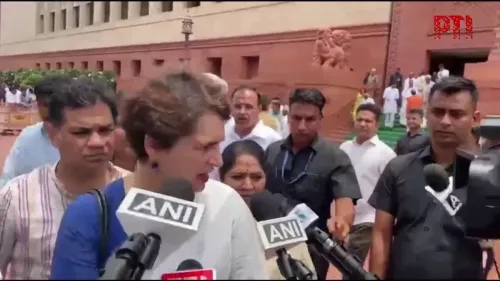
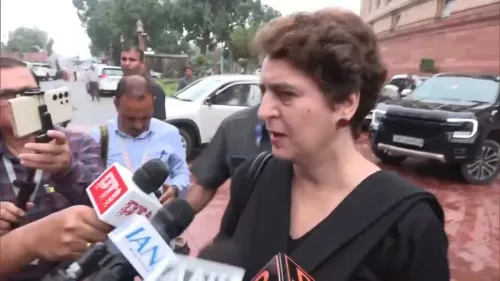
Congress leader Priyanka Gandhi Vadra on Tuesday, 21 July launched a sharp attack on the government over police action against students demonstrating against repeated paper leaks in competitive examinations, asserting that the nation's youth deserved respect — not batons and tear gas. Her remarks came from the Parliament complex in New Delhi, as student protests over the NEET-UG and other exam irregularities continued to intensify across the country.
What Priyanka Gandhi Said
Speaking to reporters, Priyanka underscored the immense personal and financial cost borne by exam aspirants. She described how millions of young Indians spend years in rigorous preparation, with families taking on heavy loans for coaching, only to see their prospects derailed by systemic failures and recurring leaks.
'The Prime Minister is the leader of this country. This country belongs to its youth. This Parliament belongs to them,' she said. 'The least he can do is listen to them, call them, and understand their pain.'
She demanded the immediate resignation of Education Minister Dharmendra Pradhan, invoking the principle of ministerial accountability. Citing precedents where ministers had stepped down over major public failures — including railway accidents — she questioned why the same standard was not being applied in the present crisis.
The Political Escalation
When asked about Leader of the Opposition Rahul Gandhi's characterisation of Prime Minister Narendra Modi as 'anti-youth,' Priyanka went further, accusing the government of being 'anti-youth, anti-poor, and anti-farmer' — drawing a direct line between the handling of student protests and the earlier response to farmers' demonstrations.
She noted that Rahul had been consistently raising the exam-leak issue in Parliament, yet successive governments had failed to deliver lasting structural solutions. Investigations into past leaks, she argued, typically resulted in action only against junior officials, while those at the top escaped accountability.
Systemic Failures at the Core
Priyanka's intervention comes amid a broader crisis of confidence in India's examination and recruitment infrastructure. The NEET-UG controversy — involving alleged paper leaks affecting hundreds of thousands of medical aspirants — has become a flashpoint, drawing opposition parties, student unions, and civil society groups into a widening demand for reform.
Critics argue that the pattern of leaks, followed by investigations that rarely reach the top, reflects deep institutional rot. This is not the first time competitive exam integrity has come under fire; similar controversies have surfaced in state-level recruitment exams over the past several years, suggesting the problem is structural rather than isolated.
What Priyanka Is Demanding
Beyond the ministerial resignation, Priyanka called for an end to the use of force against peaceful protesters, greater transparency in the examination process, and the introduction of stricter mechanisms to prevent future leaks. She urged the government to take concrete steps to rebuild trust in India's public examination and recruitment systems.
With opposition parties uniting behind student demands and protests showing no signs of abating, pressure on the government to respond substantively — rather than through policing — is mounting by the day.
Point of View
But the underlying grievance is real and politically potent. The NEET-UG crisis has exposed a recurring failure in India's examination infrastructure — one where accountability consistently stops short of those who design and administer the systems. The government's instinct to police protests rather than address root causes risks deepening the trust deficit with a demographic — first-time and young voters — that both parties are aggressively courting. Congress's framing of 'anti-youth, anti-poor, anti-farmer' is a deliberate attempt to stitch together three separate protest constituencies into a single electoral narrative ahead of state elections. Whether that framing holds depends on whether the government offers credible reform or continues to manage the crisis through force.
NationPress
20 Oct 2026
Frequently Asked Questions
What did Priyanka Gandhi say about the exam paper leak protests?
Priyanka Gandhi criticised the police use of batons and tear gas against students protesting repeated paper leaks in competitive exams, stating that the country's youth deserved respect and attention. She made these remarks at the Parliament complex in New Delhi on 21 July.
Why is Priyanka Gandhi demanding Dharmendra Pradhan's resignation?
Priyanka invoked the principle of ministerial accountability, arguing that ministers have historically resigned over major public failures such as railway accidents, and that the same standard should apply to the Education Minister over the exam-leak crisis. She questioned why no senior official had been held accountable.
What is the NEET-UG controversy that triggered the protests?
The NEET-UG controversy centres on alleged paper leaks that compromised a high-stakes medical entrance examination, affecting hundreds of thousands of aspirants across India. It has become a focal point for broader demands to reform the country's competitive examination and recruitment infrastructure.
What specific reforms has Priyanka Gandhi called for?
Beyond the ministerial resignation, she has called for an end to force against peaceful protesters, greater transparency in the examination process, and stricter mechanisms to prevent future leaks — with the goal of rebuilding public trust in India's examination and recruitment systems.
How has the Congress party framed the government's overall stance?
Congress leaders, including Rahul Gandhi and Priyanka Gandhi, have characterised the Modi government as 'anti-youth, anti-poor, and anti-farmer,' linking the crackdown on student protesters to the earlier handling of farmers' demonstrations to build a broader political narrative.