NTA to re-conduct UGC-NET in English, Sociology, Commerce after paper errors
Synopsis
Facing a fresh wave of criticism, the NTA has chosen transparency over damage control — admitting errors in UGC-NET papers for English, Sociology, and Commerce and announcing fee-free re-tests on 9 and 10 September. Out of 184 subjects and 24,700 questions, only three papers were flagged, but the episode has reignited questions about systemic quality control at India's premier exam body.
Key Takeaways
The NTA will re-conduct UGC-NET for English , Sociology , and Commerce after errors were found in the question papers.
Sociology re-test is scheduled for 10 September ; English and Commerce re-tests on 9 September .
Of 184 subjects and 24,700 questions examined, issues were found in only 3 UGC-NET subjects ; answer keys for the remaining 181 subjects were published on 16 August .
Nearly 8 lakh of over 10 lakh registered candidates appeared across the examination cycle.
Re-tests will be held at no additional fee , and qualifying allocations for affected subjects will not be reduced .
The NTA says it is strengthening internal processes and fixing accountability for the lapses that occurred.
The National Testing Agency (NTA) on Monday, 17 August defended its decision to re-conduct the University Grants Commission-National Eligibility Test (UGC-NET) for English, Sociology, and Commerce, stating that it is proactively identifying errors and correcting them transparently in the interest of candidates. The announcement, made a day after the agency confirmed the re-tests, comes amid mounting public criticism over the NTA's management of high-stakes competitive examinations.
Scale of the Examination Cycle
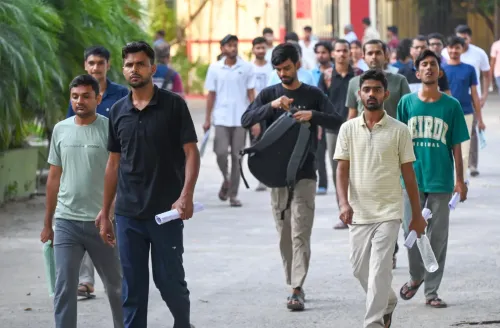
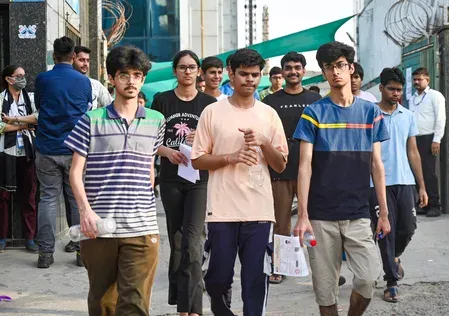
The NTA conducted a series of national examinations between June and July 2025, covering UGC-NET, CSIR-NET, and ICAR (AIEEA-PG and AICE-PhD) — a combined total of 184 subjects and papers comprising 24,700 distinct questions. Over 10 lakh candidates registered for these examinations, of whom nearly 8 lakh appeared. According to sources familiar with the matter, each question must be set, moderated, translated, typeset, administered, and evaluated to a common standard — a process they described as enormous in scale and complexity.
Where the Problems Were Found
Of the 184 subjects examined, issues were identified in only three of the 87 UGC-NET subjects — English, Sociology, and Commerce. For the remaining 181 subjects — comprising 84 UGC-NET subjects, all 5 CSIR-NET subjects, and 92 ICAR subjects — the papers were found to be in order, and their answer keys were published on Sunday, 16 August. The answer keys for the three affected subjects were withheld as the agency focused on corrective action.
Re-Examination Dates and Candidate Protections
The Sociology paper will be re-conducted on 10 September, while the English and Commerce papers will be held on 9 September. The NTA has confirmed that the re-tests will be held at no additional fee to candidates. Crucially, the number of qualifying candidates and subject-wise allocations for the affected subjects will not be reduced. Sources acknowledged that re-conducting a paper is 'undoubtedly hard on the candidates' of the affected subjects.
NTA's Defence: Accountability Over Cover-Up
According to sources, the NTA examined the papers, sought opinions from subject-matter experts, and chose to re-conduct the three papers 'rather than allow papers with defects to stand.' The agency stated it took 'the responsibility of acknowledging that something had gone wrong in these papers and of taking corrective action, at cost to itself, rather than papering over the problem.' The NTA further argued that correcting flawed papers ultimately protects the 'honest, hard-working candidate' who prepared on merit, as errors disadvantage sincere aspirants relative to those who may have encountered questions from earlier cycles.
Systemic Reforms Underway
Beyond the three affected papers, the NTA stated it is using this episode to strengthen internal processes at the stages of setting, moderating, translating, and composing question papers. The agency said it is also working to fix responsibility for the lapses that occurred. 'The willingness to identify problems proactively, to admit them, and to act, even where action is difficult, is itself the foundation of a more accountable examination system,' sources said. This comes amid a broader crisis of confidence in the NTA following controversies surrounding other national examinations earlier this year.
Point of View
But it is not sufficient — the agency has not yet named the process failures or the individuals responsible. More troubling is the pattern: this is not an isolated lapse but part of a string of examination controversies that have eroded candidate trust. Re-conducting three papers at no fee is the minimum expected response, not a mark of institutional credibility. The real test is whether the 'systemic reforms' the NTA promises will be independently audited, or whether they will remain internal assurances with no external verification.
NationPress
17 Aug 2026
Frequently Asked Questions
Why is the NTA re-conducting UGC-NET for English, Sociology, and Commerce?
The NTA found multiple errors in the question papers for these three UGC-NET subjects and decided to re-conduct the exams rather than let flawed papers stand. Subject-matter experts were consulted before the decision was taken.
When will the UGC-NET re-exams for the three affected subjects be held?
The English and Commerce re-tests are scheduled for 9 September, while the Sociology paper will be re-conducted on 10 September 2025.
Will candidates have to pay again for the UGC-NET re-exam?
No. The NTA has confirmed that the re-tests will be held at no additional fee. The number of qualifying candidates and subject-wise allocations for the affected subjects will also not be reduced.
How many subjects and questions were part of this examination cycle?
The NTA conducted examinations across 184 subjects and papers, comprising 24,700 distinct questions, covering UGC-NET, CSIR-NET, and ICAR. Of these, errors were identified in only 3 UGC-NET subjects.
What reforms is the NTA undertaking after the UGC-NET paper errors?
The NTA says it is strengthening internal processes at the stages of question-setting, moderation, translation, and typesetting. It has also stated it will fix responsibility for the lapses, though no independent oversight mechanism has been announced.