Pulwama plotter Hamza Burhan shot dead by gunmen in PoK's Muzaffarabad
Synopsis
Hamza Burhan, the Pulwama attack planner who fled to Pakistan in 2017 and rose to command Al Badr, has been shot dead in Muzaffarabad — the latest in a string of targeted killings of senior terror operatives on Pakistani soil that Indian agencies say is demoralising groups like Lashkar-e-Taiba and Jaish-e-Mohammed and shrinking their recruitment pipelines.
Key Takeaways
Hamza Burhan , a key planner of the 2019 Pulwama attack , was shot dead by unknown gunmen in Muzaffarabad, PoK .
He was designated a terrorist under the UAPA by the Indian government in 2022 and served as a commander of terror outfit Al Badr .
Burhan had left for Pakistan in 2017 and built a terror network spanning Pulwama to Shopian in South Kashmir.
His killing is part of a series of targeted eliminations of Pakistan-based terror operatives, including multiple Lashkar-e-Taiba and Jaish-e-Mohammed figures since 2024 .
Pakistan has not issued official statements on any of these killings; investigations reportedly remain inconclusive.
Indian agencies say the killings have demoralised terror outfits and reduced recruitment, particularly since Operation Sindoor .
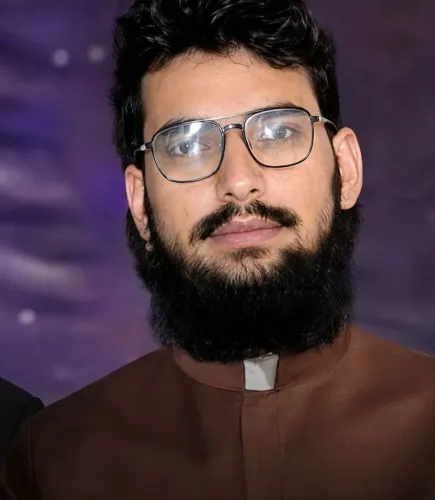
Hamza Burhan, one of the key planners behind the 2019 Pulwama terror attack, was shot dead by unknown gunmen in Muzaffarabad, Pakistan-occupied Kashmir (PoK). Burhan, also known by the alias Doctor, is said to have been hit by multiple gunshots and died on the spot, according to reports. His elimination adds to a growing pattern of targeted killings of Pakistan-based terror operatives.
Who Was Hamza Burhan
Hamza Burhan, whose full name is Arjumand Gulzar Dar, was born in the Ratnipora area of Pulwama, Jammu and Kashmir. He left for Pakistan in 2017, ostensibly to pursue higher studies, but instead joined the terror outfit Al Badr, rising rapidly to the rank of commander.
He subsequently returned to Kashmir, where his activities centred on radicalising youth and inducting them into terror networks. His operational reach extended across South Kashmir, from Pulwama to Shopian. The Indian government formally designated him a terrorist under the Unlawful Activities (Prevention) Act (UAPA) in 2022, describing him as 'an associate member of Al Badr, a terrorist outfit designated under the UAPA.'
The Pulwama Attack: Background
The Pulwama terror attack of 14 February 2019 remains one of the deadliest strikes on Indian security forces in recent decades. A suicide bomber, identified as Adil Ahmad Dar, rammed an explosive-laden vehicle into a bus carrying Indian security personnel on the Jammu-Srinagar national highway in the Lethapora area of Pulwama, killing 40 Central Reserve Police Force (CRPF) personnel.
The attack was claimed by Jaish-e-Mohammed. In retaliation, the Indian Air Force struck a Jaish-e-Mohammed training base in Balakot, Pakistan, in an air operation that marked a significant escalation in India's counter-terror posture.
A Pattern of Targeted Killings in Pakistan
Burhan's killing is part of a widening series of targeted eliminations of terror operatives on Pakistani soil. In May 2025, Lashkar-e-Taiba operative Farman Ali was shot dead at Muridke. In April 2025, unknown gunmen killed Sheikh Yousuf Afridi, a Lashkar-e-Taiba commander, in Khyber Pakhtunkhwa.
Also in April, the co-founder of Lashkar-e-Taiba, Amir Hamza, survived a shooting in Lahore. In January 2025, Pakistani Army Lieutenant Colonel Imran Dayal, reportedly a handler for the Pahalgam terror attack, was gunned down in Dera Ismail Khan. Jaish-e-Mohammed operative Mushtaq alias Ghazi Baba was killed near Peshawar in October 2024. In May 2024, Lashkar-e-Taiba commander Razaullah Nizamani alias Abu Saifullah Khalid was shot in Matli, Sindh.
Pakistan has not issued official statements on any of these incidents, and investigations reportedly remain inconclusive.
Impact on Terror Networks
Indian agencies have noted that the sustained elimination of senior commanders has demoralised outfits such as Lashkar-e-Taiba and Jaish-e-Mohammed, contributing to a measurable decline in recruitment, according to reports. Since Operation Sindoor, both organisations — which were reportedly hit hardest — have struggled to revive and reset their operations in Jammu and Kashmir.
The cumulative effect of these killings over the past two years has left key terror networks in Pakistan scrambling to regroup, with leadership gaps opening faster than they can be filled. Whether this trend continues will be closely watched by Indian security agencies in the months ahead.
Point of View
With no credible Pakistani investigation into any of them. That silence is telling: Islamabad's refusal to acknowledge these deaths publicly suggests either an inability or unwillingness to confront what is happening within its own borders. For Indian security planners, the cumulative effect — leadership attrition, recruitment decline, operational disruption — is the desired outcome, but the absence of accountability on the Pakistani side means the structural conditions that produced Pulwama remain intact. Eliminating commanders disrupts networks; it does not dismantle them.
NationPress
7 Oct 2026
Frequently Asked Questions
Who was Hamza Burhan and what was his role in the Pulwama attack?
Hamza Burhan, also known as Arjumand Gulzar Dar or 'Doctor', was a Pulwama-born Al Badr commander designated a terrorist under India's UAPA in 2022. He was identified as one of the key planners behind the 14 February 2019 Pulwama attack, which killed 40 CRPF personnel, and had built a terror recruitment network across South Kashmir before relocating to Pakistan.
Where and how was Hamza Burhan killed?
Hamza Burhan was shot dead by unknown gunmen in Muzaffarabad, Pakistan-occupied Kashmir (PoK). He is said to have been hit by multiple gunshots and died instantly, according to reports. No group has claimed responsibility, and Pakistan has not issued an official statement.
What is the significance of this killing in the broader context of terror networks?
Burhan's death is part of a series of targeted killings of Pakistan-based terror operatives that has accelerated over the past two years. Indian agencies have reportedly noted that these eliminations have demoralised Lashkar-e-Taiba and Jaish-e-Mohammed, reducing recruitment and disrupting operations in Jammu and Kashmir, particularly since Operation Sindoor.
What was the 2019 Pulwama attack?
The Pulwama attack on 14 February 2019 was one of India's deadliest terror strikes, in which a Jaish-e-Mohammed suicide bomber rammed an explosive-laden vehicle into a CRPF convoy on the Jammu-Srinagar highway, killing 40 personnel. India retaliated with an Indian Air Force strike on a Jaish-e-Mohammed training base in Balakot, Pakistan.
Who are the other terror operatives recently killed in Pakistan?
Since 2024, several Pakistan-based terror figures have been killed by unknown gunmen, including Lashkar-e-Taiba operative Farman Ali in Muridke, Lashkar-e-Taiba commander Sheikh Yousuf Afridi in Khyber Pakhtunkhwa, Jaish-e-Mohammed operative Mushtaq alias Ghazi Baba near Peshawar, and Lashkar-e-Taiba commander Razaullah Nizamani in Sindh. Pakistani Army Lieutenant Colonel Imran Dayal, reportedly a handler for the Pahalgam attack, was also killed in Dera Ismail Khan in January 2025.