Punjab CM Mann's Office Greets Sangat on Miri-Piri Diwas
Synopsis
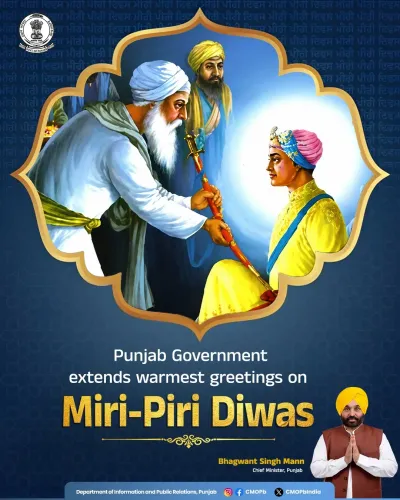
The Chief Minister's Office of Punjab, on behalf of CM Bhagwant Singh Mann, extended official greetings to the Sikh congregation on Miri-Piri Diwas on 24 July 2026, honouring the sixth Sikh Guru Hargobind Sahib Ji and the enduring philosophy of temporal and spiritual authority.
Key Takeaways
The Chief Minister's Office of Punjab issued official greetings on Miri-Piri Diwas on 24 July 2026 .
The message was dedicated to Guru Hargobind Sahib Ji , the Sixth Sikh Guru who established the Miri-Piri doctrine.
Miri-Piri represents the combined temporal and spiritual authority symbolised by two swords worn by the Guru.
The greeting extended lakh-lakh vadhaiyaan to the entire Sikh sangat across Punjab and beyond.
Issuing state greetings on Sikh religious occasions is a long-standing practice of successive Punjab governments .
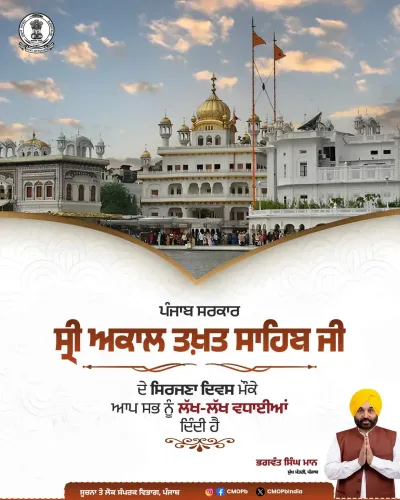
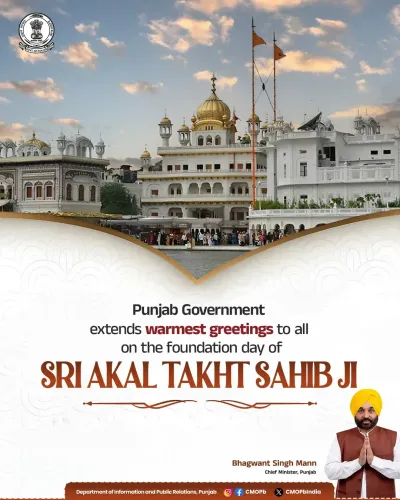
Gurdwara-led observances, including at Sri Akal Takht Sahib in Amritsar , mark the day with kirtan and katha programmes.
The Chief Minister's Office of Punjab, on behalf of the government led by Chief Minister Bhagwant Singh Mann, extended greetings to the Sikh congregation on the occasion of Miri-Piri Diwas on Friday, 24 July 2026, honouring the legacy of the Sixth Sikh Guru, Guru Hargobind Sahib Ji.
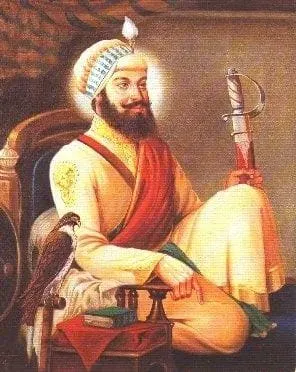
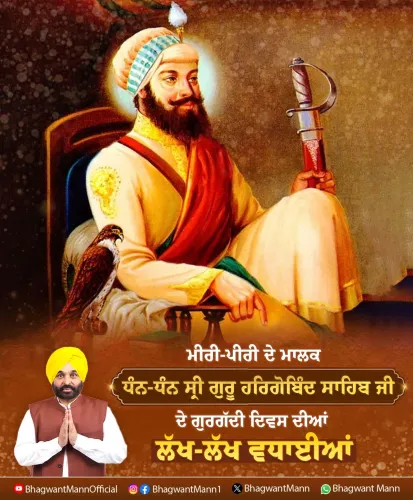
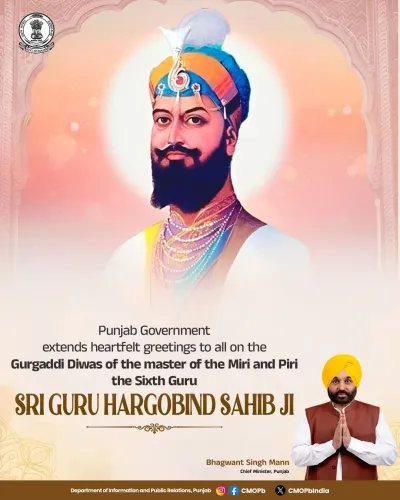
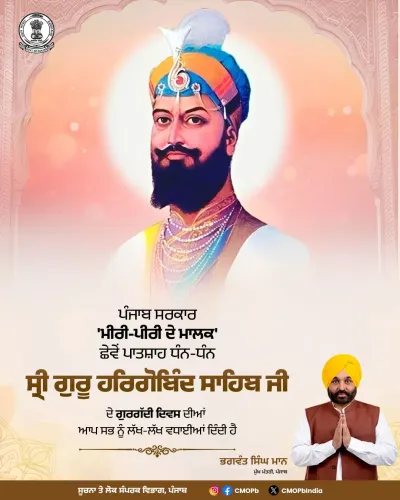
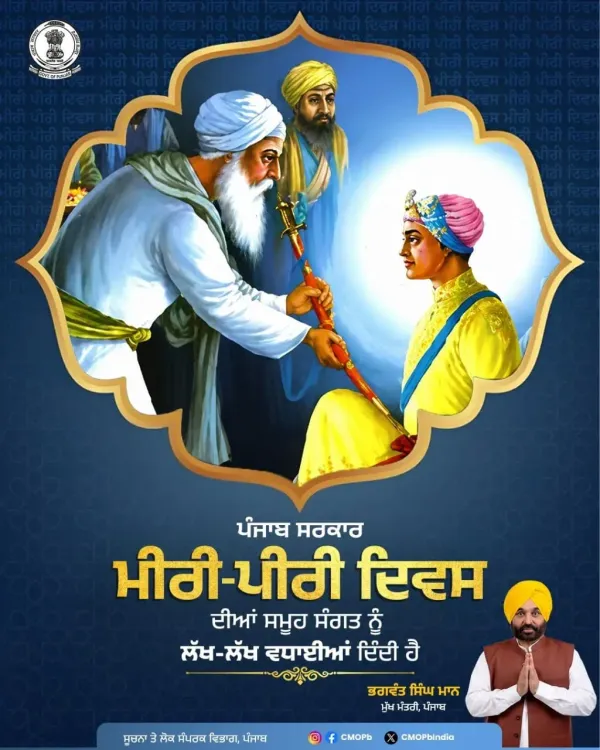
The official post, shared in Punjabi, conveyed lakh-lakh vadhaiyaan (a hundred thousand congratulations) to the samuh sangat (entire congregation), dedicating the message to Dhann-Dhann Sri Guru Hargobind Sahib Ji, revered as the Sixth Patshah (sovereign). The greeting was accompanied by an image and carried the hashtags #MiriPiriDiwas and #CMBhagwantMann.
Context
Miri-Piri Diwas commemorates the foundational Sikh philosophy introduced by Guru Hargobind Sahib Ji in the early seventeenth century. The concept of Miri-Piri — the inseparable union of temporal (miri) and spiritual (piri) authority — is symbolised by the two swords the Guru wore simultaneously. This doctrine has been central to Sikh identity and governance philosophy for over four centuries, and its annual observance draws large congregations at gurdwaras across Punjab and the global Sikh diaspora.Policy Backdrop
Issuing official state greetings on major Sikh religious occasions is a long-standing practice of the Punjab Government, observed across successive administrations regardless of political affiliation. In a state where the Sikh community forms a demographic and cultural majority, such communications serve as formal affirmations of the government's engagement with religious heritage. The CMO Punjab regularly uses its official social media channels to mark Gurpurabs, Sikh historical anniversaries, and days of religious significance, reinforcing the state's institutional connection to the faith's traditions.Stakeholders and Impact
The message is directed at the Sikh sangat — the collective congregation — both within Punjab and across India. Gurdwara institutions, including those managed by the Shiromani Gurdwara Parbandhak Committee (SGPC), typically organise special programmes, katha (religious discourse), and kirtan (devotional singing) on this occasion. State-level acknowledgement from the Chief Minister's Office lends official weight to the observance and signals the government's alignment with the community's spiritual calendar.What's Next
Gurdwara-led observances of Miri-Piri Diwas are expected to continue through the day at prominent shrines, including Sri Akal Takht Sahib in Amritsar. As Punjab's government deepens its cultural engagement, formal state participation in or patronage of heritage events linked to Sikh history remains an area to watch. Official announcements on conservation of historical Sikh sites or cultural programmes could follow in the broader context of the state's engagement with its religious legacy.Point of View
Aligning official messaging with the Sikh religious calendar reinforces its cultural credibility with the core electorate. The Miri-Piri philosophy — uniting governance with spiritual accountability — also carries an implicit resonance for a government keen to project itself as both capable and values-driven. Sustained state engagement with Sikh heritage observances will continue to be a barometer of the administration's relationship with religious institutions such as the SGPC.
NationPress
24 Jul 2026
Frequently Asked Questions
What is Miri-Piri Diwas and why is it celebrated?
Miri-Piri Diwas commemorates the philosophy introduced by the Sixth Sikh Guru, Guru Hargobind Sahib Ji, representing the inseparable union of temporal (Miri) and spiritual (Piri) authority, symbolised by two swords the Guru wore simultaneously.
Who is Guru Hargobind Sahib Ji?
Guru Hargobind Sahib Ji is the Sixth Sikh Guru, revered for establishing the Miri-Piri doctrine in the early seventeenth century, which combined worldly sovereignty with spiritual leadership and remains central to Sikh identity.
What did the Punjab government say on Miri-Piri Diwas 2026?
The Chief Minister's Office of Punjab, on behalf of CM Bhagwant Singh Mann, extended official greetings — lakh-lakh vadhaiyaan — to the entire Sikh sangat on 24 July 2026, dedicating the message to Guru Hargobind Sahib Ji.
Does the Punjab government officially observe Sikh religious days?
Yes, the Punjab Government has a long-standing practice of issuing official greetings and acknowledgements on major Sikh festivals and Gurpurabs, a tradition maintained across successive state administrations.
Where are Miri-Piri Diwas observances held in Punjab?
Key observances of Miri-Piri Diwas are held at prominent Sikh shrines including Sri Akal Takht Sahib in Amritsar, where gurdwara institutions organise kirtan, katha, and special congregational programmes.