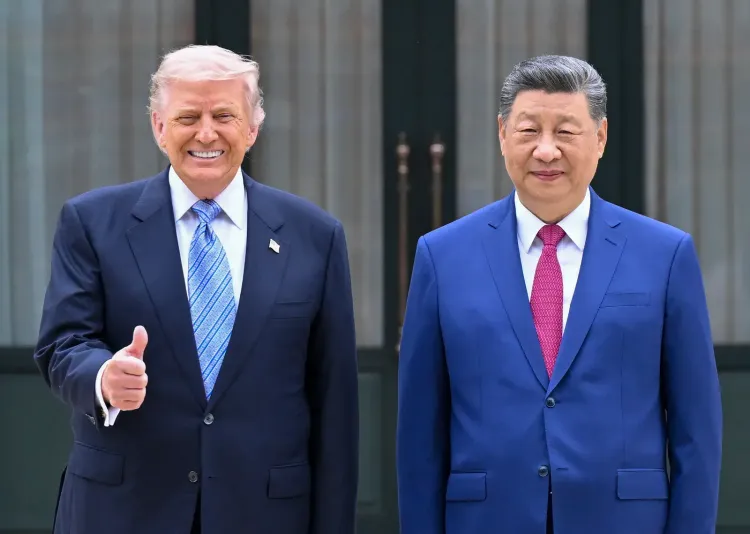
Xi Jinping to visit White House on September 24, Trump confirms
Synopsis
Trump casually announced — while hosting baseball champions at the White House — that Xi Jinping is set to arrive on 24 September. No formal agenda has been disclosed, but Trump's own framing of the meeting around AI supremacy signals that technology rivalry, not just trade, will define this summit.
Key Takeaways
Donald Trump confirmed that Xi Jinping will visit the White House on 24 September 2025 .
Trump made the disclosure during a reception for the Los Angeles Dodgers and separately at a Ratepayer Protection Pledge event.
Trump cited the meeting in the context of US-China artificial intelligence competition, arguing the US remains ahead.
No formal agenda, agreements, or White House statement has been issued to accompany the announcement.
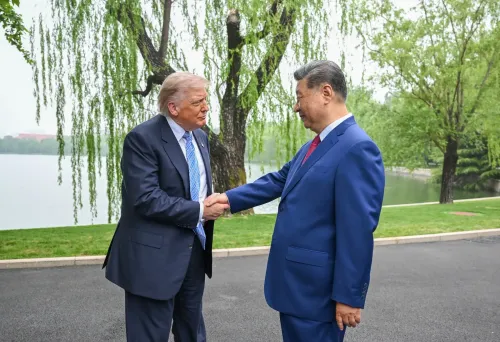
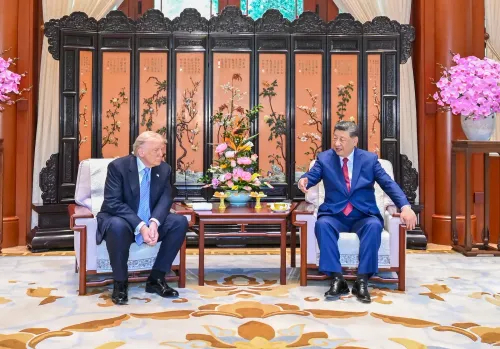
The visit follows Trump's earlier trip to Beijing and ongoing negotiations on tariffs and technology export controls.
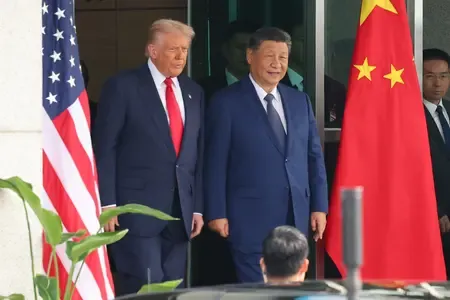
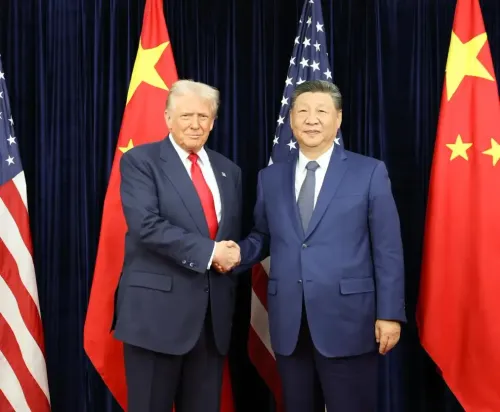
US President Donald Trump confirmed on Thursday, 24 July 2025 that Chinese President Xi Jinping is scheduled to visit the White House on 24 September, marking what would be a significant high-level summit between the leaders of the world's two largest economies. The announcement came as the two nations remain locked in strategic competition spanning trade, technology, and security.
How the Announcement Was Made
Trump disclosed the visit during a White House reception for the 2025 World Series champion Los Angeles Dodgers, mentioning it casually as he guided players through the newly renovated grounds and the Oval Office. 'We had King Charles here three weeks ago. We have President Xi coming in another three weeks. He's going to be coming here in September,' Trump told the gathering.
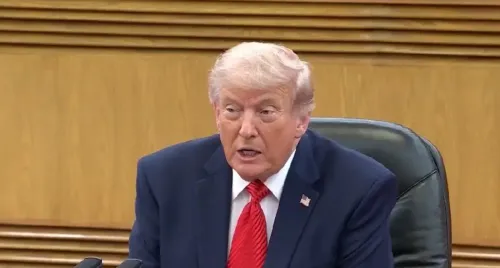
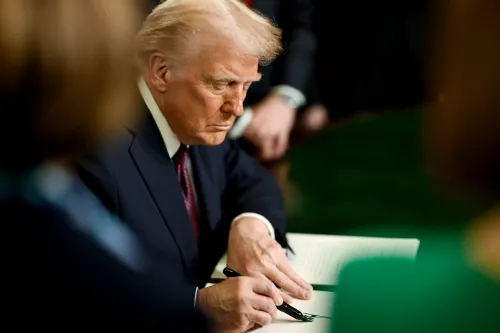
He also referenced the visit separately at an event on his administration's Ratepayer Protection Pledge, providing a specific date. 'President Xi is coming over on September 24th, and we talked about it when I was over in Beijing, and we'll be talking about it again,' Trump said.
AI Competition on the Agenda
At the Ratepayer Protection Pledge event, Trump framed the upcoming meeting partly in the context of the US-China rivalry in artificial intelligence. He argued that the United States remains ahead of China in AI development and stressed that sustaining that lead would require massive investment in electricity generation and data-centre infrastructure. The remarks signal that technology competition is likely to feature prominently when the two leaders meet.
No Formal Agenda Disclosed
Trump did not provide additional details about the visit's formal agenda, nor did he indicate whether any agreements or joint statements were expected. The White House has not issued a separate statement confirming the date. This comes amid an extended period of diplomatic recalibration between Washington and Beijing, following Trump's visit to China earlier this year and ongoing negotiations on tariffs and technology export controls.
The Oval Office as Negotiating Ground
Trump offered an unusually candid description of why he favours hosting foreign leaders in the Oval Office. 'It's a great place to negotiate, because everyone's all discombobulated when they walk in and this is a great time for me to negotiate with them,' he said. The remark underscores the transactional framing Trump has consistently applied to US foreign policy engagements.
The September meeting, if confirmed through official channels, would be one of the most consequential bilateral summits of Trump's second term, with global markets and allied governments watching closely for signals on trade tariffs, Taiwan, and the trajectory of the broader US-China relationship.
Point of View
With no formal White House statement to follow. That casualness may be deliberate signalling, or it may reflect the fluid, personality-driven diplomacy that has defined Trump's second term. Either way, the absence of any disclosed agenda for a US-China summit of this magnitude is notable. With tariff negotiations unresolved and AI export controls still contested, Beijing and Washington both have significant leverage to play — and what Trump chooses to table first on 24 September will tell us more about his second-term China strategy than any press release.
NationPress
24 Jul 2026
Frequently Asked Questions
When is Xi Jinping visiting the White House?
According to statements made by President Trump on 24 July 2025, Xi Jinping is scheduled to visit the White House on 24 September 2025. No formal confirmation has been issued by the White House separately.
Why is the Trump-Xi summit significant?
It would be one of the most consequential bilateral meetings of Trump's second term, bringing together the leaders of the world's two largest economies at a time of active rivalry over trade tariffs, artificial intelligence, technology export controls, and regional security.
What topics are expected to be discussed at the meeting?
Trump has specifically referenced artificial intelligence competition as a theme, arguing the US leads China in AI and must invest heavily to maintain that edge. Trade and technology export controls are also likely on the table, though no formal agenda has been disclosed.
How did Trump announce Xi's White House visit?
Trump mentioned the visit informally during a White House reception for the 2025 World Series champion Los Angeles Dodgers, and again at a separate Ratepayer Protection Pledge event on the same day, where he specified the 24 September date.
Has the White House officially confirmed the Xi visit?
As of Trump's remarks on 24 July 2025, no separate official White House statement has confirmed the visit or outlined its agenda. Trump's public comments are the only disclosed source for the 24 September date.