Priyanka Gandhi shares Sonia Gandhi's attack on Modi govt over education
Synopsis
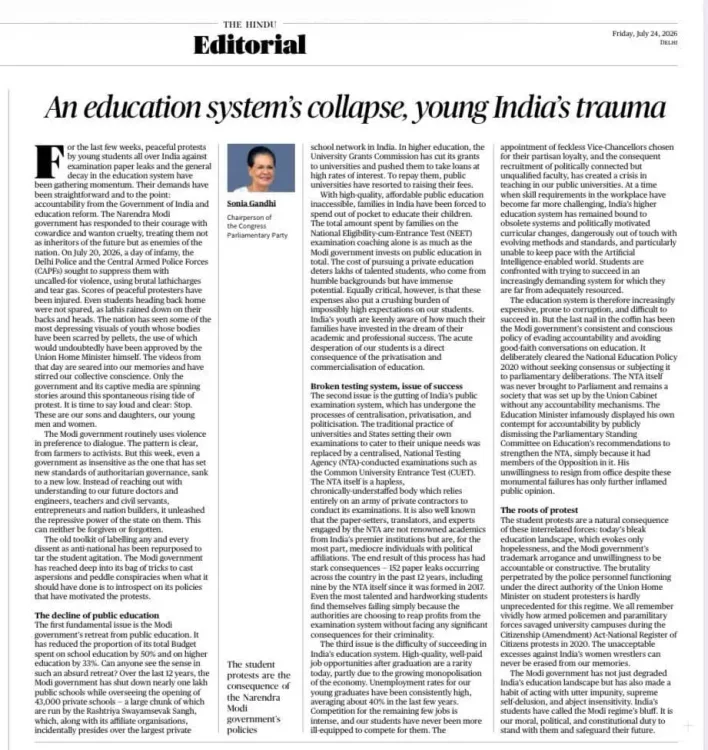
Congress general secretary Priyanka Gandhi Vadra shared a statement by CPP Chairperson Sonia Gandhi on 24 July 2026, accusing the Modi government of degrading India's education landscape and calling it a 'moral, political, and constitutional duty' to stand with students.
Key Takeaways
Priyanka Gandhi Vadra shared a statement by Sonia Gandhi , CPP Chairperson, on 24 July 2026 targeting the Modi government over education.
The statement accuses the government of 'utter impunity, supreme self-delusion, and abject insensitivity' in handling India's education sector.
Congress frames solidarity with students as a 'moral, political, and constitutional duty.' The National Education Policy 2020 and subsequent UGC guidelines have been a sustained flashpoint between the government and opposition parties.
The statement is politically significant for Uttar Pradesh , where Priyanka Gandhi holds organisational charge and student communities are a key constituency.
Parliamentary scrutiny of the education budget and new UGC regulations during the monsoon session is expected to follow.
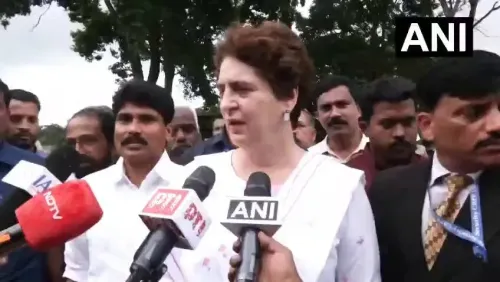
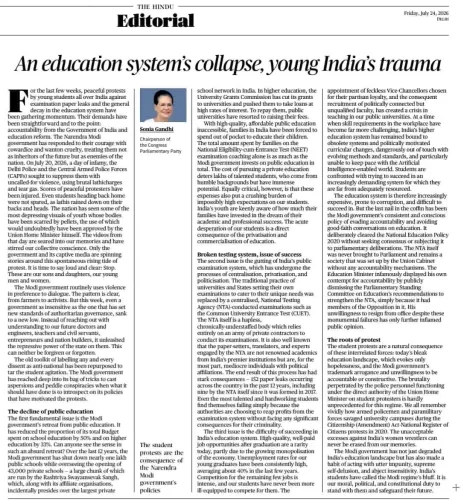
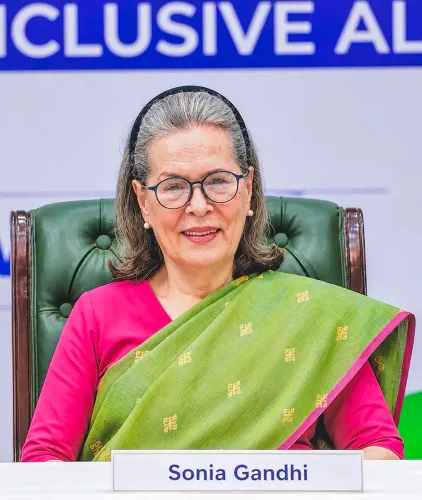
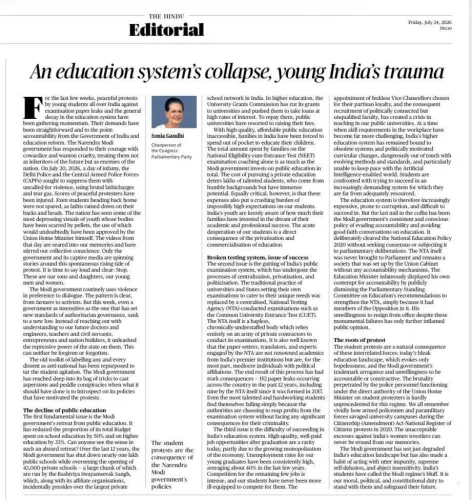
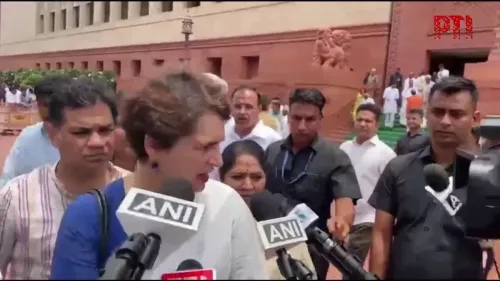
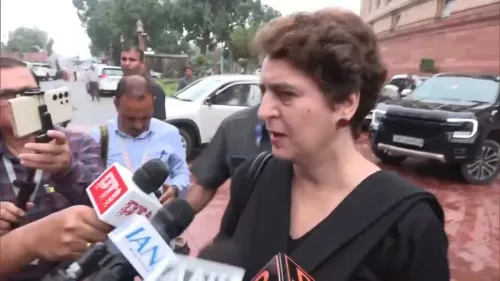
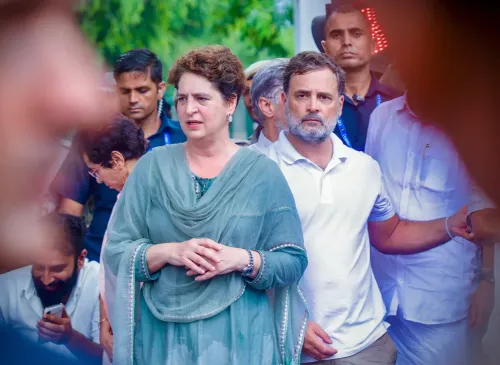
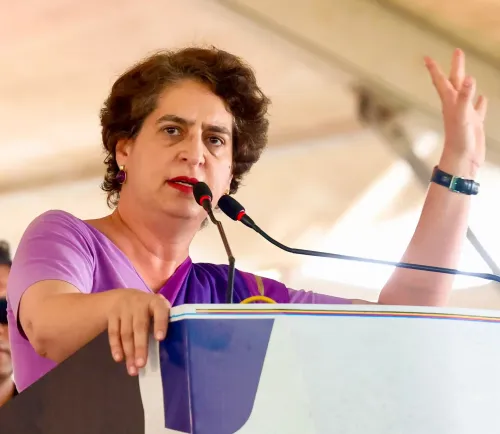
Congress general secretary Priyanka Gandhi Vadra on Friday, 24 July 2026, shared a sharp statement by Congress Parliamentary Party Chairperson Sonia Gandhi, targeting the Modi government over its handling of India's education sector and accusing it of acting against the interests of students.
The statement, attributed to Smt. Sonia Gandhi ji, CPP Chairperson, read: 'The Modi government has not just degraded India's education landscape but has also made a habit of acting with utter impunity, supreme self-delusion, and abject insensitivity. India's students have called the Modi regime's bluff. It is our moral, political, and constitutional duty to stand with them and safeguard their future.'
Context
Sonia Gandhi, who chairs the Congress Parliamentary Party, has long been a vocal critic of the Bharatiya Janata Party-led government's approach to social sector spending, including education. By amplifying this statement, Priyanka Gandhi Vadra — herself a Lok Sabha MP from Wayanad, Kerala — is reinforcing the party's sustained campaign positioning Congress as the defender of students and public educational institutions.
The statement invokes a sense of constitutional obligation, framing Congress's solidarity with students not merely as political positioning but as a duty. The phrase 'India's students have called the Modi regime's bluff' signals that the party believes student communities are themselves pushing back against government policies.
Policy Backdrop
The National Education Policy (NEP) 2020, approved by the Union Cabinet in July 2020, replaced the 1986 National Policy on Education and introduced sweeping structural changes — including a 5+3+3+4 school curriculum framework and multiple entry-exit options in higher education. While the government presented the NEP as a modernising overhaul, the Indian National Congress and other opposition parties have consistently criticised it as a vehicle for centralisation, reduced public funding, and greater private sector involvement.
Between 2021 and 2023, the University Grants Commission (UGC) and the Ministry of Education issued a series of implementation guidelines that drew further scrutiny. Central universities had earlier witnessed student protests over fee hikes and hostel charges in 2019–2020, with Congress leaders alleging a pattern of reduced government funding and expansion of self-financing courses that placed greater financial burden on students.
Stakeholders and Impact
The statement directly invokes university students and the broader higher education ecosystem as the primary stakeholders. Congress's framing positions students as active agents — not passive victims — who have themselves exposed what the party calls the government's contradictions on education.
For Priyanka Gandhi Vadra, who holds organisational charge of Uttar Pradesh — a state with a large student population and numerous central and state universities — amplifying this message carries political resonance ahead of any upcoming state or national electoral cycle. The statement's constitutional framing ('moral, political, and constitutional duty') broadens the appeal beyond party lines.
What's Next
The monsoon session of Parliament is the immediate arena to watch, where debates on the education budget and any new UGC regulations on degree structures or accreditation are expected. Congress is likely to use this statement as a springboard for sustained legislative pressure on the government's education record.
State-level responses, particularly in Uttar Pradesh, will also be closely tracked. If student mobilisation continues, the opposition's framing of education as a constitutional rights issue could shape the political narrative well into the coming months.
Point of View
The party is attempting to shift the debate from policy disagreement to a question of fundamental rights. The timing, ahead of the monsoon session, suggests a coordinated parliamentary strategy. Priyanka Gandhi Vadra's amplification from her personal handle adds a youth-facing, grassroots dimension that complements the institutional weight of Sonia Gandhi's voice.
NationPress
22 Oct 2026
Frequently Asked Questions
What did Sonia Gandhi say about the Modi government and education?
Sonia Gandhi, as CPP Chairperson, stated that the Modi government has 'degraded India's education landscape' and acted with 'utter impunity, supreme self-delusion, and abject insensitivity,' adding that it is a moral, political, and constitutional duty to stand with India's students.
Why did Priyanka Gandhi share Sonia Gandhi's statement on education?
Priyanka Gandhi Vadra shared the statement as part of Congress's broader campaign against the Modi government's education policies, reinforcing the party's position as a defender of students and public educational institutions.
What is the Congress party's criticism of the National Education Policy 2020?
Congress has consistently criticised NEP 2020 as promoting centralisation, reducing public funding for education, and increasing private sector involvement, placing greater financial burden on students.
What student issues has Congress highlighted in the education debate?
Congress leaders have pointed to fee hikes, hostel charge increases at central universities, expansion of self-financing courses, and reduced government funding as key concerns affecting students.
What is expected in Parliament on education after this statement?
During the monsoon session, debates on the education budget and new UGC regulations on degree structures and accreditation are expected, with Congress likely to use this statement to mount legislative pressure on the government.