Giriraj Singh: Wangchuk ends fast after PM Modi's assurance on NEET
Synopsis
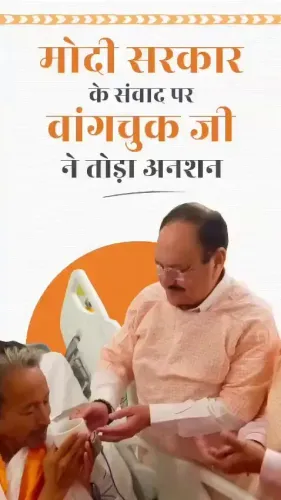
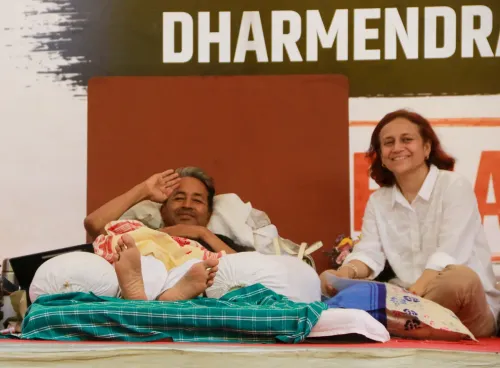
Union Textiles Minister Giriraj Singh announced on 24 July 2026 that activist Sonam Wangchuk ended his hunger strike after Union Ministers JP Nadda and Dr Jitendra Singh assured him of strict action on the NEET paper leak and PM Modi addressed the nation's youth on the issue.
Key Takeaways
Activist Sonam Wangchuk ended his hunger strike on 24 July 2026 after the central government reiterated its commitment on the NEET paper leak issue.
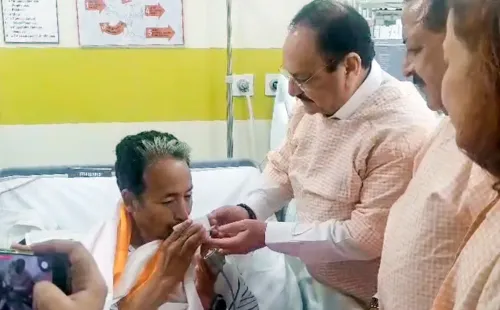
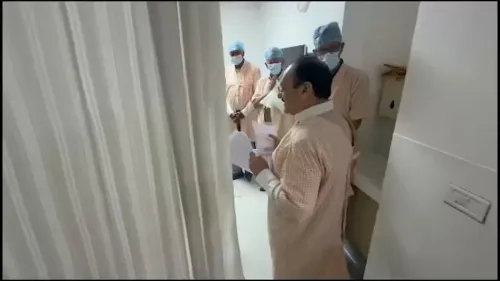
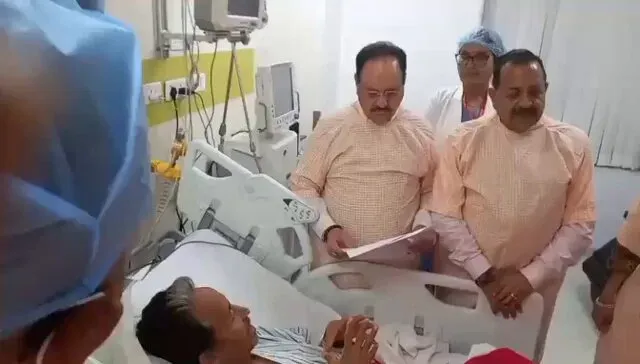
Union Ministers JP Nadda and Dr Jitendra Singh personally met Wangchuk and assured him of strict action against the guilty and examination system reforms.
Prime Minister Narendra Modi addressed the nation's youth late on 23 July 2026 , reiterating the government's resolve on the matter.
The controversy stems from allegations of irregularities in the 2024 NEET-UG examination , the gateway to undergraduate medical admissions in India.
The government has framed Wangchuk's decision to end his fast as an expression of trust in PM Modi's leadership and the administration's assurances.
Parliamentary scrutiny and official action reports against those implicated in the leak remain key indicators of follow-through.
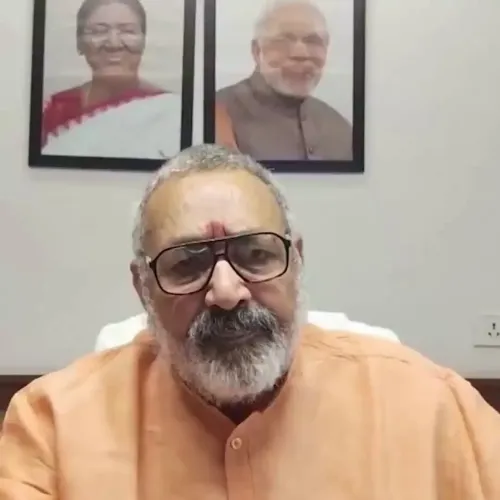
Union Textiles Minister Giriraj Singh on Friday, 24 July 2026, posted on X that activist Sonam Wangchuk has ended his hunger strike after the central government reiterated its commitment to addressing the NEET paper leak controversy and assured strict action against those responsible.
In his post, Singh stated that Union Ministers JP Nadda and Dr Jitendra Singh met Sonam Wangchuk and conveyed the government's position, assuring him that action against the guilty and reforms in the examination system would be pursued with full commitment. He wrote: 'केंद्रीय मंत्री श्री JP Nadda जी और डॉ. Jitendra Singh जी ने सोनम वांगचुक जी से भेंट कर सरकार का पक्ष रखा' ('Union Ministers JP Nadda and Dr Jitendra Singh met Sonam Wangchuk and presented the government's position').
Context
The NEET paper leak controversy erupted following allegations of irregularities in the 2024 NEET-UG examination, the national entrance test for undergraduate medical admissions in India. The controversy triggered widespread protests from medical aspirants and demands for systemic reform in how high-stakes competitive examinations are conducted. Sonam Wangchuk, the Ladakhi engineer and activist widely recognised for his educational and environmental initiatives, had undertaken a hunger strike to press for accountability.
Singh noted in his post that Prime Minister Narendra Modi addressed the nation's youth late the previous night, reiterating the government's clear resolve on the matter. 'माननीय प्रधानमंत्री जी ने भी देश के युवाओं को संबोधित करते हुए इस विषय पर सरकार का स्पष्ट संकल्प दोहराया' ('The honourable Prime Minister also addressed the country's youth and reiterated the government's clear resolve on this issue'), Singh wrote.
Policy Backdrop
The National Eligibility cum Entrance Test (NEET) is the sole gateway for admission to undergraduate medical programmes across India, making its integrity critical for lakhs of aspirants each year. Following the 2024 leak allegations, the central government ordered investigations and faced sustained pressure from students, parents, and opposition parties to overhaul the examination framework.
These developments have unfolded alongside the broader implementation of the National Education Policy 2020, which envisions structural changes in testing and evaluation. The government has repeatedly emphasised zero tolerance for malpractice in national examinations, framing accountability in this case as consistent with that stance.
Stakeholders and Impact
At the centre of this episode are medical aspirants — lakhs of students whose futures hinge on the credibility of NEET results. Any perceived compromise in examination integrity directly affects their prospects and public trust in the admissions process. Wangchuk's fast drew significant attention to the issue, elevating it beyond a policy dispute into a question of moral accountability.
The government's decision to deploy senior ministers — JP Nadda, a veteran BJP leader, and Dr Jitendra Singh, who handles the Science and Technology and Personnel portfolios — to meet Wangchuk signals the political weight attached to resolving this standoff. Singh's post frames Wangchuk's decision to end his fast as a direct outcome of trust in the Prime Minister's leadership.
What's Next
Parliamentary debates and potential legislative proposals to strengthen examination integrity remain closely watched. Any official report on actions taken against those implicated in the leak will be a key test of the assurances conveyed to Wangchuk. The government's credibility on examination reform will be measured against concrete outcomes — prosecutions, systemic changes, and whether future NEET cycles proceed without controversy.
For the broader student community, the resolution of this episode may set a precedent for how the government responds when civil society voices raise accountability concerns about institutions that shape the futures of India's youth.
Point of View
Which cuts across party lines and touches millions of aspirant families. By framing Wangchuk's fast-breaking as an act of trust in PM Modi's leadership, the BJP is working to convert a reputational liability into a narrative of responsive governance. However, assurances alone will face scrutiny: the credibility of this resolution will ultimately depend on visible prosecutions and structural reforms to examination processes. The episode also underscores how civil society figures with moral authority can compel high-level government engagement on youth-centric policy failures.
NationPress
22 Oct 2026
Frequently Asked Questions
Why did Sonam Wangchuk end his hunger strike?
Sonam Wangchuk ended his hunger strike after Union Ministers JP Nadda and Dr Jitendra Singh met him and assured him that the government would take strict action against those responsible for the NEET paper leak and would carry out necessary reforms in the examination system. PM Modi's address to the nation's youth also contributed to his decision.
What is the NEET paper leak controversy?
The NEET paper leak controversy refers to allegations of irregularities and paper leaks in the 2024 NEET-UG examination — India's national entrance test for undergraduate medical admissions — which triggered widespread protests from students and demands for systemic reform.
Who is Sonam Wangchuk and why was he on a hunger strike?
Sonam Wangchuk is a Ladakhi engineer, innovator and activist known for his educational and environmental initiatives. He undertook a hunger strike to press the government for accountability and systemic reform following the NEET paper leak controversy.
What did PM Modi say about the NEET paper leak?
According to Giriraj Singh's post, PM Narendra Modi addressed the nation's youth late on 23 July 2026 and reiterated the government's clear resolve to address the NEET paper leak issue and take action against those responsible.
What action is the government taking on the NEET paper leak?
The central government has ordered investigations, and senior ministers JP Nadda and Dr Jitendra Singh have personally assured activist Sonam Wangchuk that strict action will be taken against the guilty and that necessary reforms will be made to the examination system.