Punjab CM Office: Amritsar Rural Police Bust Arms, Drug Networks
Synopsis
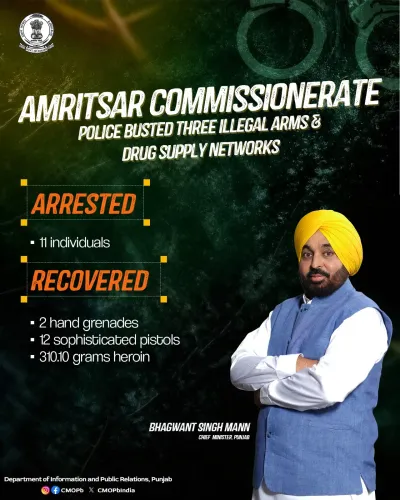
Amritsar Rural Police dismantled multiple arms, explosives and drug networks on 6 November 2026, arresting 16 accused and recovering 34 kg heroin, 2 Uzi guns, 2 hand grenades and 5 pistols under Punjab's Yudh Nashian Virudh and Gangsteran Te Vaar campaigns.
Key Takeaways
16 accused apprehended by Amritsar Rural Police in a single coordinated operation announced on 6 November 2026 .
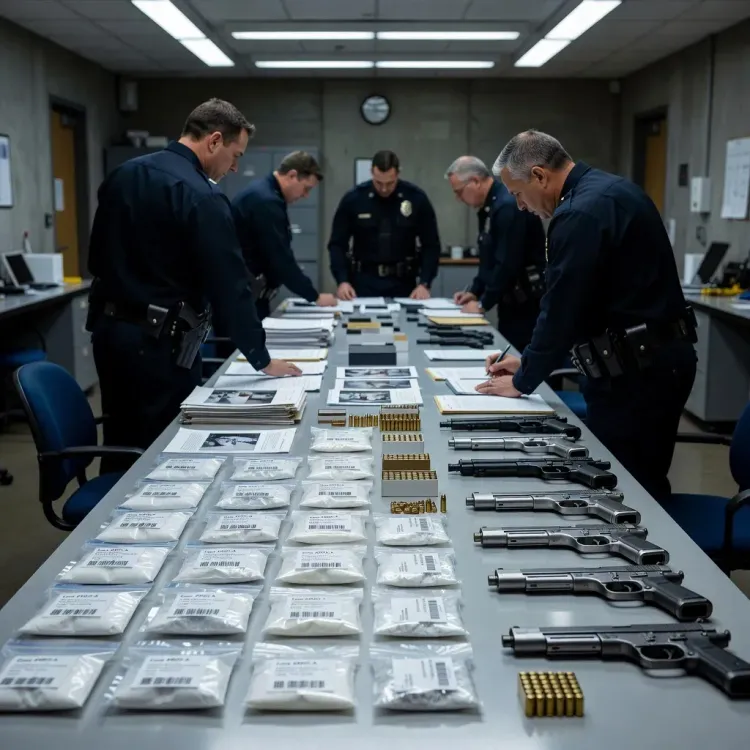
Seizures included 34 kg of heroin , 2 Uzi submachine guns , 2 hand grenades , 5 illegal pistols , and 26 live cartridges .
Police resolved 3 previously unsolved firing incidents as part of the same operation.
The operation falls under Punjab's twin campaigns: Yudh Nashian Virudh (anti-drug) and Gangsteran Te Vaar (anti-gangster), running since 2022.
Amritsar Rural Police covers territory bordering Pakistan, making it a frontline unit against cross-border smuggling of arms and narcotics.
Conviction rates and charge-sheet filing for the 16 arrested will be the key indicators of the operation's lasting impact.
Thirty-four kilograms of heroin, two Uzi submachine guns, and a pair of live hand grenades — the haul recovered by Amritsar Rural Police in a fresh crackdown reads less like a district police log and more like a border-security seizure. The Chief Minister's Office of Punjab announced on Friday, 6 November 2026 that the force had dismantled multiple illegal arms, explosives, and drug trafficking networks in one sweeping operation.
What was seized — and from whom
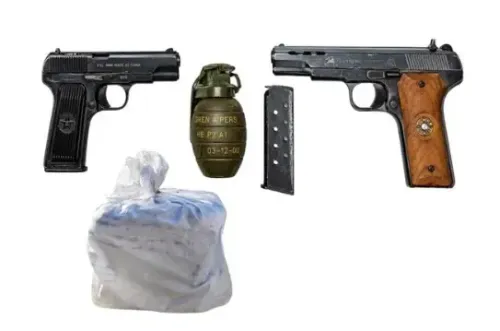
The operation netted 16 accused and produced a striking inventory: 5 illegal pistols, 2 sophisticated Uzi guns, 2 hand grenades, 26 live cartridges, and 34 kg of heroin. Police simultaneously solved 3 firing incidents that had previously gone unresolved — a detail that signals the operation broke open live criminal cases, not merely stockpiles.
The Uzi guns stand out. Compact, originally designed for military and law-enforcement use, their appearance in rural Punjab underscores the degree to which organised crime networks in the border belt have access to sophisticated weaponry — hardware that does not arrive through ordinary channels.
Amritsar Rural's front-line role in border-district crime
Amritsar Rural Police covers territory that runs up against the India-Pakistan international border — a geography that makes it a persistent flashpoint for cross-border smuggling of narcotics and firearms. Drones, tunnels, and couriers have all been documented methods of infiltration in this corridor. A single district unit recovering Uzis, grenades, and 34 kg of heroin in one sweep reflects both the scale of the challenge and, its proponents would argue, the intensity of the response.
Where this fits in Punjab's twin campaigns
The operation falls under two overlapping state-government drives: Yudh Nashian Virudh (War Against Drugs) and Gangsteran Te Vaar (Strike Against Gangsters), both launched after the Aam Aadmi Party government of Chief Minister Bhagwant Mann came to power in March 2022. The campaigns have made regular, publicised seizures a signature of the administration's law-and-order messaging — turning each recovery announcement into a visible signal of state capacity.
Punjab has long grappled with narcotics and organised crime tied to its border geography and historically porous supply lines. The current government has leaned heavily on coordinated police action in districts like Amritsar, Tarn Taran, and Gurdaspur to demonstrate that the problem is being confronted, not merely managed.
What comes next for the 16 accused
The more consequential measure of this operation will emerge in the months ahead: whether charge-sheets are filed on schedule, whether the cases hold up under judicial scrutiny, and whether conviction rates begin to reflect the volume of arrests. In Punjab's history, high-profile seizures have occasionally outpaced prosecutorial follow-through. This time, with 16 arrested and three solved firing cases on the docket, the courts — not just the camera — will deliver the final verdict.
For now, the message from Bhagwant Mann's government is unambiguous: the border belt's criminal networks are under sustained pressure, and the state intends to keep it that way.
Point of View
Well-publicised seizures to reinforce its law-and-order credentials — a campaign posture that began immediately after the 2022 assembly victory. The recovery of sophisticated weapons like Uzi guns alongside a large heroin haul highlights the intersection of narcotics trafficking and organised crime in Punjab's border belt, a structural challenge no single government has fully resolved. Chief Minister Bhagwant Mann has staked political capital on demonstrating measurable progress against these networks, making each operation both a law-enforcement event and a public-trust signal. The real test of the campaign's depth, however, lies in judicial outcomes — whether arrests translate into convictions at a rate that meaningfully disrupts, rather than temporarily displaces, criminal networks.
NationPress
6 Nov 2026
Frequently Asked Questions
What did Amritsar Rural Police recover in the November 2026 operation?
Amritsar Rural Police recovered 34 kg of heroin , 2 Uzi guns , 2 hand grenades , 5 illegal pistols , and 26 live cartridges , and arrested 16 accused while solving 3 firing incidents.
What is Yudh Nashian Virudh in Punjab?
Yudh Nashian Virudh (War Against Drugs) is a statewide anti-drug campaign launched by the Punjab government after the 2022 assembly elections, targeting narcotics trafficking networks and addiction across the state.
What is Gangsteran Te Vaar?
Gangsteran Te Vaar (Strike Against Gangsters) is a parallel Punjab government initiative targeting organised criminal gangs, often linked with cross-border arms smuggling and contract killings in the state.
Why is Amritsar Rural Police significant in anti-smuggling operations?
Amritsar Rural Police covers districts bordering Pakistan, making the unit a frontline force against cross-border smuggling of drugs and sophisticated weapons such as Uzi guns and hand grenades.
Who is the Chief Minister of Punjab overseeing these operations?
Bhagwant Mann of the Aam Aadmi Party has been Chief Minister of Punjab since March 2022 and has made anti-drug and anti-gangster campaigns a central plank of his government's law-and-order agenda.