Punjab Govt School NEET Qualifiers Jump from 80 to 882
Synopsis
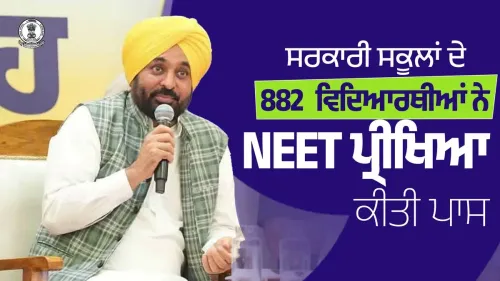
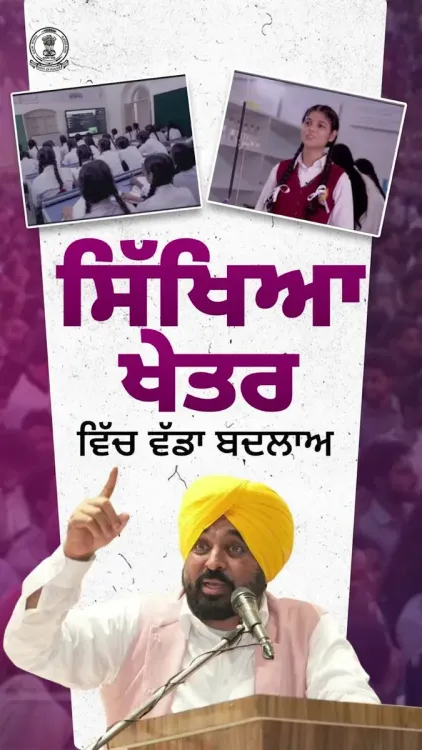
Punjab's CMO reports that NEET qualifiers from state government schools have surged from roughly 80 in 2021 to 882 in 2026 — an 11-fold rise Chief Minister Bhagwant Mann attributes to stronger competitive-exam support within the public schooling system.
Key Takeaways
NEET qualifiers from Punjab government schools rose from approximately 80 in 2021 to 882 in 2026 , an increase of roughly 11 times.
The claim was made by the Chief Minister's Office of Punjab and attributed directly to CM Bhagwant Mann on 29 September 2026.
The Aam Aadmi Party government has pursued a policy of embedding competitive-exam coaching support inside state-run schools since taking office in March 2022 .
NEET is India's sole centralised entrance test for MBBS and BDS admissions , conducted by the National Testing Agency.
Punjab's trajectory mirrors a broader national pattern of states using government school NEET and JEE pass rates as measurable education-quality benchmarks.
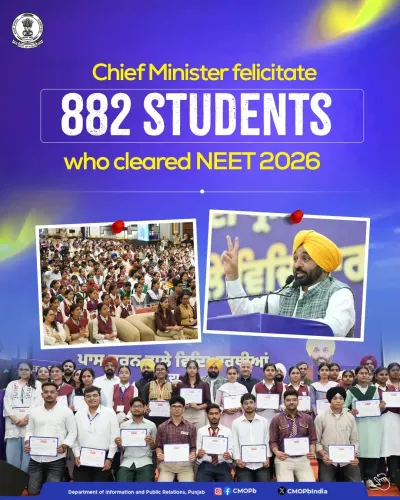
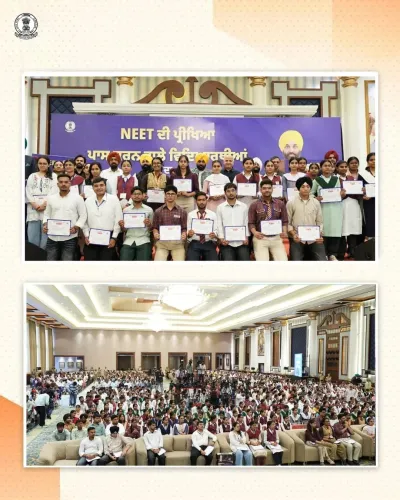
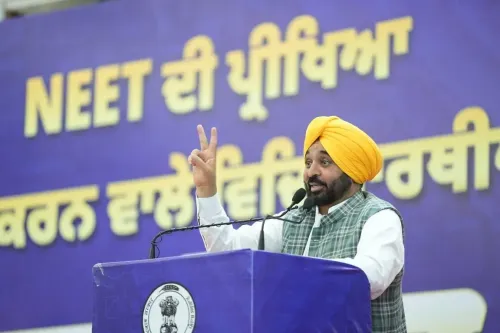
From roughly 80 students to 882 — that is the distance Punjab's government school pupils have travelled on the NEET scoreboard in just five years. The Chief Minister's Office of Punjab announced on Tuesday, 29 September 2026 that students from state-run schools qualifying the National Eligibility cum Entrance Test (NEET) have surged more than tenfold since 2021, citing the figure as evidence of deepening academic support for competitive examinations in the public schooling system.
What the numbers actually say
The post, attributed to Chief Minister Bhagwant Mann, states that NEET qualifiers from Punjab government schools stood at lagbhag 80 (approximately 80) in 2021 and reached 882 in 2026 — an increase of roughly 11 times over five academic cycles. The CMO framed the jump as a reflection of 'growing educational support and preparation for competitive examinations in government schools.' No individual scheme name was cited in the post itself.
The AAP education playbook comes to Punjab
When the Aam Aadmi Party formed the Punjab government in March 2022, it imported a template already stress-tested in Delhi: bolster government school infrastructure, layer in structured coaching for national entrance exams, and measure the result in hard numbers. The logic is straightforward — public school students, disproportionately from lower-income families, have historically been shut out of NEET-qualifying lists dominated by private coaching alumni. Targeted preparatory support inside the school system is designed to close exactly that gap.
Punjab is not alone in this pivot. Several Indian states have moved to embed competitive-exam coaching within government institutions, treating NEET and JEE pass rates as a proxy for the health of the public education system. What makes Punjab's figure notable is the scale of the reported climb over a compressed timeline.
Why 882 matters beyond the headline
Each NEET qualifier from a government school represents a student who did not need to buy access to a private coaching centre to reach the threshold for a medical seat. At the margin, that shifts the social profile of who eventually enters MBBS and BDS programmes across India. The National Testing Agency conducts NEET as the single gateway to undergraduate medical admissions nationwide, making the qualifier count a direct pipeline indicator for the medical workforce.
The figure also carries political weight for the Mann government ahead of the next Punjab assembly cycle — a concrete, countable outcome in a sector where public trust has been hard to rebuild after years of infrastructure neglect.
The sharper test will come in the years ahead: whether the numbers hold, whether qualifiers convert to actual medical admissions, and whether the coaching support reaches students in every district — not just urban centres with better teacher density.
Point of View
Countable metrics (exam pass rates, school infrastructure milestones) are the most credible currency in a voter conversation about public services. The critical caveat is that qualifying NEET and actually securing a medical seat are two different thresholds; the state's next challenge is demonstrating that these students are converting qualifications into admissions. How Punjab performs on that second metric will determine whether this announcement becomes a durable policy legacy or a half-told story.
NationPress
29 Sept 2026
Frequently Asked Questions
How many students from Punjab government schools qualified NEET in 2026?
According to Chief Minister Bhagwant Mann, 882 students from Punjab government schools qualified NEET in 2026, up from approximately 80 in 2021.
What is NEET and why does it matter for government school students?
NEET (National Eligibility cum Entrance Test) is India's centralised entrance examination for MBBS and BDS admissions, conducted by the National Testing Agency. Government school students have historically been underrepresented among qualifiers, so a rising qualifier count signals improved access to medical careers for lower-income families.
What has the Punjab AAP government done to improve NEET results in government schools?
Since taking office in March 2022 , the Bhagwant Mann-led AAP government has worked to strengthen government schools with coaching support for competitive examinations, modelled on approaches piloted in Delhi.
Is the jump from 80 to 882 NEET qualifiers from Punjab government schools verified?
The figure was stated by the official Chief Minister's Office of Punjab account on 29 September 2026. Independent verification of the exact numbers has not been confirmed from external sources.
Which other Indian states support NEET coaching in government schools?
Several states including Delhi have embedded structured coaching for national entrance exams within public school systems. Punjab's reported rise aligns with this broader national trend of using targeted academic interventions to improve competitive-exam outcomes in government institutions.