Punjab, Haryana choke under post-Diwali smog as AQI hits 'Severe' levels
Synopsis
Post-Diwali Punjab and Haryana are choking — Mandi Gobindgarh hit AQI 445, the 'Severe' threshold, while Punjab logged 1,152 fresh farm fires in a single day, pushing the seasonal total to 4,459. With winter's low winds set to trap pollutants further, what started as a festival night could stretch into weeks of hazardous air.
Key Takeaways
Mandi Gobindgarh recorded an AQI of 445 ('Severe') on 8 November , dropping to 399 on 9 November , according to CPCB data.
Ludhiana ( 313 ), Jalandhar ( 298 ), Amritsar ( 234 ), and Patiala ( 210 ) all recorded 'Very Poor' or worse air quality in Punjab.
In Haryana , Bahadurgarh ( 389 ), Rohtak ( 379 ), Bhiwani ( 377 ), Charkhi Dadri and Sirsa ( 363 each) and Gurugram ( 316 ) were among the worst-affected cities.
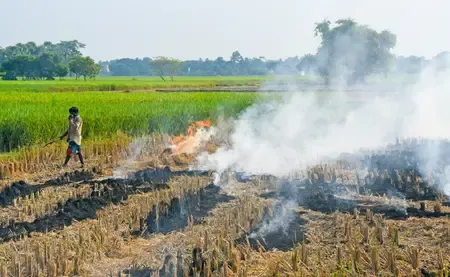
Punjab recorded 1,152 new stubble-burning incidents on 8 November alone, taking the seasonal total to 4,459 .
Health experts have flagged heightened risk for children , senior citizens , and people with asthma or heart conditions ; N95 masks and reduced outdoor activity have been recommended.
Approaching winter conditions — low winds and falling temperatures — could prolong the smog episode across both states.
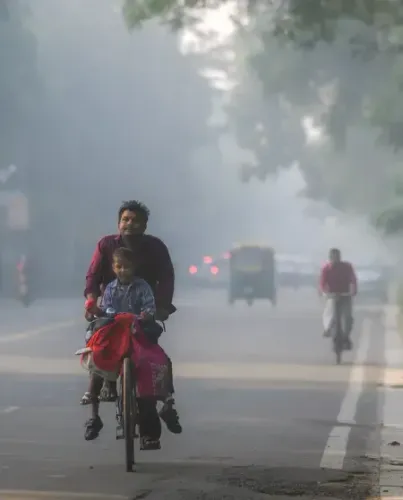
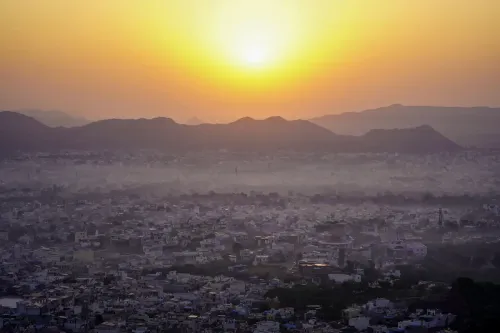
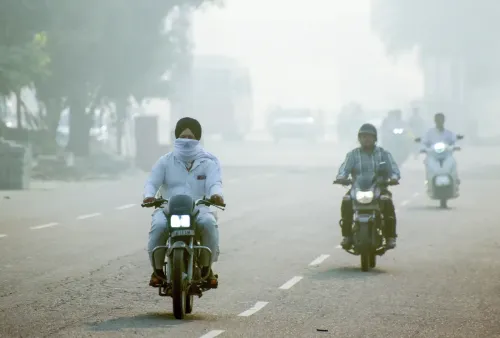
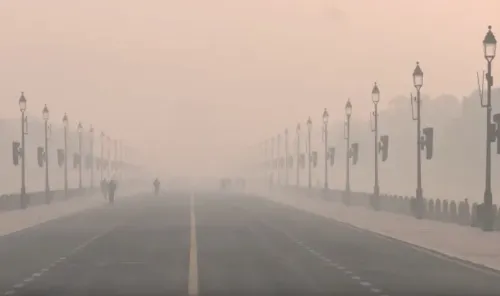
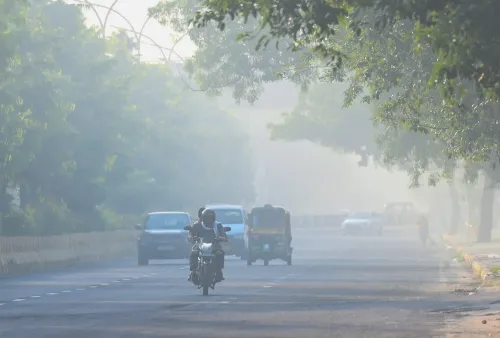
A severe pollution crisis has gripped Punjab and Haryana following Diwali celebrations, as a deadly combination of firecracker emissions, paddy stubble burning, and unfavourable weather conditions pushed air quality to alarming levels across dozens of cities on 8–9 November 2026. A thick blanket of smog has engulfed residential neighbourhoods in both states, raising urgent concerns over public health.
AQI Readings Across Both States
In Punjab, Mandi Gobindgarh emerged as one of the worst-affected cities, recording an Air Quality Index (AQI) of 445 on 8 November — firmly in the 'Severe' category. By 9 November, its AQI had eased marginally to 399, according to data from the Central Pollution Control Board (CPCB). Other major Punjab cities showed sustained deterioration: Ludhiana recorded 313, Jalandhar 298, Amritsar 234, and Patiala 210 — all in the 'Very Poor' or higher range.
The situation in Haryana was equally grim. Bahadurgarh reported an AQI of 389, followed by Rohtak at 379, Bhiwani at 377, Charkhi Dadri and Sirsa at 363 each, and Gurugram at 316 — all indicating 'Very Poor' air quality across large swathes of the state.
Stubble Burning Surges Alongside Firecracker Fallout
Despite restrictions on firecrackers, celebrations reportedly continued beyond permitted hours in several areas, releasing smoke and harmful particulate matter into an already stressed atmosphere. The post-Diwali pollution episode has been compounded by the ongoing paddy stubble-burning season across Punjab. According to reported figures, 1,152 new farm fire incidents were recorded on 8 November alone, taking the seasonal total to 4,459 incidents. The smoke from agricultural fields has mixed with vehicular emissions, industrial pollution, and construction dust to further worsen conditions.
Health Warnings for Vulnerable Groups
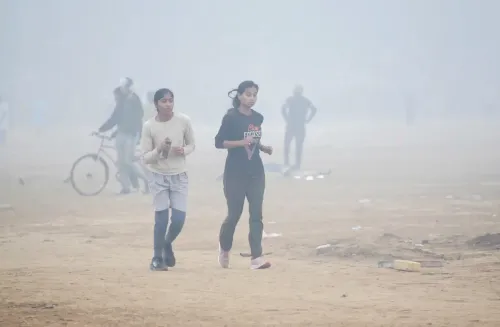
Air pollution experts and health professionals have expressed particular concern for children, senior citizens, and those suffering from asthma, heart conditions, and other respiratory ailments. Prolonged exposure to such levels of polluted air can cause coughing, breathing difficulties, throat irritation, and eye allergies, according to medical advisories. At higher pollution levels, even otherwise healthy individuals may experience respiratory discomfort. Residents have been advised to minimise outdoor activities, avoid morning walks in heavily polluted areas, and wear well-fitted N95 masks when outdoor exposure is unavoidable.
What Experts and Authorities Are Saying
Air pollution experts have underscored the need for stronger enforcement of firecracker restrictions, more effective management of agricultural residue, and stricter monitoring of industrial and vehicular emissions. This comes amid concerns that authorities have struggled to curb stubble burning year after year despite court directives and government schemes offering compensation to farmers for in-situ crop residue management. Notably, the annual recurrence of this crisis — peaking between October and November — reflects a systemic gap between policy intent and ground-level compliance.
What Lies Ahead
With winter conditions setting in, experts warn that low wind speeds and falling temperatures could trap pollutants closer to the ground, prolonging the current smog episode well beyond the immediate post-Diwali period. The situation across Punjab and Haryana is likely to remain critical until a significant wind event disperses the accumulated particulate matter.
Point of View
Which is precisely the problem. Farm fire totals of over 4,000 incidents by early November signal that neither compensation schemes nor court orders have meaningfully changed farmer behaviour, and state governments have shown little appetite for the politically costly enforcement that might. The firecracker angle is real but secondary; stubble burning is the structural driver, and it recurs because the economic incentive to burn remains stronger than any penalty applied. Until the Centre and state governments make residue management cheaper and faster than burning — through mechanisation subsidies, logistics support, and credible deterrence — expect this headline every November.
NationPress
9 Nov 2026
Frequently Asked Questions
How bad is the air quality in Punjab and Haryana after Diwali 2026?
Air quality across Punjab and Haryana has deteriorated sharply following Diwali, with several cities recording AQI levels in the 'Very Poor' and 'Severe' categories. Mandi Gobindgarh in Punjab hit an AQI of 445 on 8 November, while Haryana cities such as Bahadurgarh (389) and Rohtak (379) also recorded dangerously high readings.
What is causing the pollution crisis in Punjab and Haryana?
The crisis stems from a combination of post-Diwali firecracker emissions, large-scale paddy stubble burning, vehicular exhaust, industrial pollution, and construction dust, all worsened by unfavourable weather conditions. Punjab alone recorded 1,152 new farm fire incidents on 8 November, bringing the seasonal total to 4,459.
Who is most at risk from the current pollution levels?
Children, senior citizens, and individuals with pre-existing conditions such as asthma, heart disease, or other respiratory ailments face the highest health risk. Even otherwise healthy people may experience breathing difficulties, coughing, throat irritation, and eye allergies at current pollution levels.
What precautions have been recommended for residents?
Residents have been advised to minimise outdoor activities, avoid morning walks in heavily polluted areas, and wear well-fitted N95 masks if outdoor exposure is unavoidable. Medical experts have urged vulnerable groups to remain indoors as much as possible until air quality improves.
Will the pollution in Punjab and Haryana get worse?
Experts warn that the onset of winter — bringing lower wind speeds and falling temperatures — could trap pollutants closer to the ground and prolong the current smog episode. Without a significant wind event, air quality across both states is expected to remain at hazardous levels in the coming days.