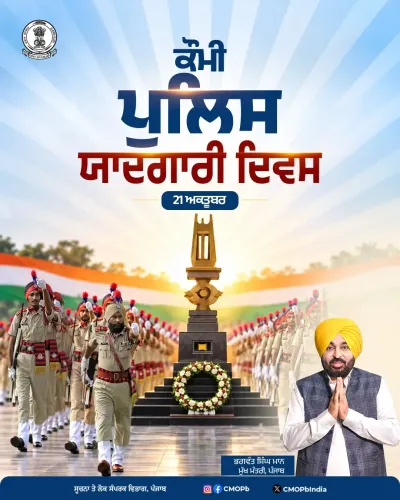
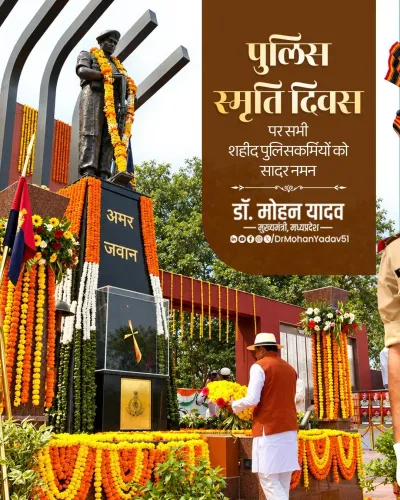
Punjab Marks 67th Police Commemoration Day at PAP HQ
Synopsis
The 67th State-Level Police Commemoration Day was observed with solemnity at Punjab Armed Police Headquarters on 21 October 2026, paying tribute to officers who died fighting militants and criminals to protect India's unity and integrity.
Key Takeaways
The 67th State-Level Police Commemoration Day was held at Punjab Armed Police (PAP) Headquarters on 21 October 2026 .
The observance honoured police personnel who laid down their lives fighting militants and criminals for India's unity and integrity.
Police Commemoration Day has been observed annually since 1959 , marking the sacrifice of personnel killed at Hot Springs, Ladakh .
Punjab's commemoration carries special historical resonance given the state's severe losses during the militancy of the 1980s and 1990s .
The event was described by the Chief Minister's Office of Punjab as being conducted with 'solemnity and reverence'.
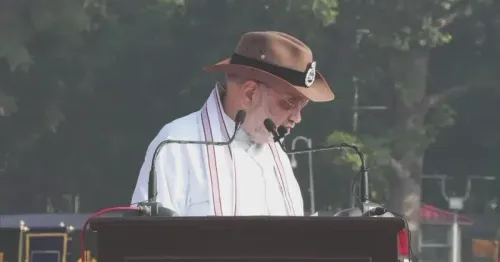
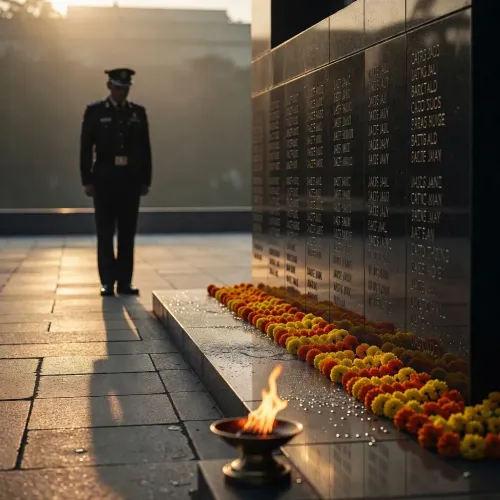
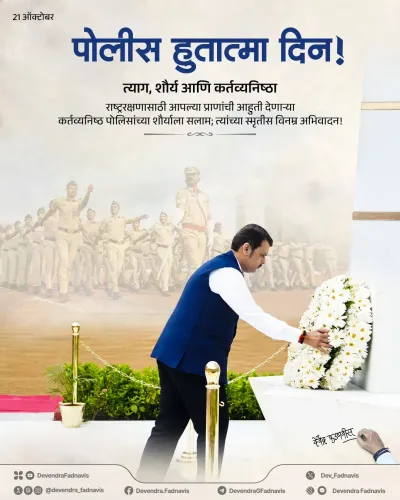
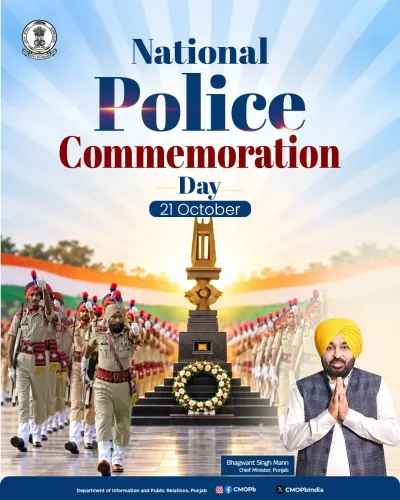
They stood between chaos and order — and paid with their lives. On Wednesday, 21 October 2026, the Chief Minister's Office of Punjab announced that the 67th State-Level Police Commemoration Day was observed with solemnity and reverence at the Punjab Armed Police (PAP) Headquarters, honouring police personnel who fell fighting militants and criminals in defence of the nation's unity and integrity.
A Tradition Born From Sacrifice in Ladakh
Police Commemoration Day traces its origins to 21 October 1959, when a patrol of Central Reserve Police Force personnel was ambushed and killed by Chinese troops at Hot Springs, Ladakh — one of the earliest armed confrontations on India's northern frontier. That act of sacrifice became the anchor for an annual national observance, replicated at the state level every year since. Punjab's version carries a particular weight: the state bore the brunt of a decade-and-a-half of militancy through the 1980s and 1990s, during which hundreds of police personnel were killed in the line of duty.
Punjab's Fallen — A Legacy the State Has Never Forgotten
For Punjab, this commemoration is not ceremonial shorthand. State governments across successive administrations have maintained the tradition of official memorials recognising police losses during the militancy era, acknowledging that the force paid an extraordinary price to restore peace. The Punjab Armed Police, the state's dedicated armed wing headquartered in the state, has been central to those operations and to these annual remembrances. The families of martyred officers remain the living conscience of this observance — their presence at PAP Headquarters each year a reminder that behind every name on a memorial wall is a household that bore the cost.
The 67th Observance — Solemnity in Uniform
The CMO Punjab described the proceedings as being conducted with 'solemnity and reverence', the language of a state that understands its debt. The event marks the 67th consecutive year of this observance — a span that stretches from the Cold War-era skirmishes of 1959 to the present, encompassing insurgencies, cross-border terrorism, and everyday law-enforcement sacrifice. Each year the ceremony is a recommitment: that the state will not let institutional memory fade into bureaucratic routine.
In a country where police forces are often caught between political pressure and public scrutiny, Commemoration Day stands as one moment when the uniform speaks for itself — for the men and women who wore it and did not come home.
Point of View
Where the wounds of the militancy era remain socially and politically raw, a government's visible, solemn participation in Commemoration Day reinforces its continuity with the security establishment and communicates respect toward the families of martyrs — a constituency no party can afford to alienate. The Bhagwant Mann government's marking of the 67th edition sustains a tradition that has outlasted multiple political transitions in Chandigarh, suggesting these observances have transcended partisan ownership to become a matter of state identity.
NationPress
22 Oct 2026
Frequently Asked Questions
What is Police Commemoration Day and why is it observed on 21 October?
Police Commemoration Day is observed every year on 21 October to honour police and paramilitary personnel killed in the line of duty. The date marks the 1959 ambush at Hot Springs, Ladakh , where CRPF personnel were killed by Chinese troops in one of India's earliest border confrontations.
Where was Punjab's 67th Police Commemoration Day held in 2026?
The 67th State-Level Police Commemoration Day was observed at the Punjab Armed Police (PAP) Headquarters in Punjab on 21 October 2026 .
Who are the Punjab police martyrs being remembered on this day?
The observance honours all Punjab police personnel who laid down their lives fighting militants and criminals, including the large number of officers killed during Punjab's militancy period in the 1980s and 1990s , as well as those who died in subsequent law-enforcement operations.
What is the Punjab Armed Police (PAP)?
The Punjab Armed Police (PAP) is the state's dedicated armed police wing, headquartered in Punjab. It has historically played a frontline role in counter-insurgency and law-enforcement operations across the state.
How many years has Police Commemoration Day been observed in Punjab?
The 2026 observance was the 67th edition , meaning the tradition has been continuous since 1959 — the year the national Police Commemoration Day was first established following the Hot Springs, Ladakh incident.