Punjab Police Marks 453 Days of 'Yudh Nashian Virudh' Drive
Synopsis
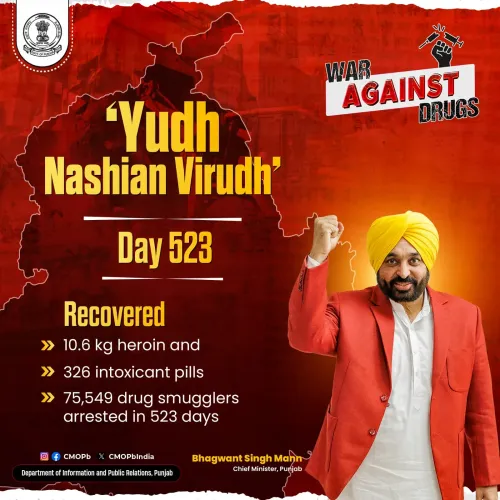
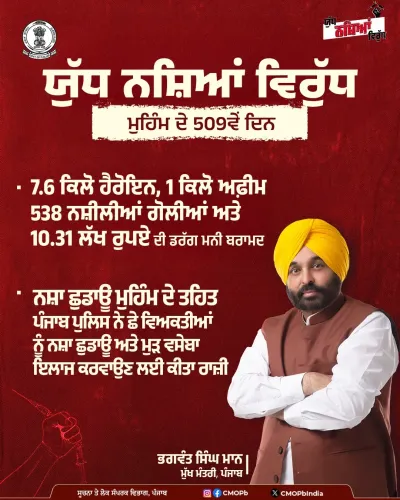
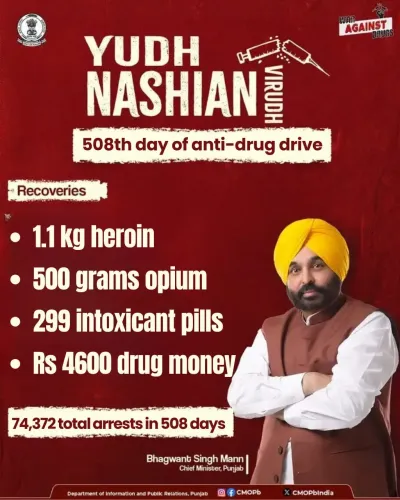
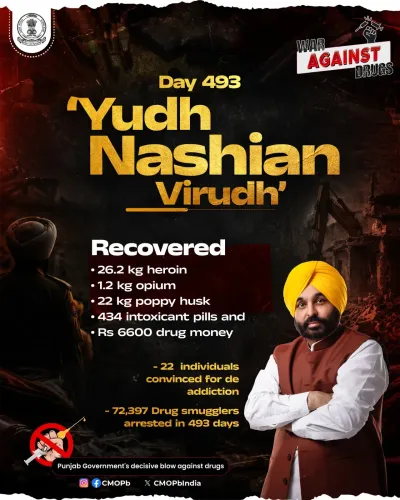
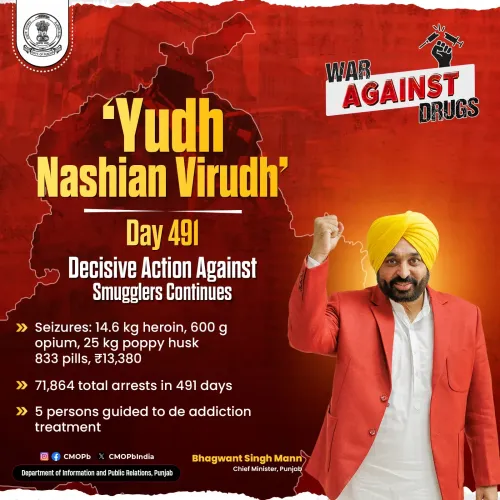
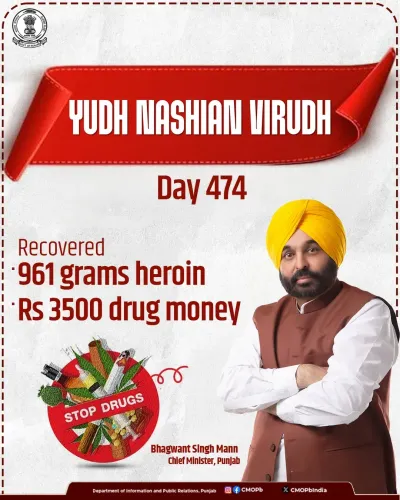
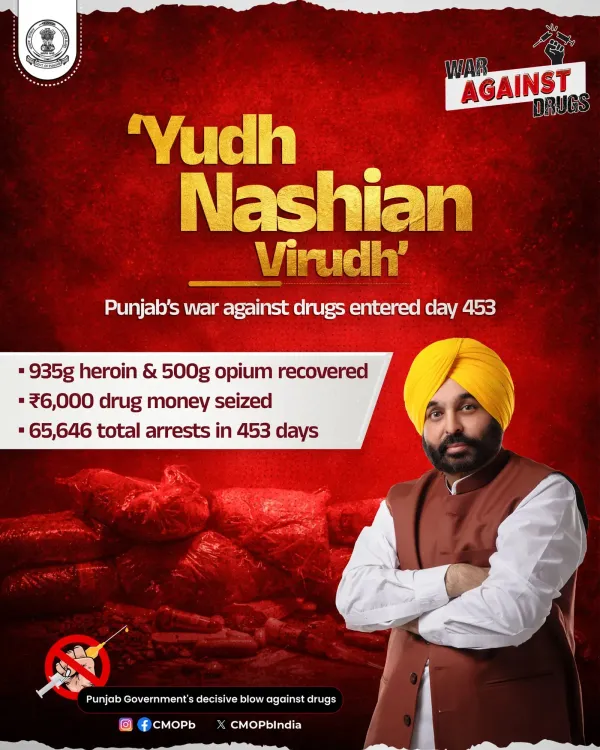
Punjab Police's 'Yudh Nashian Virudh' anti-drug campaign reached its 453rd day on 29 May 2026, with fresh seizures of 935g heroin, 500g opium, and ₹6,000 in drug money. Cumulative arrests since the drive began have climbed to 65,646, the Chief Minister's Office of Punjab reported.
Key Takeaways
453 consecutive days of unbroken anti-drug operations under the Yudh Nashian Virudh campaign as of 29 May 2026 .
Latest seizures include 935 grams of heroin , 500 grams of opium , and ₹6,000 in drug money.
Total drug smugglers arrested since the campaign launched has reached 65,646 .
The drive is central to Chief Minister Bhagwant Mann 's AAP government manifesto commitment of zero tolerance on drugs.
Punjab's border location near the Golden Crescent makes it a persistent transit and consumption zone for narcotics trafficking.
Conviction rates and rehabilitation programme rollout remain key benchmarks yet to be publicly quantified by the state government.
The Chief Minister's Office of Punjab announced on Friday, 29 May 2026 that Punjab Police has continued its anti-drug campaign Yudh Nashian Virudh ('War Against Drugs') into its 453rd consecutive day, with fresh seizures of 935 grams of heroin, 500 grams of opium, and ₹6,000 in drug money recovered in the latest operational push.
Context
According to the CMO Punjab post, the cumulative number of drug smugglers arrested since the campaign began has reached 65,646 over 453 days. The daily update signals that enforcement teams are conducting round-the-clock operations across the state rather than periodic crackdowns. The seizures reported on this day — heroin and opium combined with cash — reflect the mixed narcotics profile of trafficking routes active in the region.
Policy Backdrop
The Yudh Nashian Virudh campaign is a cornerstone of the Aam Aadmi Party government's drug-eradication agenda in Punjab, a pledge that featured prominently in the party's manifesto ahead of the March 2022 state elections. Chief Minister Bhagwant Mann has repeatedly framed the drive as a zero-tolerance enforcement posture, with daily public reporting — including arrest tallies and seizure figures — used to demonstrate operational continuity and government accountability.
Punjab's geographic proximity to the Golden Crescent — the Afghanistan-Pakistan-Iran narcotics corridor — has made it a transit and consumption hotspot for over two decades. Successive state administrations have launched anti-drug campaigns, but critics have long argued that enforcement alone, without proportionate investment in conviction and rehabilitation infrastructure, yields limited long-term impact.
Stakeholders and Impact
The primary beneficiaries of sustained enforcement are Punjab's youth and border communities, who bear the heaviest social cost of drug dependency. Each arrest removes an active link in the supply chain, though analysts note that conviction rates from the large arrest pool remain a key metric to watch — a high arrest count with low convictions can indicate procedural gaps in prosecution. Families of those arrested also face socioeconomic disruption, underscoring the need for parallel de-addiction and legal-aid infrastructure.
Drug smuggling networks operating across the Punjab-Pakistan border adapt continuously, meaning sustained pressure is required to prevent supply-chain reconstitution. The ₹6,000 in drug money recovered on this day, while modest in isolation, forms part of a broader asset-disruption strategy intended to erode trafficking economics over time.
What's Next
Observers will watch whether the Mann government supplements the enforcement drive with measurable de-addiction programme rollouts and transparent conviction data from the 65,646 arrests logged so far. The campaign's longevity — now past 15 months of unbroken daily operations — sets an unusual precedent for sustained police mobilisation in Indian state governance. Whether the momentum translates into lasting structural change in Punjab's drug landscape will depend as much on the judiciary and rehabilitation system as on police operations alone.
Point of View
Quantifiable record of promise-keeping ahead of future electoral cycles. With 65,646 arrests logged, the sheer volume is politically significant, but it also raises a structural question: whether the criminal justice pipeline — from arrest to prosecution to conviction — has the capacity to process cases at this scale. Punjab's drug problem is deeply rooted in geography and socioeconomic vulnerability, and enforcement-heavy campaigns, however sustained, have historically required complementary demand-reduction investment to produce durable outcomes. The campaign's continuation past 453 days suggests institutional commitment, but the true measure of its success will emerge from conviction statistics and rehabilitation uptake data that have yet to be placed in the public domain.
NationPress
20 Sept 2026
Frequently Asked Questions
What is the Yudh Nashian Virudh campaign in Punjab?
'Yudh Nashian Virudh' means 'War Against Drugs' in Punjabi. It is an ongoing anti-drug enforcement campaign run by Punjab Police under the Bhagwant Mann -led AAP government, involving daily raids, seizures, and arrests of drug smugglers across the state since the government came to power in 2022 .
How many drug smugglers have been arrested in Punjab's anti-drug drive?
As of 29 May 2026 , the 453rd day of the campaign, the total number of drug smugglers arrested under Yudh Nashian Virudh has reached 65,646 , according to the Chief Minister's Office of Punjab.
What drugs were seized by Punjab Police on 29 May 2026?
On the 453rd day of the campaign, Punjab Police recovered 935 grams of heroin , 500 grams of opium , and ₹6,000 in drug money during their ongoing anti-drug operations.
Why is Punjab particularly affected by drug trafficking?
Punjab shares a border with Pakistan and sits geographically close to the Golden Crescent — the Afghanistan-Pakistan-Iran narcotics production corridor — making it a major transit and consumption zone for heroin and other drugs for over two decades.
What is Bhagwant Mann's drug policy in Punjab?
Chief Minister Bhagwant Mann and the Aam Aadmi Party government committed to a zero-tolerance policy on drugs as a key manifesto pledge before the 2022 Punjab elections. The Yudh Nashian Virudh campaign operationalises this through sustained daily police enforcement and public reporting of seizures and arrests.