Punjab Police Hits 446 Locations on Day 275 of Gangster Crackdown

Synopsis
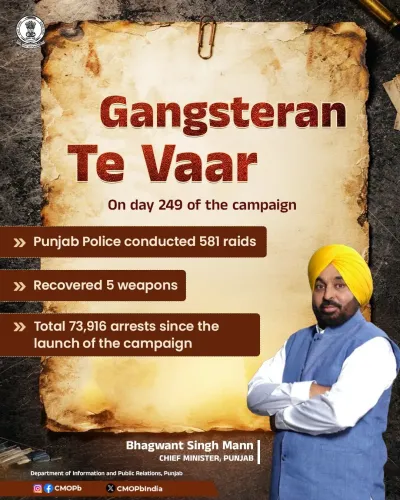
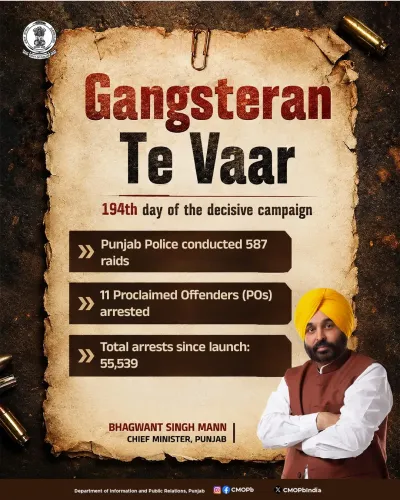
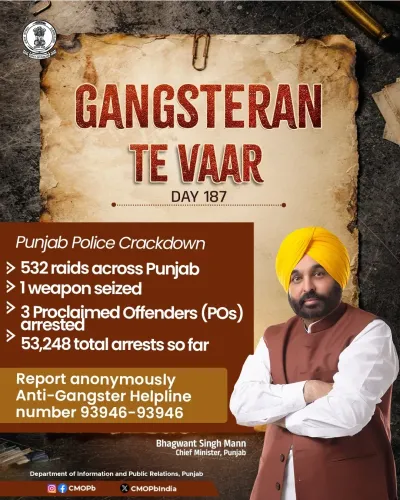
On Day 275 of the Gangsteran Te Vaar campaign, Punjab Police executed 446 coordinated raids on mapped gangster-associate locations across the state, recovered three weapons, and pushed total campaign arrests to 80,053, the Chief Minister's Office announced on October 23, 2026.
Key Takeaways
446 raids were conducted across Punjab on Day 275 of the Gangsteran Te Vaar campaign on October 23, 2026 .
Raid locations were pre-identified and mapped as sites linked to associates of gangsters, indicating intelligence-led operations.
Three weapons were recovered and fresh arrests made on Day 275 alone.
Cumulative arrests since the campaign's launch have reached 80,053 .
The campaign is a flagship law-and-order initiative of Chief Minister Bhagwant Mann 's AAP government, which took office in March 2022.
Punjab's organised crime landscape — rooted in drug networks and extortion — has been a persistent governance challenge for successive state governments.
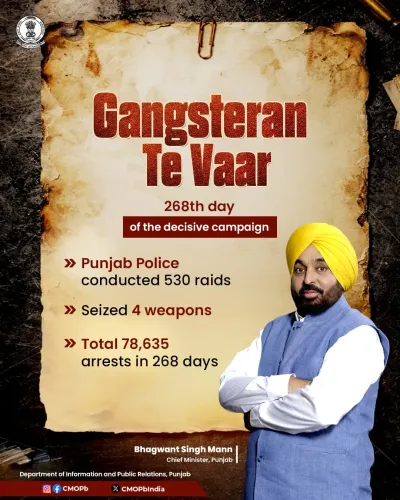
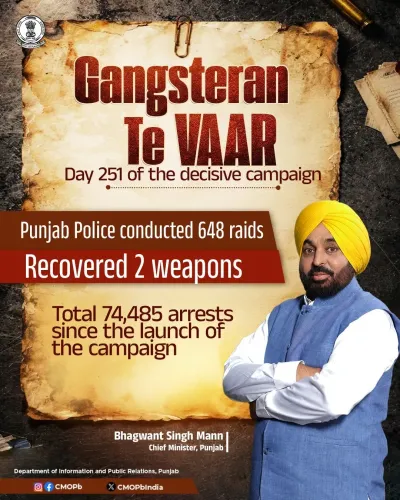
A single coordinated sweep across an entire state, 446 simultaneous raids — that is what Punjab Police executed on Day 275 of the Gangsteran Te Vaar (Gangsters, We Strike) campaign, as the Chief Minister's Office of Punjab announced on Friday, October 23, 2026. Three weapons were recovered and fresh arrests were made, pushing the campaign's cumulative total to a striking 80,053 arrests since the drive began.
446 Raids, One Day, State-Wide
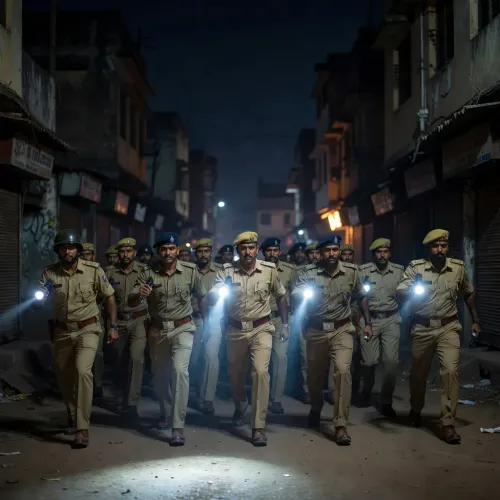
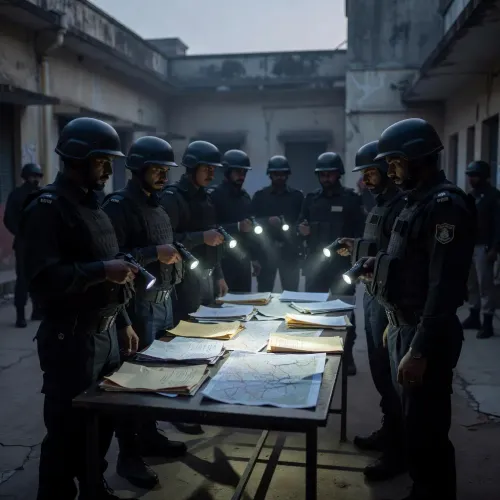
According to the official announcement, police teams fanned out to locations that had been pre-identified and mapped as hideouts or haunts of gangster associates — a detail that signals intelligence-led planning rather than reactive policing. The raids were spread across Punjab, targeting support networks that keep organised criminal groups operational: foot soldiers, financiers, and safe-house operators who rarely make headlines but form the backbone of gang logistics.
On Day 275 alone, officers recovered three weapons. While that number is modest in isolation, the post frames it within a cumulative arc: weapons taken off the street compound over hundreds of consecutive days of pressure on these networks.
80,053 Arrests and the Logic of Sustained Pressure
The figure of 80,053 total arrests is the headline statistic the CMO Punjab is anchoring the campaign's credibility to. Punjab has historically wrestled with an organised-crime landscape that evolved from the militancy era into contemporary gang syndicates deeply intertwined with the drug trade — extortion calls to businesses, targeted killings, and cross-border weapons smuggling have periodically rattled the state's social fabric.
When Chief Minister Bhagwant Mann and the Aam Aadmi Party came to power in March 2022, dismantling the drug-gangster nexus was a centrepiece law-and-order promise. The Gangsteran Te Vaar campaign is the operational expression of that pledge — a sustained, numbered-day structure that is itself a communication strategy, signalling to residents and critics alike that the pressure is unrelenting and quantifiable.
What Daily Raids Actually Disrupt
Mapping and raiding associate locations serves a specific tactical purpose: it degrades the ecosystem around high-value gang leaders who are harder to apprehend. Associates move money, weapons, and information. By repeatedly disrupting those nodes, police aim to isolate gang leadership and raise the operational cost of staying active in Punjab. Whether that sustained attrition is translating into measurable declines in extortion incidents or targeted violence is the question that independent crime statistics — not yet publicly released for this campaign — would need to answer.
For now, the numbers the government controls — raids conducted, arrests logged, weapons seized — continue to climb. And on Day 275, Punjab Police added another chapter to what is becoming one of the longest-running named anti-gang campaigns in the state's recent history.
Point of View
053 arrests as the cumulative ledger, the AAP government is building a data-driven narrative around its core 2022 promise to break the drug-gangster nexus. The genuine test, however, lies not in arrest volumes but in whether extortion incidents and gang-linked violence are declining — metrics that require independent verification and have not yet been publicly released. Until that data surfaces, the campaign's operational scale is impressive, but its societal impact remains an open verdict.
NationPress
23 Oct 2026
Frequently Asked Questions
What is the Gangsteran Te Vaar campaign in Punjab?
Gangsteran Te Vaar is a sustained Punjab Police anti-gangster operation launched under Chief Minister Bhagwant Mann's AAP government. It targets gangsters and their associates through coordinated raids, arrests, and weapons seizures across the state.
How many total arrests have been made in the Gangsteran Te Vaar campaign?
As of Day 275 of the campaign (October 23, 2026), the total number of arrests since the drive began stands at 80,053, according to the Chief Minister's Office of Punjab.
How many raids did Punjab Police conduct on Day 275?
Punjab Police conducted 446 raids on Day 275 of the Gangsteran Te Vaar campaign, targeting pre-identified and mapped locations linked to gangster associates across the state.
What weapons were recovered in the Day 275 Punjab Police raids?
Three weapons were recovered by police teams during the Day 275 operations on October 23, 2026.
Who launched the Gangsteran Te Vaar campaign and why?
The campaign was launched by the Punjab Police under Chief Minister Bhagwant Mann's AAP government, which came to power in March 2022 on a promise to dismantle the drug-gangster nexus that has long plagued the state through extortion, targeted killings, and organised crime networks.