Punjab Police hits Day 280 of 'Gangsteran Te Vaar' with 510 raids

Synopsis
On Day 280 of the 'Gangsteran Te Vaar' campaign, Punjab Police carried out 510 raids linked to gangster associates across the state, recovering three weapons and pushing total arrests to 81,076 since the campaign's launch under Chief Minister Bhagwant Mann.
Key Takeaways
510 raids were conducted by Punjab Police on Day 280 of the Gangsteran Te Vaar campaign on October 28, 2026 .
Raids targeted geo-mapped locations linked to associates of gangsters across Punjab.
Three weapons were recovered during Day 280 operations.
Cumulative arrests since the campaign's launch reached 81,076 .
The campaign was initiated under Chief Minister Bhagwant Mann 's AAP government, which took office in March 2022 .
The drive reflects a sustained strategy of targeting gangster support networks , not just top-tier criminals.
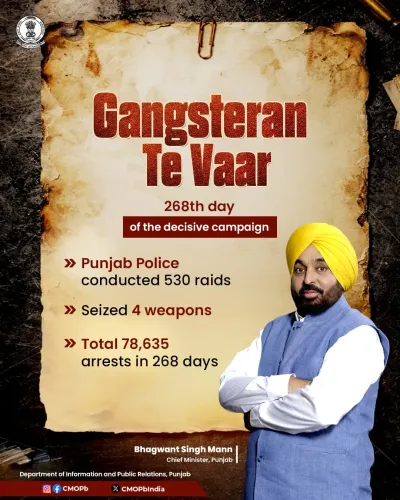
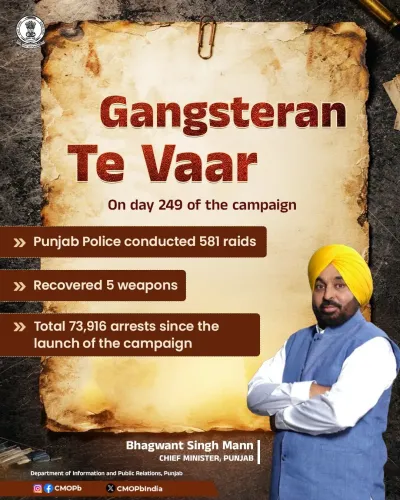
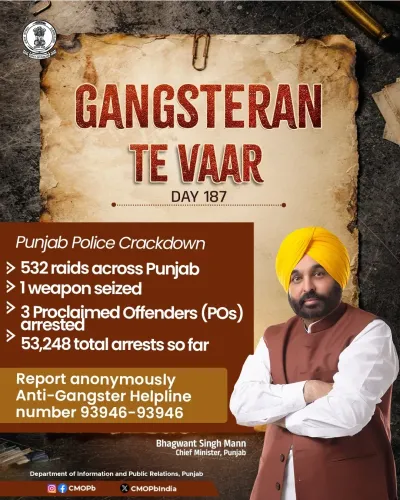
Nearly 280 days into one of Punjab's most sustained anti-crime offensives, the numbers keep climbing — and the state government wants every resident to know it. On Wednesday, October 28, 2026, the Chief Minister's Office of Punjab announced that Punjab Police conducted 510 raids across mapped locations linked to gangster associates, arresting individuals and recovering three weapons on Day 280 alone of the 'Gangsteran Te Vaar' ('Strike on Gangsters') campaign.
810,000-plus arrests and the daily raid rhythm
The single-day action pushed the campaign's cumulative arrest tally to 81,076 since the drive was launched by the Bhagwant Mann-led Aam Aadmi Party government. That headline figure — arrests in the tens of thousands — reflects the campaign's defining feature: near-daily coordinated sweeps that systematically target not just active gangsters but the wider ecosystem of associates, logistics networks, and safe-house operators that keep organised crime functional.
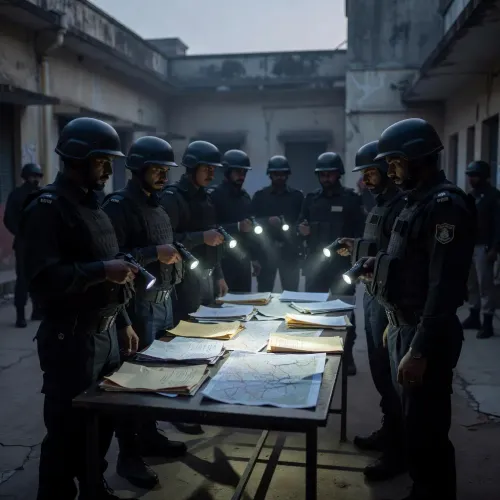
The 510 raids on Day 280 follow a pattern the CMO has publicised consistently — identifying and geo-mapping locations tied to criminal networks, then executing simultaneous operations across multiple districts to limit the ability of any one node in the network to warn others.
Why Punjab made organised crime the centrepiece of governance
Chief Minister Bhagwant Mann, who took office in March 2022, inherited a Punjab where organised crime syndicates — many with cross-border links — had embedded themselves in extortion rackets, drug supply chains, and political intimidation. The AAP government moved quickly to frame law-and-order, particularly the dismantling of gangster networks, as a core deliverable rather than a peripheral security matter.
'Gangsteran Te Vaar' emerged from that political and administrative priority. Its structure — daily raids, daily public reporting of statistics — is itself a governance choice, signalling accountability and maintaining pressure on networks that historically exploited gaps between sporadic crackdowns.
Weapons, arrests, and what the tally represents
The recovery of three weapons on Day 280 is modest in isolation, but weapon seizures across nearly nine months of continuous operations add up to a meaningful reduction in the arsenal available to street-level criminal networks. Each arrest, even of a peripheral associate, disrupts the logistical and financial support structures that allow top-tier gangsters — many of whom operate from outside India — to maintain influence inside the state.
Punjab's organised crime problem has long had a transnational dimension, with several high-profile gangsters directing extortion and contract killings remotely. A campaign that targets local associates is, in effect, a sustained attempt to cut the operational wires between distant masterminds and ground-level enforcers.
With 81,076 arrests logged and the campaign showing no sign of winding down, the question now is whether the sheer volume of enforcement translates into durable disruption — or whether the networks prove elastic enough to absorb the pressure and reconstitute. The daily raid count will keep that answer in plain sight.
Point of View
Where anti-crime drives typically surged after high-profile incidents and then tapered. By publishing daily raid and arrest statistics, the Mann government has embedded law-and-order delivery into a performance accountability framework — a direct echo of the AAP governance model pioneered in Delhi. The cumulative arrest figure of 81,076 is politically significant regardless of conviction rates, as it projects administrative momentum heading into future electoral cycles. The deeper test, however, is whether sustained enforcement pressure translates into measurable reductions in extortion incidents and violent crime, metrics that will ultimately define whether the campaign is a structural shift or a well-publicised attrition exercise.
NationPress
28 Oct 2026
Frequently Asked Questions
What is the 'Gangsteran Te Vaar' campaign in Punjab?
'Gangsteran Te Vaar' — meaning 'Strike on Gangsters' — is an ongoing Punjab Police campaign launched under Chief Minister Bhagwant Mann's government to dismantle organised criminal networks through daily coordinated raids targeting gangsters and their associates across the state.
How many arrests have been made in Punjab's Gangsteran Te Vaar campaign?
As of Day 280 of the campaign on October 28, 2026, a total of 81,076 arrests have been recorded since the campaign's launch, according to the Chief Minister's Office of Punjab.
How many raids did Punjab Police conduct on Day 280?
Punjab Police conducted 510 raids on Day 280, targeting identified and geo-mapped locations linked to associates of gangsters across the state.
Who is leading the anti-gangster drive in Punjab?
The campaign is led by Punjab Police under the political direction of Chief Minister Bhagwant Mann of the Aam Aadmi Party, who has made tackling organised crime a central governance priority since taking office in March 2022.
Why does Punjab have a serious organised crime problem?
Punjab has faced persistent challenges from criminal networks involved in extortion, contract killings, and narcotics trafficking, with several high-profile gangsters operating remotely from abroad. The state's cross-border geography and history of gang violence have made dismantling these networks a long-standing law-enforcement priority.